It's not so hard to spot trucks with swamp-coolers in Brazil, since it's a cost-effective alternative to improve the thermal comfort inside the cabin even with the engine off, unless a regular air-conditioner which usually requires engine power to drive the compressor. There is actually no compressor in a swamp-cooler, neither a synthetic gas. Only water stored in a tank that can be mounted in virtually any compartment of the vehicle (or built-in to the swamp-cooler) and on-board electric power (there are 12V and 24V devices, the one to be fitted into a T2 might be the 12V) are required.
The air is aspirated thru an axial fan, pre-filtered to remove larger particles, dust and small insects, then goes thru a straw filter soaked with water and then the specific heat of the air induces a small amount of the water to vaporize, absorbing the heat and increasing the air relative humidity, all controled thru an electronic processor which adjusts the ventilation speed and the humidity increasement ratio. Altough it's often not the easiest position to ensure a perfect integration with the vehicle's original appearance, swamp-coolers are usually assembled at the top of the vehicle to allow a natural flow of the cooled air. The device used in this T2 is from the Resfriar brand, known in Italy as ResfriEuro and in England and Germany as TopCooling, with a tank mounted inside the vehicle instead of built-in to the evaporative unit.
Thursday, August 15, 2013
Sunday, August 11, 2013
Diesels: cleaner than hybrids
Hybrid cars, such as the Toyota Prius, have been praised by the "politically-correct" crowds due to a supposedly lower environmental footprint through an expectable operational life around 10 to 15 years, but it's quite unaccurate to trust only in marketing tricks. In the end, even an old beater can often feature a greater "environmental performance", eventually including 7700lbs. GVWR trucks such as the Mercedes-Benz MB-180 D which was assembled in Spain until '97, available in some markets with the legendary OM616 engine in a version rated at 79hp backed by a 5-speed manual front-driven transaxle.
Diesels have been known for their enhanced adaptability to alternative fuels, including waste cooking oils, while the most mainstream hybrids aren't so suitable to anything other than ethanol or gaseous fuels. An indirect-injection Diesel engine such as the OM616 can use nearly anything as fuel, altough some like ethanol and gaseous fuels might work only thru supplementary injection at the intake and still requiring a pilot-injection from either regular Diesel fuel or biodiesel, vegetable oil, or even old engine oil.
Dr. Rudolf Diesel himself was a visionary, predicting the possibilities to bring energy independence to agricultural villages in the former German Southeast Africa (currently Namibia), since biofuels could get their production less concentrated and more regionalized, allowing the choice for the most suitable one to regional needs or preferences, and cutting part of the cost of the logistic process to ensure its supplies. With direct injection, he even considered the possibilities to use pure ethanol, without any of the ignition improvers used in the Scania ethanol-powered buses from Stockholm. After all, the increased thermal efficiency in the Diesel cycle compared to a regular spark-ignited engine is still worth the higher initial cost, at a point that it took nearly all the market share in heavy-duty trucks.
It's also not so unusual for a Diesel engine to outlast a hybrid setup before an engine overhaul becomes required, even when the Diesel is submitted to higher load factors. The absence of an electric ignition system with many components prone to natural wear also decreases the amount of replacement parts and the respective raw materials and energy required to manufacture them.
Another increasingly controversial aspect regarding hybrids is about the higher mineral extraction and energy expenses involved in all the industrial and logistic procedures before the vehicle is ready to run. A set of battery packs can usually last 10 to 15 years before starting to fail, and altough its chemicals can be recycled, it's an energy-expensive procedure that also implies safety risks due to the reactivity of the electrolythic compounds. All the supposedly lower energy consumption during the operational lifespan of the hybrid vehicle is hardly recovered when compared to a Diesel-engined vehicle with similar performance ratings, even considering an eventually higher consumption increasement while using a specific alternative fuel as reference, such as E100 ethanol. For example, a Prius and a Peugeot Partner 1.4e-HDi can both get a 62MPG rating with gasoline and Diesel fuel respectively, while running on ethanol the Prius has a 30% mileage decreasement to 43.4MPG while the Peugeot can get a mileage decreasement around 50% to just 31MPG. Well, if we remember the lesser amount of DPF regen cycles in the Partner while using ethanol blends, an increasement lower than 50% on the fuel consumption might actually be expected when using pure ethanol due to the absence of particulate matter generation...
After all, a Diesel-powered old beater can still be way cleaner than a highly-acclaimed hybrid...
Diesels have been known for their enhanced adaptability to alternative fuels, including waste cooking oils, while the most mainstream hybrids aren't so suitable to anything other than ethanol or gaseous fuels. An indirect-injection Diesel engine such as the OM616 can use nearly anything as fuel, altough some like ethanol and gaseous fuels might work only thru supplementary injection at the intake and still requiring a pilot-injection from either regular Diesel fuel or biodiesel, vegetable oil, or even old engine oil.
It's also not so unusual for a Diesel engine to outlast a hybrid setup before an engine overhaul becomes required, even when the Diesel is submitted to higher load factors. The absence of an electric ignition system with many components prone to natural wear also decreases the amount of replacement parts and the respective raw materials and energy required to manufacture them.
Another increasingly controversial aspect regarding hybrids is about the higher mineral extraction and energy expenses involved in all the industrial and logistic procedures before the vehicle is ready to run. A set of battery packs can usually last 10 to 15 years before starting to fail, and altough its chemicals can be recycled, it's an energy-expensive procedure that also implies safety risks due to the reactivity of the electrolythic compounds. All the supposedly lower energy consumption during the operational lifespan of the hybrid vehicle is hardly recovered when compared to a Diesel-engined vehicle with similar performance ratings, even considering an eventually higher consumption increasement while using a specific alternative fuel as reference, such as E100 ethanol. For example, a Prius and a Peugeot Partner 1.4e-HDi can both get a 62MPG rating with gasoline and Diesel fuel respectively, while running on ethanol the Prius has a 30% mileage decreasement to 43.4MPG while the Peugeot can get a mileage decreasement around 50% to just 31MPG. Well, if we remember the lesser amount of DPF regen cycles in the Partner while using ethanol blends, an increasement lower than 50% on the fuel consumption might actually be expected when using pure ethanol due to the absence of particulate matter generation...
After all, a Diesel-powered old beater can still be way cleaner than a highly-acclaimed hybrid...
Thursday, August 01, 2013
Brazilian mini hearses
In a country where full-size sedans are not the mainstream, and the station-wagons are getting pretty much neglected, funeral agencies in Brazil are currently using smaller hearses based on compact coupé-utilities very popular in the local automotive market.
Altough the short cargo tray, usually less than 6ft.-long, may not be deemed suitable to carry a casket, it's stretched from the rear overhang by means of a fiberglass insert totally integrated to the canopy used to enclose the compartment, ensuring the required dignity to the last trip. There's also a liner, integrated with the canopy and the rear extension too, providing an easy-to-clean surface without gaps.
The external layout of the vehicle ends up holding some resemblance to European hearses, which are often fitted with panoramic windows.
One of the most popular models to be converted into a hearse is the Chevrolet Montana, known in Mexico as Chevrolet Tornado and in South Africa as Chevrolet Utility. The engine is a flexfuel 1.4L 4-cylinder, backed by a front-driven 5-speed manual transmission.
Altough the short cargo tray, usually less than 6ft.-long, may not be deemed suitable to carry a casket, it's stretched from the rear overhang by means of a fiberglass insert totally integrated to the canopy used to enclose the compartment, ensuring the required dignity to the last trip. There's also a liner, integrated with the canopy and the rear extension too, providing an easy-to-clean surface without gaps.
The external layout of the vehicle ends up holding some resemblance to European hearses, which are often fitted with panoramic windows.
One of the most popular models to be converted into a hearse is the Chevrolet Montana, known in Mexico as Chevrolet Tornado and in South Africa as Chevrolet Utility. The engine is a flexfuel 1.4L 4-cylinder, backed by a front-driven 5-speed manual transmission.
Monday, July 01, 2013
Cargo tricycles: increasing popularity in Uruguay
Due to high gasoline prices and a recent ban on the registry of new Diesel-powered light vehicles, small utility tricycles like the Chinese-made Yumbo Cargo 125 are increasing their market share in Uruguay. Altough the low output and limited performance (max. speed around 60km/h) turn them pretty unsafe for highway traffic, they're a reasonable option for urban jobs such as parcel delivery or even just as a personal commutter for those who don't feel safe to ride a regular motorcycle.
Despite the lack of weather protection, tricycles like the Yumbo Cargo 200 are an effective solution to urban light hauling due to their lower operational cost compared to a regular 4-wheeled compact van such as the Peugeot Partner, which currently is not available in Uruguay with Diesel engines anymore.
Friday, June 14, 2013
Advantages of evaporative cooling in cash-transit vans
![]() |
| Brazilian armored cash-transit van, based in a local derivative of the Mercedes-Benz Vario, with 2 roof-mounted evaporative coolers |
Comparing to a regular air-conditioner, the effect of an evaporative cooling setup over the fuel consumption is more negligible, not just due to its ligther weight increasement but also due to the lower mechanical load, since it doesn't require an engine-driven compressor. Instead of using a synthetic gas, it uses only water as the cooling fluid, which also reflects as an environmental benefit since the most usual refrigerant gas commercially available is HFC-134, also known as R-134a, ranked among the so-called greenhouse gases and with a lifespan longer than carbon dioxide when released in the atmosphere. And meanwhile R-134a requires an energy expense to be manufactured, evaporative coolers can use rainwater.
![]() |
| The Brink's Company uses rainwater collectors in all its Brazilian branches |
Saturday, June 01, 2013
4-cylinder Diesel engines: the best response to the claim for better fuel-efficiency in trucks
We all know Americans love trucks, and they also have their loyal enthusiasts in export markets. A good example is the Cadillac Escalade EXT, which offers a good balance of luxury and heavy-duty capabilities. There is, however, a significative downside regarding those vehicles: the fuel-efficiency is compromised by their size and weight..
Many commercial trucks with a GVWR that often doubles the Escalade, such as the Isuzu NPR, are available with engines ranging from 3.0L to 5.2L, and still leave a good safety margin for towing in case of engine swap...
It's worth to remember the technical evolution regarding Diesel emissions aftertreatment, which can lead to an end to the misconceptions pointing these engines as "filthy". At the long run, they're even cleaner than a comparable gasoline-electric hybrid driveline, not just due to the lower energy spent to manufacture a Diesel engine but also the lower amount of raw materials in opposition to a complete hybrid setup with the electric motor, additional electronic controllers and the traction battery pack.
Another feature that evolved significantly in the 4-cylinder Diesels is the acoustic comfort. A good example is Mercedes-Benz: its earlier Diesels still used to clatter a little even tough the indirect injection makes it less noisy, and also used to feel quite underpowered comparing to a gasser in spite of the increased fuel-efficiency. But nowadays, with turbocharging and advanced electronic engine management, even the flagship S-Class is available with a 2.1L 4-banger Diesel. The common-rail injection, due to the multiple jets for every injection cycle, improves the sound deadening and also makes the engine run smoothier.
Often, the unavailability of Diesel versions for some SUVs, like the Chevrolet Suburban, is pointed as a prejudice to increase their global presence, altough some enthusiasts claim that only a huge V8 can lead to the genuine American "soul" into them. That perception of the amount of cylinders as a premium feature is quite dumb, since it also increases the internal frictions inside the engine, decreasing its efficiency...
However, even when there is a Diesel engine available for an American truck, it's usually bigger than it's really necessary for many operators. Okay, it can be cool to have a massive Diesel V8, but often a 4-cylinder can already get the job done. For example, the GMT400 trucks had the IDI boat-anchor 6.5L V8 turbodiesel available in North America, meanwhile its Brazilian counterparts were available with a 4.0L 4-cylinder Maxion S4T and a 6-cylinder MWM Sprint 6.07 TCA, both featuring direct injection. Not every truck buyer requires a torque amount greater than what a gasser V8 is able to provide, but the RPM bands of a Diesel are desirable even if it's a 4-cylinder, like in a walk-thru van.
Nowadays, it's no surprise that 4-cylinder turbodiesels are getting an increased popularity even among the hot-rodding folks, most notably the Cummins 4BT, which can develop over 200hp for relatively cheap but, altough these power figures can sound unimpressive, the high torque and the lower fuel consumption than a comparable gasser are a premium.
In many markets, 4-cylinder turbodiesels nearly eliminated 6-cylinder and V8 gasser trucks. One of the most notable cases is the Land Rover Defender. It was available with the Rover 3.9L V8 gasser until '97, and after the demise of this engine there were versions fitted with the BMW M52 2.8L straight-6 catering to the South African market until 2000. Since then, however, there is no gasser Defender and, after the demise of the 2.5L Td5 (5-cylinder turbodiesel) in 2007 due to emissions regulations, the only engines available for the Defender were 4-cylinder turbodiesels shared with the Ford Transit van, being a 2.4L until 2012 when a 2.2L replaced it also for emissions-related reasons.
In Brazil, for example, in '97 the Ford F-1000, local equivalent to the F-250, was available with a 2.5L Maxion HSD in a 2WD version, altough it was phased out for the following year. The 300cu.in. (4.9L) straight-6 was available for the 2WD F-1000, but wasn't so popular. In the 4WD F-1000, the 4.3L MWM X10 was the only option, mostly favored for its ruggedness in harsh environments.
In a worldwide base, 4-cylinder Diesel engines have been regarded as an effective balance between capability and fuel-efficiency. Even in special applications, such as ambulances.
Usually, massive V8 gassers, or eventually flexfuel, are the most usual engine option for an American full-size truck, altough other options could also provide a fair performance with improvements to the fuel savings. I can't deny my favorite choice are Diesel engines, due to their higher thermal efficiency, adaptability to alternative fuels, and also because they're cool too. With the right gear ratio selection, even some 4-cylinder turbodiesels, with a displacement considerably below the 6.2L of the currently-offered V8, can be a good match to an Escalade while not feeling underpowered at all.
Many commercial trucks with a GVWR that often doubles the Escalade, such as the Isuzu NPR, are available with engines ranging from 3.0L to 5.2L, and still leave a good safety margin for towing in case of engine swap...
It's worth to remember the technical evolution regarding Diesel emissions aftertreatment, which can lead to an end to the misconceptions pointing these engines as "filthy". At the long run, they're even cleaner than a comparable gasoline-electric hybrid driveline, not just due to the lower energy spent to manufacture a Diesel engine but also the lower amount of raw materials in opposition to a complete hybrid setup with the electric motor, additional electronic controllers and the traction battery pack.
![]() |
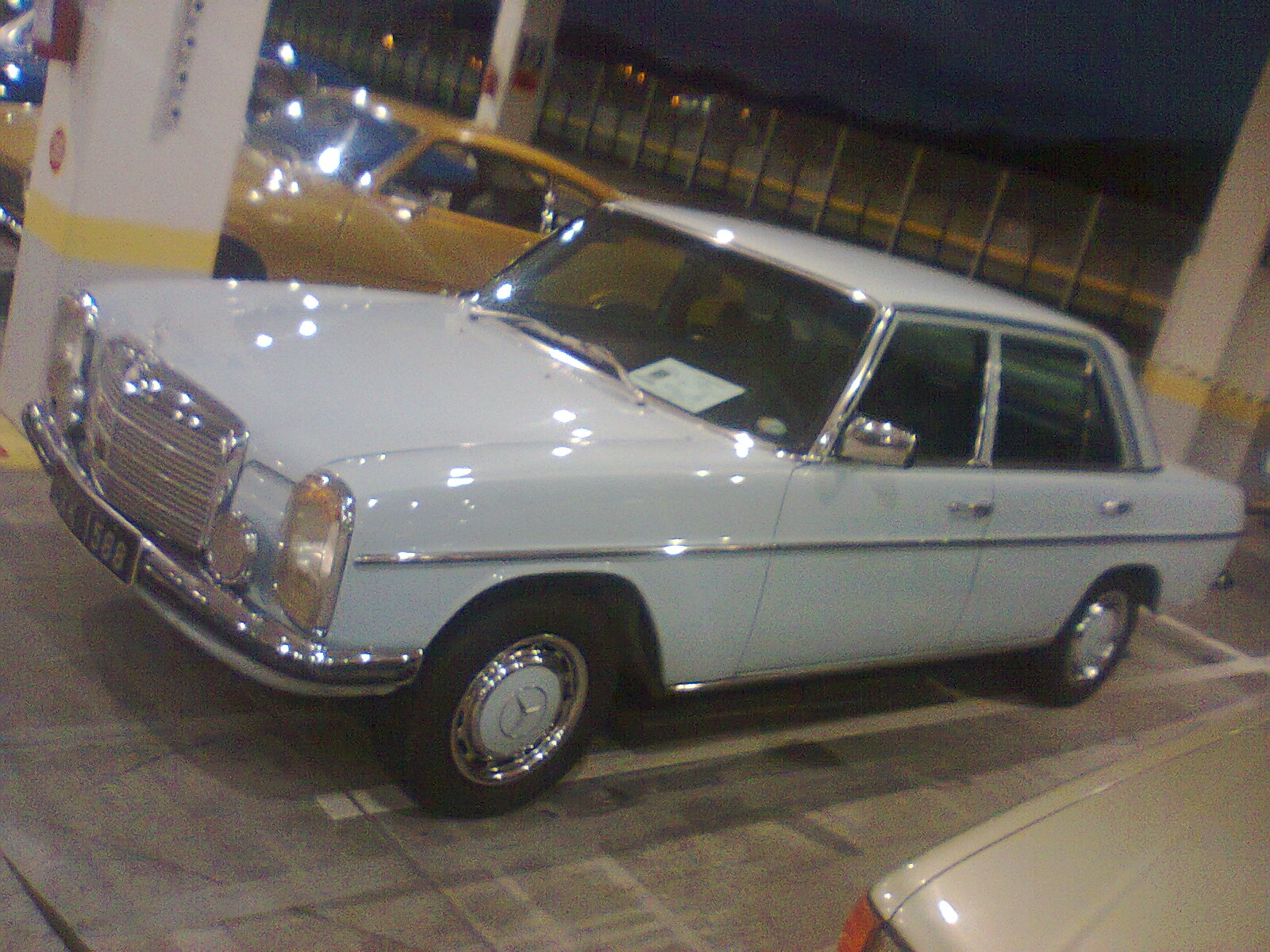
| Mercedes-Benz 240D: features one of the most dependable engines ever made, but had its limitations regarding performance and acoustic comfort |
Often, the unavailability of Diesel versions for some SUVs, like the Chevrolet Suburban, is pointed as a prejudice to increase their global presence, altough some enthusiasts claim that only a huge V8 can lead to the genuine American "soul" into them. That perception of the amount of cylinders as a premium feature is quite dumb, since it also increases the internal frictions inside the engine, decreasing its efficiency...
![]() |
| GMC 6-100/6-150: Brazilian equivalent of the 3500HD |
Nowadays, it's no surprise that 4-cylinder turbodiesels are getting an increased popularity even among the hot-rodding folks, most notably the Cummins 4BT, which can develop over 200hp for relatively cheap but, altough these power figures can sound unimpressive, the high torque and the lower fuel consumption than a comparable gasser are a premium.
In many markets, 4-cylinder turbodiesels nearly eliminated 6-cylinder and V8 gasser trucks. One of the most notable cases is the Land Rover Defender. It was available with the Rover 3.9L V8 gasser until '97, and after the demise of this engine there were versions fitted with the BMW M52 2.8L straight-6 catering to the South African market until 2000. Since then, however, there is no gasser Defender and, after the demise of the 2.5L Td5 (5-cylinder turbodiesel) in 2007 due to emissions regulations, the only engines available for the Defender were 4-cylinder turbodiesels shared with the Ford Transit van, being a 2.4L until 2012 when a 2.2L replaced it also for emissions-related reasons.
In Brazil, for example, in '97 the Ford F-1000, local equivalent to the F-250, was available with a 2.5L Maxion HSD in a 2WD version, altough it was phased out for the following year. The 300cu.in. (4.9L) straight-6 was available for the 2WD F-1000, but wasn't so popular. In the 4WD F-1000, the 4.3L MWM X10 was the only option, mostly favored for its ruggedness in harsh environments.
In a worldwide base, 4-cylinder Diesel engines have been regarded as an effective balance between capability and fuel-efficiency. Even in special applications, such as ambulances.
Subscribe to:
Posts (Atom)