Wednesday, February 11, 2015

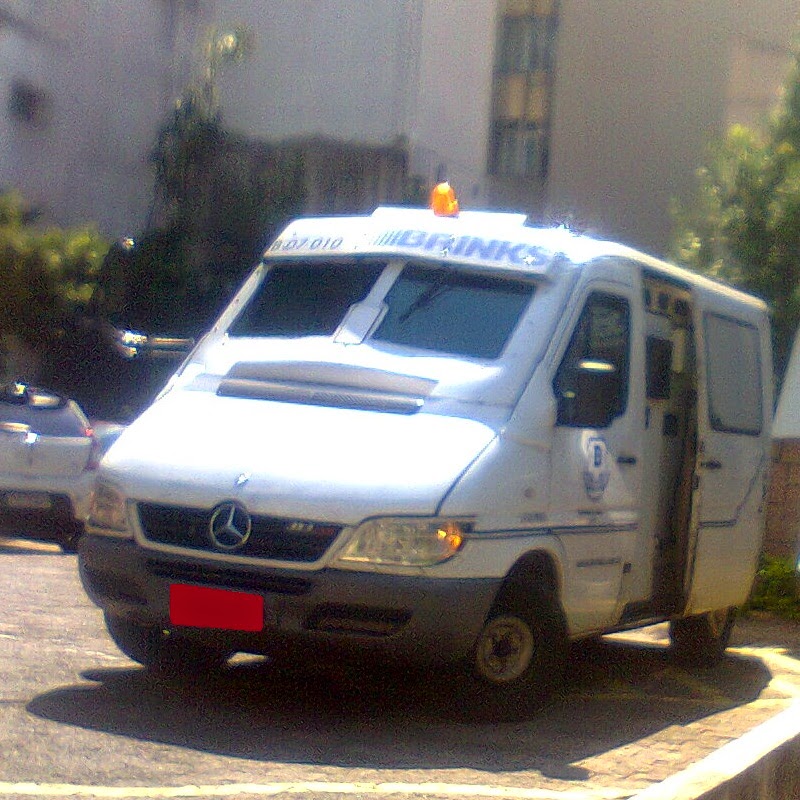
Brink's armored van

Still think a 4-cylinder turbodiesel under 3-litre is not enought to get the job done? It's time to review some concepts...
Alongside its regular cash-transit vans built around medium-duty truck frames, Brazilian branch of the Brink's company also operates with some Argentinian-made Mercedes-Benz Sprinter vans, mostly due to their enhanced maneuverability in tight spaces, fuel savings, and to circumvent restrictions on the circulation of trucks in some areas. The only engines officially available for the Sprinter in Brazil since its introduction in '97 have been 4-cylinder turbodiesels, and this one specifically is fitted with a 2.1L OM611 rated at 127hp (129cv for those more used to the French unit, or 95kW) at 3800RPM and 300Nm. (220lb.ft.) at 1600-2400RPM backed by a 5-speed manual transmission. Apart from a handful "executive" passenger vans which featured a 5-speed automated-manual transmission, the Sprinter is only available in Brazil with manual transmissions.

Sure the weight added by the up-armoring decreases its payload in a significant matter, but it still does what it's expected to do.

Monday, January 12, 2015

Fiat Siena Tetrafuel

Yesterday morning while I was walking my dog in another neighborhood nearby, I saw this Fiat Siena Tetrafuel, the first vehicle factory-fitted to run on gasoline, ethanol and compressed natural gas (CNG). What surprised me the most, actually, is the fact that this one didn't had a taxi livery, which is pretty much unusual since its main market had always been the taxi segment in Brazil. Actually, the Tetrafuel nameplate is not so accurated, since it runs on gasoline, ethanol and CNG, not considering Brazilian-standard E20/E25 gasohol as a distinct fuel at all. It has a pair of 6.5m³ trunk-mounted CNG tanks, and only one single tank for the liquid fuels at its regular underbody location. The engine is a 1.4L Fire with the 8-valve head and natural aspiration, and power figures were 67hp while running only on CNG, 80hp on gasoline, and 81hp on ethanol. Introduced in 2006 alongside the already-available gasoline/ethanol flexfuel variants, the Tetrafuel was phased out in Brazil in 2011 and replaced in 2012 by a Tetrafuel variant of the Grand Siena which was introduced in that year. The old model had its production transfered to Venezuela, where it had been a captive import, and the Venezuelan-made version was rebadged Dodge Forza.

Monday, January 05, 2015

A few CNG-powered trucks in my hometown

Compressed Natural Gas, or CNG, was initially deployed as an automotive fuel in Italy during the inter-wars period, and is currently pointed as one of the easiest-to-implement measures to reduce the dependence on Middle-East oil, alongside ethanol. It's usually extracted from fossil reserves, either in oil wells or isolated, but since its basic component is Methane gas it can also be sourced from any organic matter residue in landfills and wastewater treatment plants. It's often also pointed as more sustainable than ethanol and biodiesel, because its impact on food prices and availability is lower. The main markets for CNG-powered vehicles nowadays are India, Pakistan, Argentina and Brazil. Their presence in Europe and the USA is increasing in commercial vehicles, but is still not so popular among private car owners due to the lack of refuelling stations in spite of the availability of Natural Gas as for stationary applications such as power generation, home heating and cooking fuel. Anyway, the folks at Ecomodder and CNGChat might like these ones...

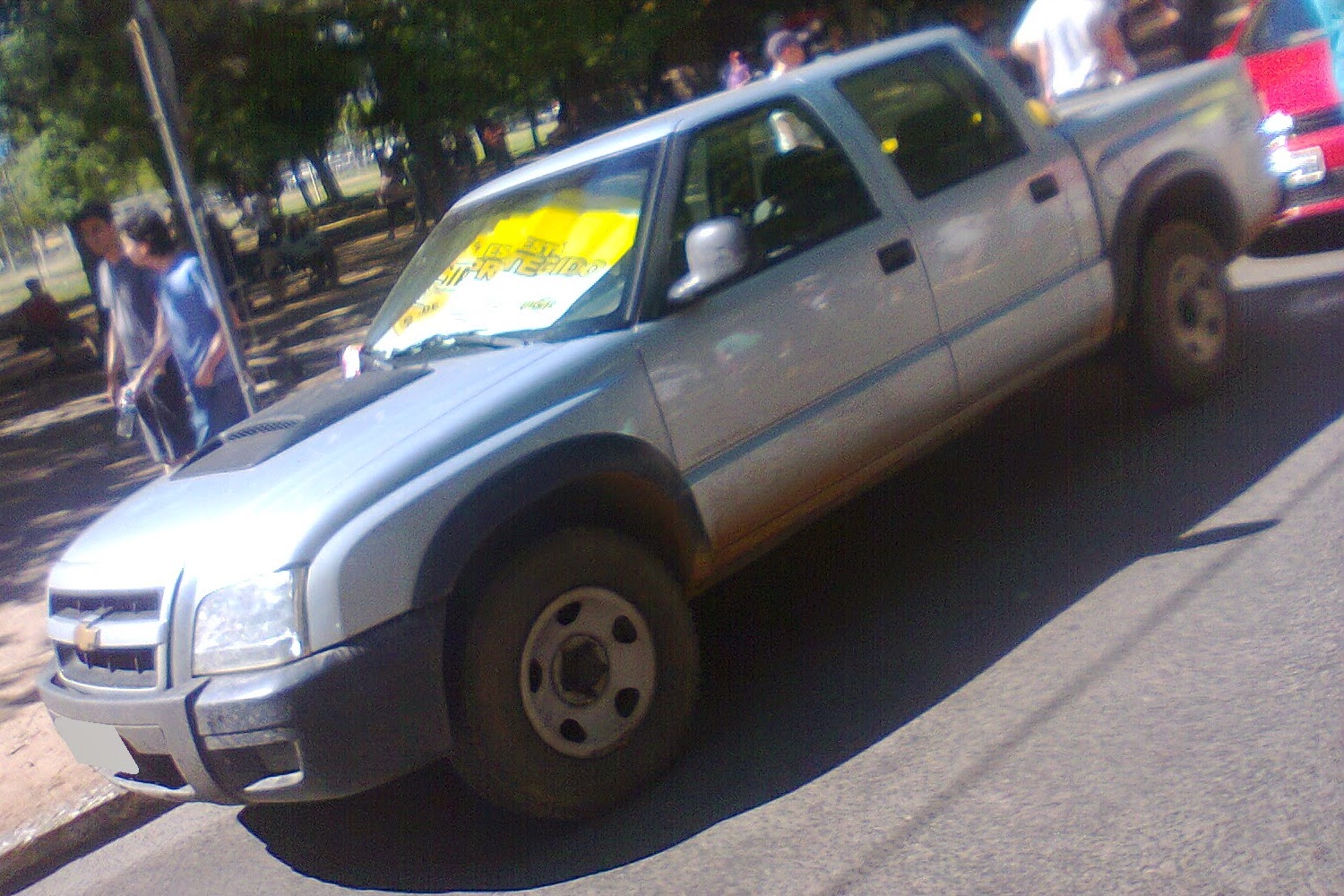
Brazilian versions of the Chevy S10 have an Opel-designed 4-cyl engine available, initially as gasoline-powered but gasoline/ethanol flexfuel since '05, instead of the Vortec 2200 from their American equivalent. This on was originally a flexfuel, so now with the CNG setup it became tri-fuel capable...

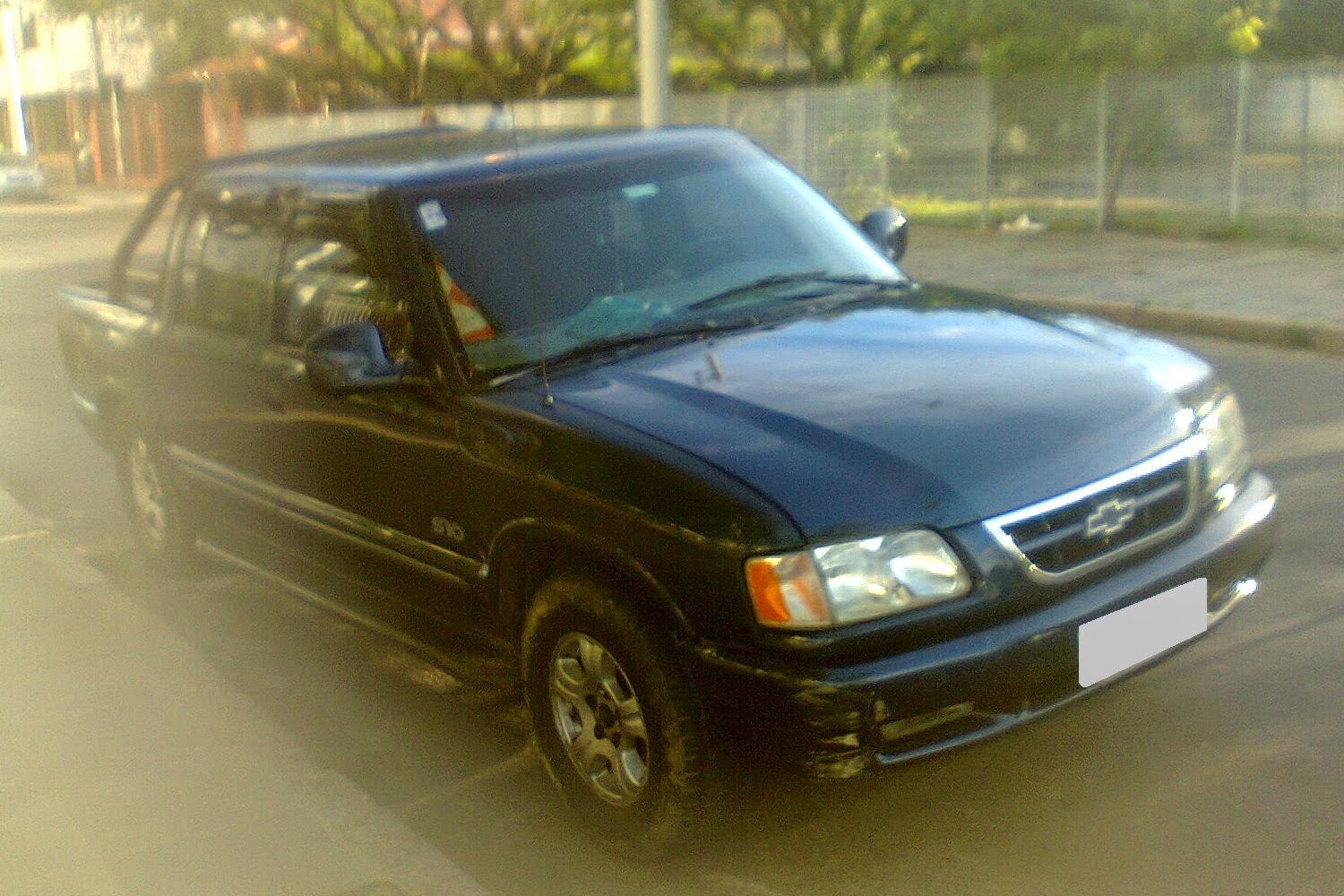
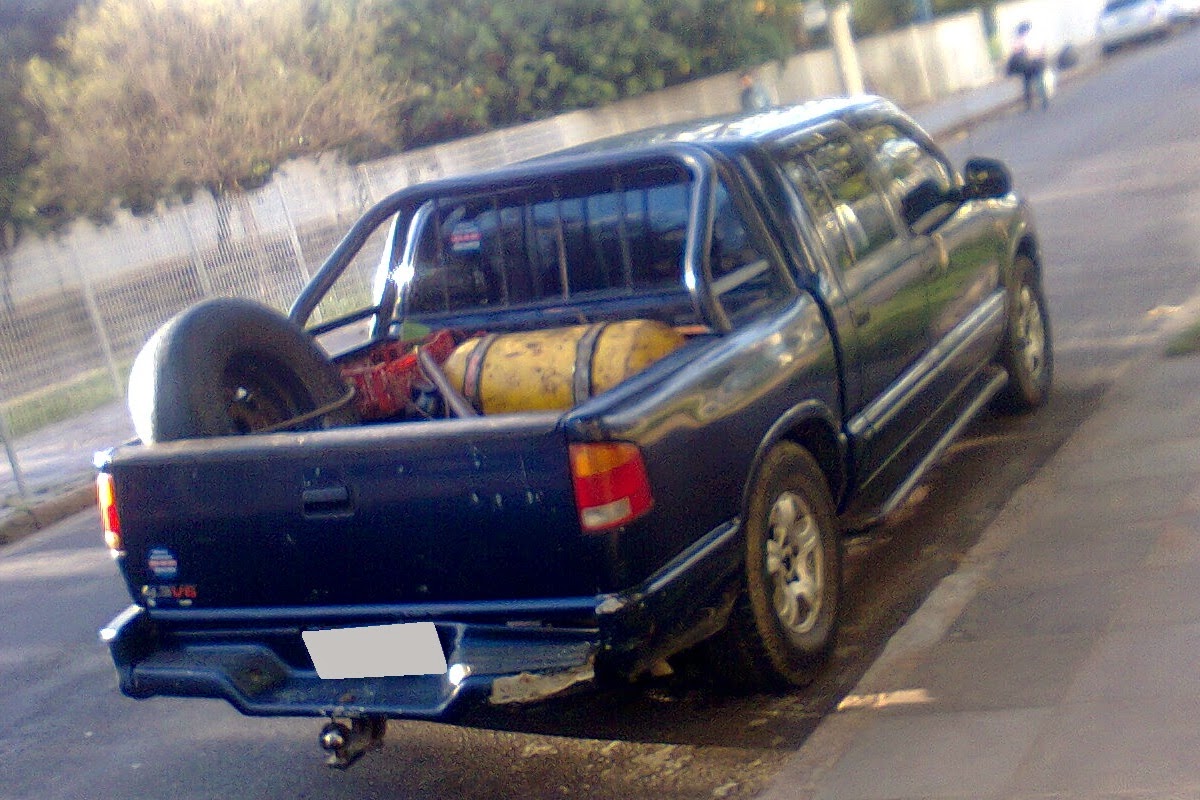
This other S10 has the 4.3L V6 engine, and the CNG tank is visible at the pick-up box. Couldn't see any underbody tank, but since the spare tyre had been relocated to the box it may have released some space to fit other tanks, which would be kinda useful considering the thirst of the V6...

Another V6, this time a single-cab. Also fitted with a single box-mounted tank, but since it didn't have clearance issues with the wheel wells a bigger tank could be fitted...

The Dodge Dakota is considered a lemon in Brazil, because its local production run had been too short ('99-'01) and, in spite of running on the American 4WD chassis and suspension setup due to the harsher pavement conditions, it was only available in 2WD. It was also kinda expensive when new, and all of its gasoline-powered engines were imported. The 4-cyl 2.5L and the 3.9L V6 were made in the USA while the 5.2L V8 came from Venezuela. The only Brazilian-made engine was the Diesel-powered one, a VM Motori R425 OHV license-made by Detoilet Detroit Diesel which had some overheating issues and was more expensive to overhaul than the Diesel engines used in its opponents, leading a handful of owners to repower them with engines from other similarly-sized trucks such as the MWM Sprint 4.07 TCA used in the S10 from '99 to '05 and the Toyota 3L and 5L-E from the Hilux. Many of the surviving gasoline-powered ones had been converted to CNG, such as this one with extended cab and the V6 engine.

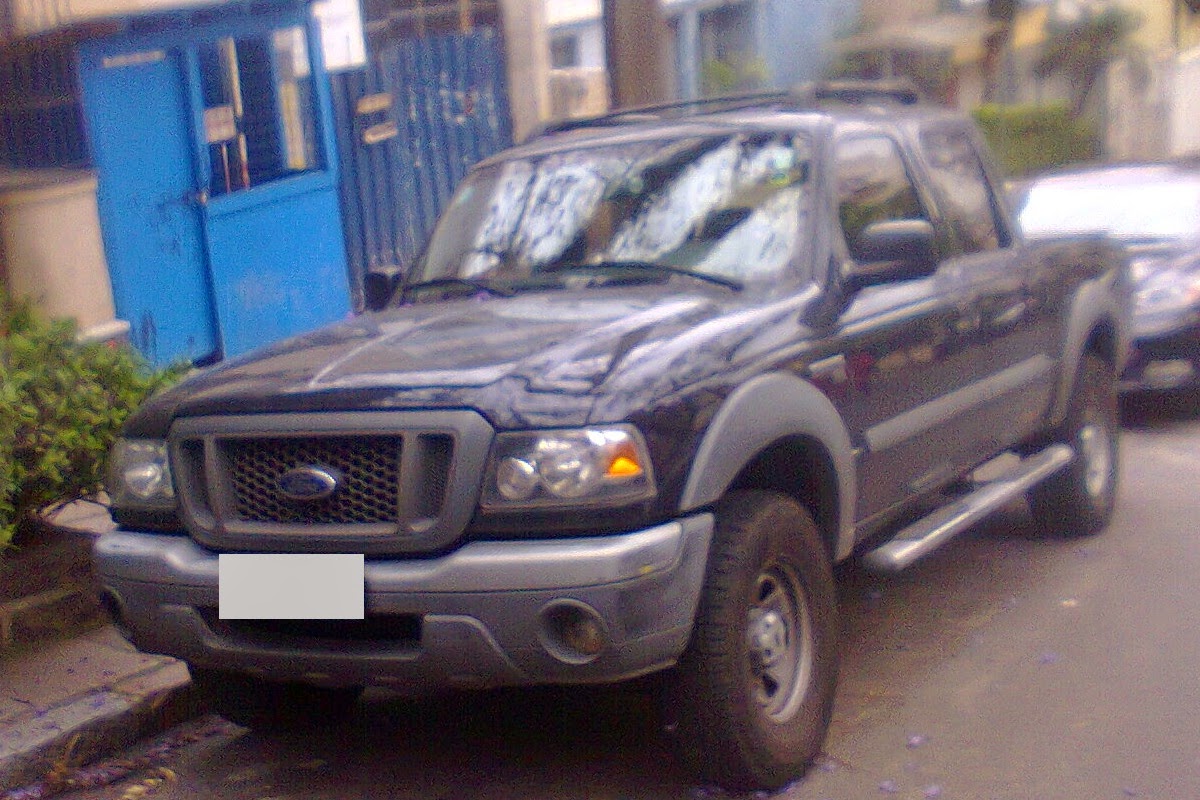
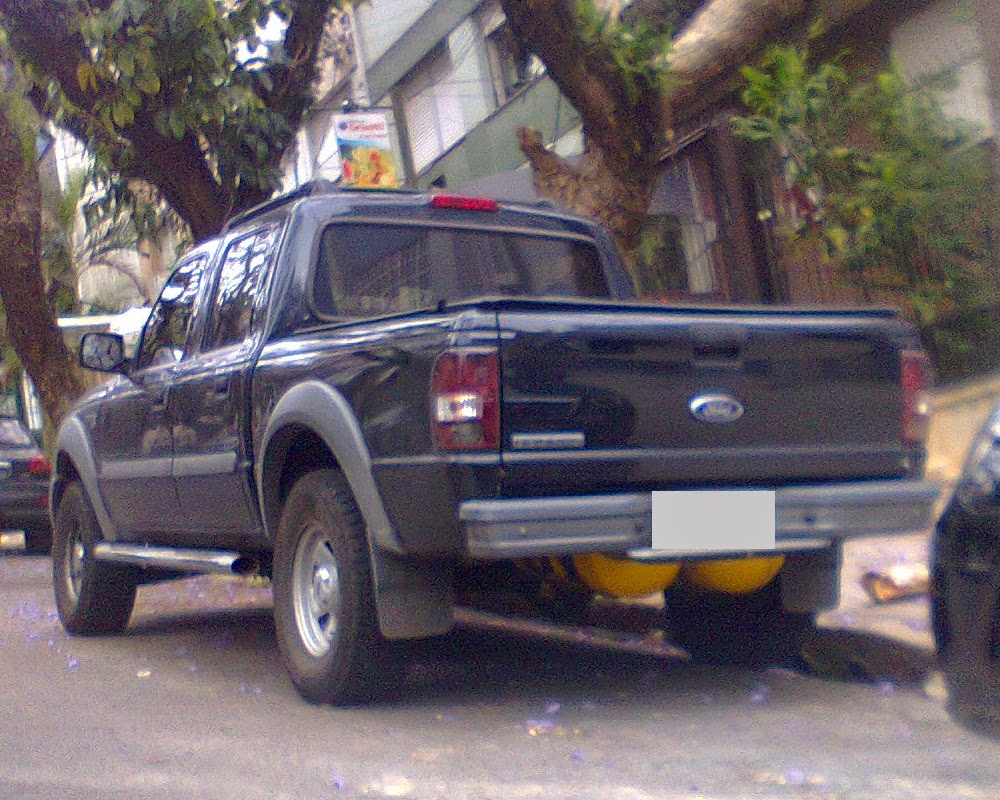
This double-cab Ranger was available only in South American RHD markets (except French Guyana where a rebadged Euro-spec Mazda B-Series was sold as the Ranger) and Mexico, because the Ranger made in Argentina is available there since late '97. Ford even offered a CNG-prep package for the 2.3L 4-cyl engine in Brazil from '06 to '12, and a bi-fuel CNG installation was a factory option for the ones fitted with the 4.0L V6 engine in Venezuela from June '09 to early '12. There is a conversion shop certified by Ford to perform the service in Brazil, but the certified conversions had the CNG tank mounted in the pick-up box, while this one had a non-certified conversion with underbody tanks in the stock spare tyre location. At least the spare tyre takes less useful space in the box than a CNG tank would...

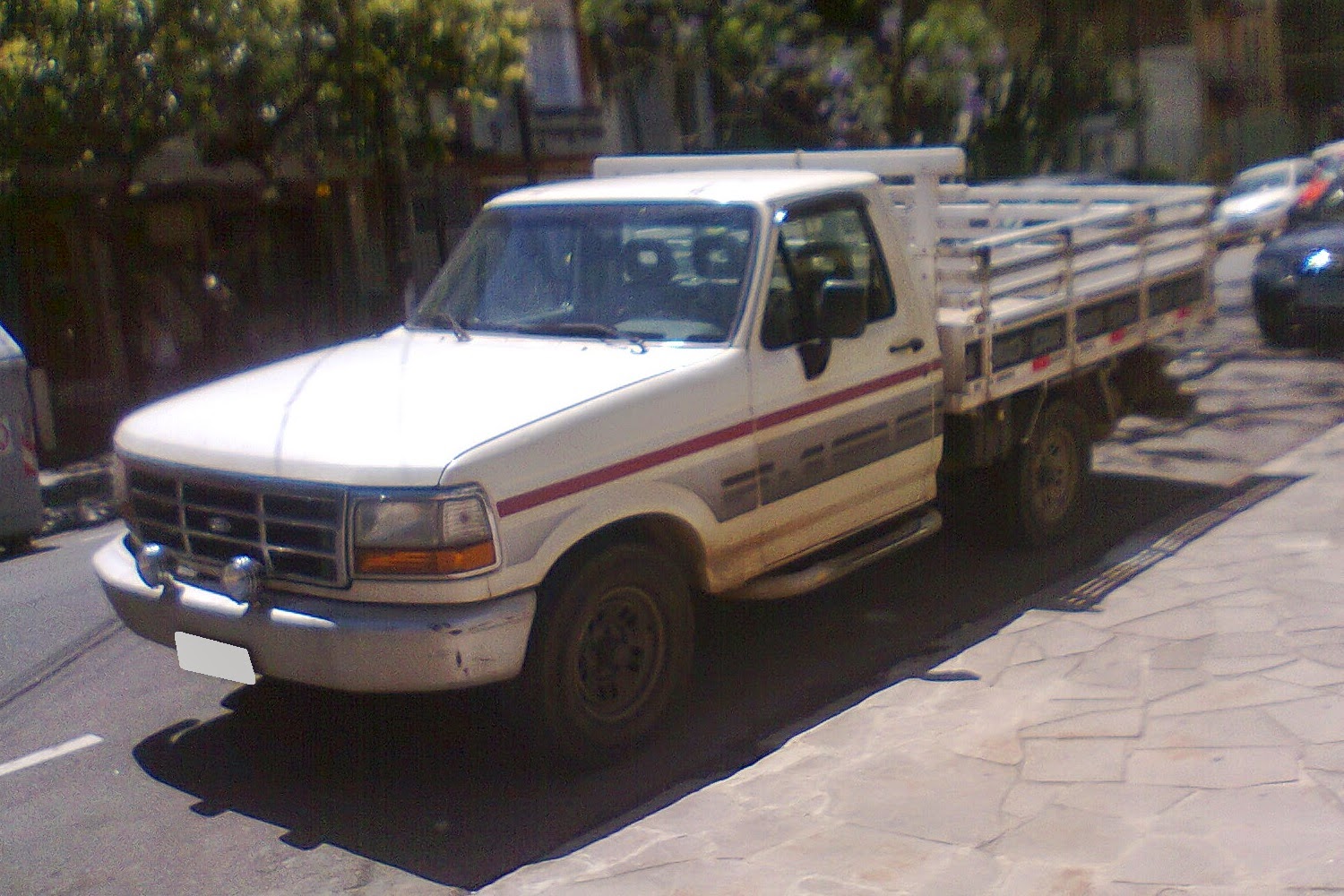
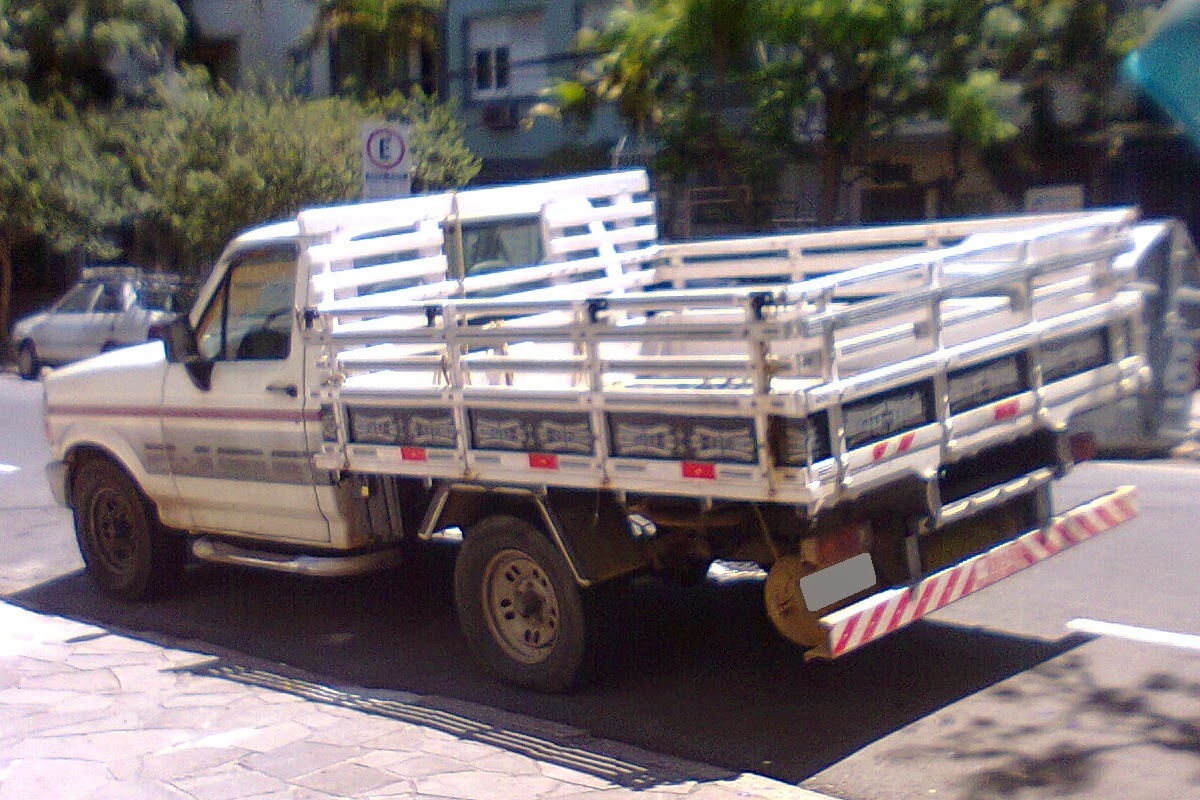
In spite of the side graphics suggesting that it could be an F-100, it's a Brazilian equivalent to the American F-250 and was known locally as F-1000. The last zero on the graphics would appear in the stock sheetmetal pick-up box if it wasn't converted to a wooden one. Engine is the gasoline-powered 300cu.in. inline-6, backed by a 5-speed manual transmission. This one was fitted with a single CNG tank mounted under the box, still visible from the sides or from the rear bumper gaps.

Monday, December 22, 2014

Tricycle for a disabled rider

This tricycle was assembled in Brazil, and is based in a random Chinese imitation of the Honda CG 125. Spotted in Itapema city, Santa Catarina state.

The front suspension is reinforced, like it's done in some motorcycle-based cargo tricycles, and a rear extension was added without any cut in the original chassis, making this conversion somehow easily reversible.

Saturday, December 06, 2014

4-cylinder turbodiesel engines into trucks: suitable to America?

4-cylinder Diesel enginess became a prevalent choice for commercial operators in light-duty trucks all around the world since a relatively long while ago, and the recent advances in turbocharging technologies brought benefits regarding performance and fuel-efficiency.
Nowadays, even a full-size such as a Ford F-450 fitted with a Cummins B3.9 (the good old 4BT) can be as throttle-responsive as one fitted with a gasser V8, no wonder this was the only engine available for a South American equivalent of the F-450 from late '98 to 2011. The cost of a V8 Diesel engine, such as the ones used in North America, would be too high for Brazilian buyers, who couldn't afford the Diesel option as a premium feature.

Historic competition between Mercedes-Benz LN trucks and the F-Series in the Brazilian market is often pointed as the main reason leading Ford to move towards 4-cylinder Diesels in the 70's. Mercedes-Benz not just got a clear advantage due to the parts commonality of its OM-314 engine with the OM-352 used in medium-duty trucks and bus frames but also because these engines were also supplied to other OEMs which fitted it into stationary/industrial appliances and special machinery, making the availability of spare parts easy, and Ford couldn't get a constant supply of any Diesel V8 similar to the International 6.9L IDI used in the United States, so the quickest solution was to fit the agricultural 4.4L engine into the trucks, with a locally-sourced MWM D-226-4 (lately a D-229-4) also available.
MWM would eventually become a Navistar company, and make the V8 engines in Brazil to fit them into International medium-duty trucks and RHD versions of the F-250 and F-350 exported to Australia, but for the versions aimed for sale in Brazil and other regional export markets Ford would keep the 4-cylinder engines, which became supplied exclusively from Cummins in late '98.

What could be pointed as a downgrade exclusive for the Third World, however, is getting attention from Americans who are becoming kinda tired of wasting their money for that one-size-fits-all deal. The increasing complexity of the V8 turbodiesels, which became more targetted to private users, and the sky-high premium cost they're charged for, is leading to some changes in the perception of 4-cylinder engines among the customers, and taken more seriously as a viable option by people who just seek for a no-frills workhorse instead of a fancy "redneck limo" to show off.
Anyway, a 4-cylinder turbodiesel can be a good choice even for a leisure-oriented truck. The one shown in these pictures is an F-250 (not an Excursion) made in Brazil, factory-fitted with a 203hp common-rail Cummins ISB3.9 and an Eaton 5-speed manual transmission, with the 6-door SUV bodywork by Tropical Cabines, a company specialized in crew-cab conversions. Actually, very few people who buy a Diesel truck for non-commercial purposes would really care if there's a small 4-banger or a fancy V8 under the hood as long as it can roll coal.

An increasing interest in 4-cylinder Diesels has led to a rush for old walk-thru vans and Japanese cab-forward trucks such as the Isuzu NPR, aiming at the adaptation of their engines into trucks originally fitted with a gasser V8. An engine swap is very labor-intensive, but this phenomenon shows that many Americans are thinking outside the box and not willing to be pushed towards a bigger engine when they just need (or want) a Diesel.
Most of these conversions are, actually, deemed illegal because of differences in the emission certifications of the engines and the vehicles, even if a Diesel engine originally fitted to a Class 5 truck has lower emissions than a gasser V8 that could be legally fitted into a Class 2 rig such as a Hummer H2...

Anyway, the so-called "working class heroes" are still more receptive to 4-cylinder turbodiesels, usually taking their current availability in the Japanese cab-forward trucks such as the Mitsubishi Fuso Canter as a reference of their suitability to the needs of an American operator. So, since U.S.-spec versions of the Canter are fitted with a high-speed 3.0L 4-cylinder turbodiesel outsourced from FPT (Fiat Powertrain), why can't a similar engine become available for a conventional bonnetted-cab truck with a lower GVWR?
Tuesday, December 02, 2014

Has Ford gone too far with the engine downsizing in the Brazilian versions of the SuperDuty?

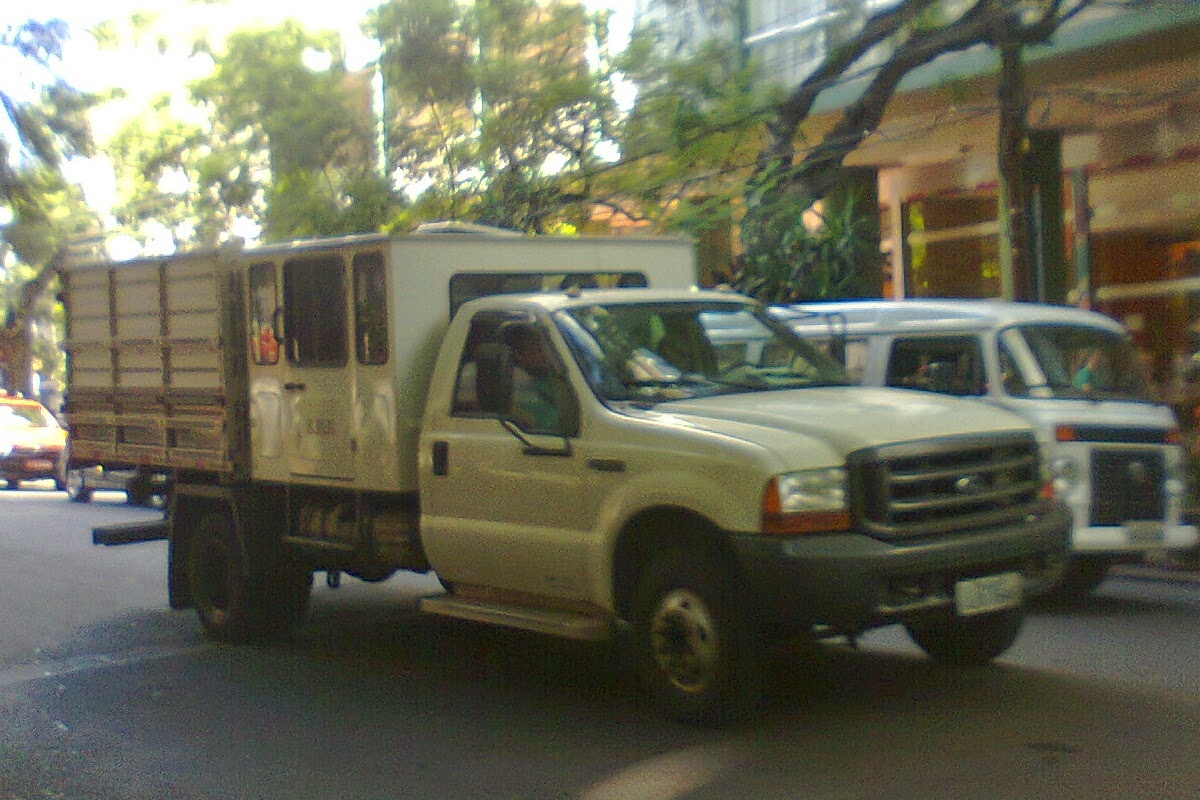
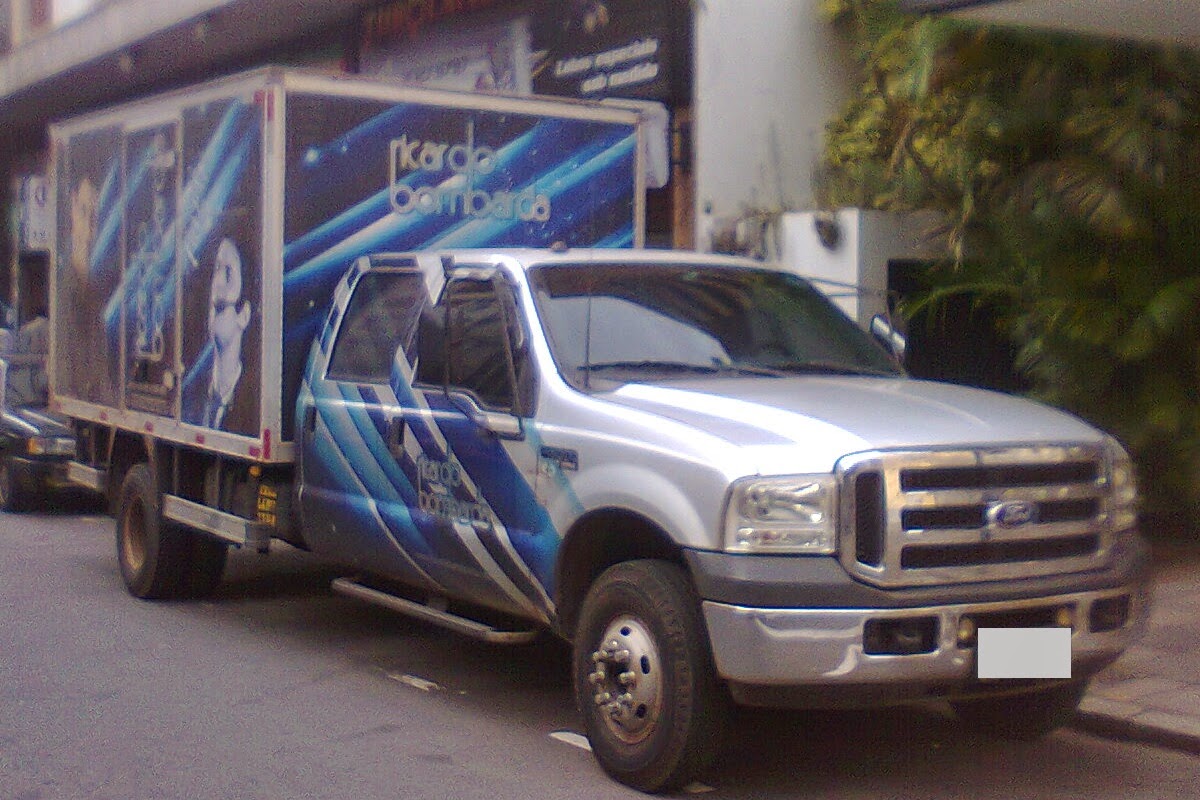
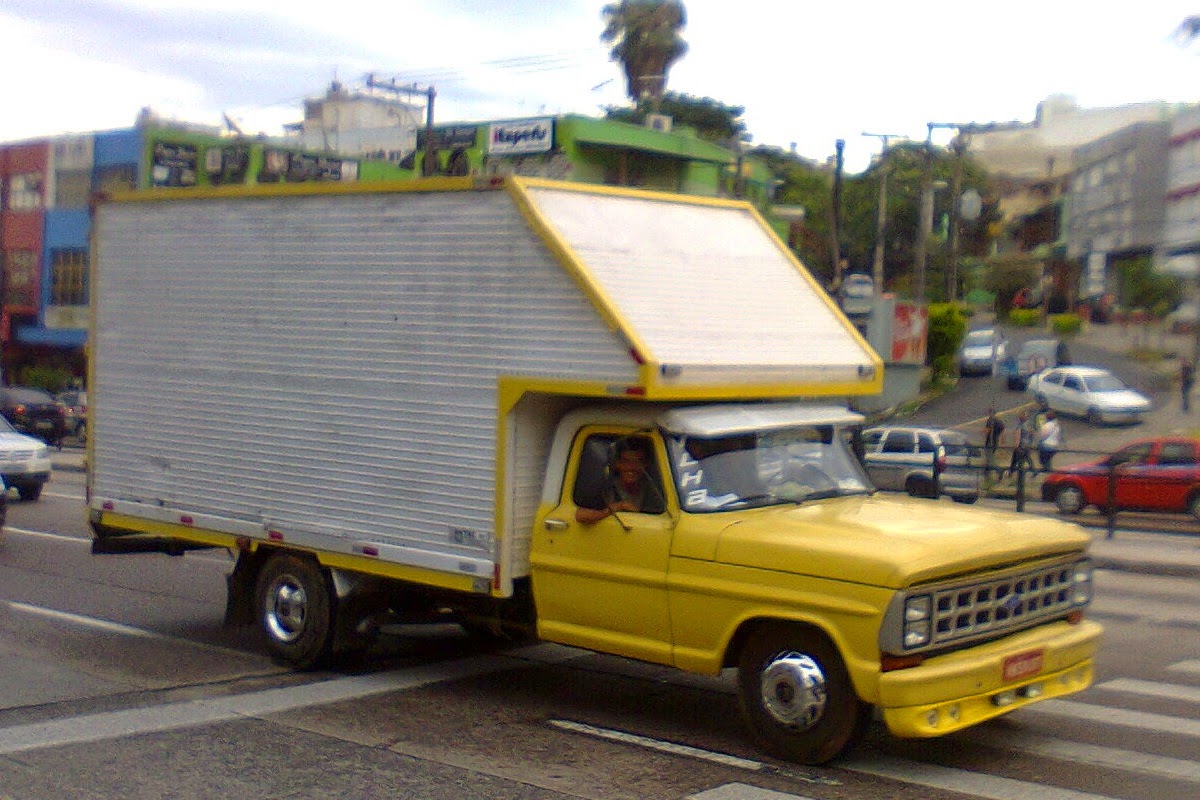
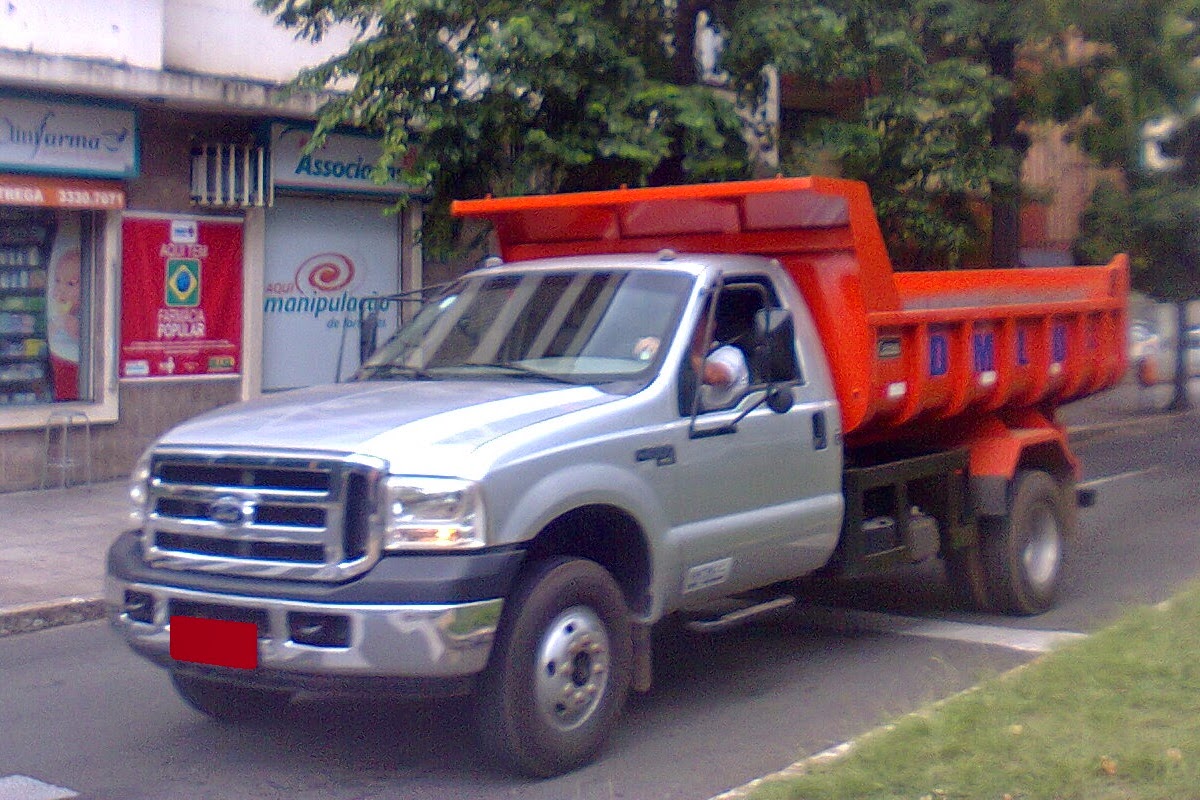
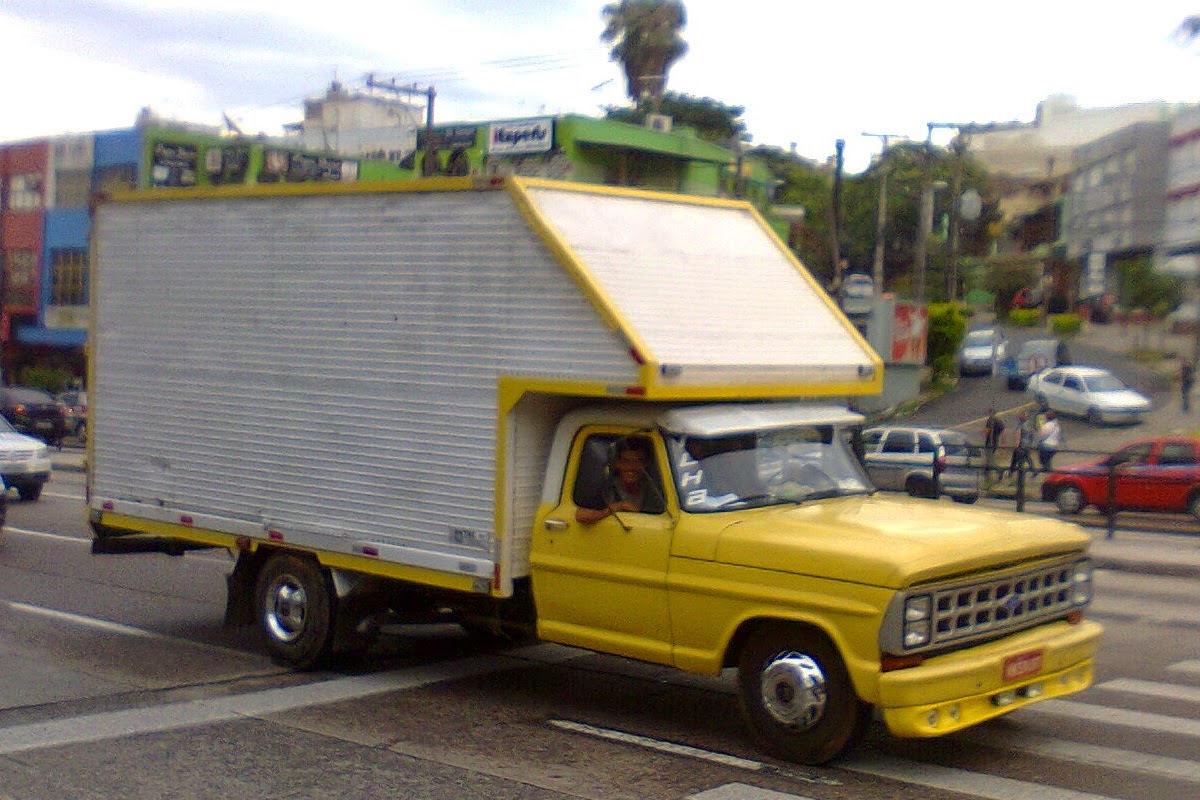
It ain't breaking news that Ford always used Diesel engines smaller than its American counterparts in the Brazilian F-Series, and lately in the SuperDuty, but it was a shock for many people when it was announced that starting in 2014 the F-350 (picture above, notice the saddle-mounted DEF tank with its blue filling cap) and the F-4000 (a local derivative of the F-450, shown in the picture below with crew-cab and a box-van body) would feature a Cummins ISF2.8 at their engine bay. The current Brazilian version of the F-350, available only in 2WD, is exclusive for the local market, while the F-4000 can be had in either 2WD or 4WD and is also exported to Argentina.

Actually, the F-4000 (the yellow one above might be from the 70's due to the white cabin roof, but got updated with a front clip from the 80's) has been fitted exclusively with a 4-cylinder Diesel since the 70's, and the F-1000 (a derivative of the OBS F-250 with the short bed of the F-150) had a high-speed turbodiesel with a displacement below 3-litre available between '97 and '98 for its 2WD variant, but the F-350 and F-4000 were never factory-fitted with any engine under 3.9-litre such as the Cummins B3.9 (also often referred to as "4BT") which became the sole powerplant for both the F-350 and F-4000 from late '98 to late 2011 when they were phased out because somebody at Ford South American Operations (FSAO) deemed it wouldn't be cost-effective to upgrade them with an electronically-governed engine compliant to Euro-5 emission standards, and trying to push the traditional buyers of the Brazilian F-Series/SuperDuty to the Ford Transit semi-bonnetted vans and the Ford Cargo forward-control truck sounded more profitable. But it was proved wrong and, after losing some market share for Volkswagen, Iveco and even to Hyundai and a few Chinese manufacturers, Ford had to reintroduce the F-350 and F-4000 (pictured below is a '05-'11 F-4000, with a mechanically-governed B3.9 detuned to 120hp in order to get compliant to the Euro-3 emission standards).
In spite of the controversies regarding the new engine, the SuperDuty already recovered its sales performance right after its reintroduction. In a contrast to the American market, where conventional bonnetted trucks remain the most popular configuration, nowadays forward-control trucks are prevalent in Brazil, so the cabin is the strongest sales argument for the F-350 and the F-4000 against its closest competition in the public utility and rural segments. The basic concept of the SuperDuty, less specialized than the current generation of Class 3 and Class 4 cab-forward trucks which are more focused on urban delivery, makes it more favorable for a wide range of operations not just in city and highway but also in rougher terrain.
While it could be deemed kinda obvious to just fit the same engine and transmission from the smaller versions of the Ford Cargo into the F-350 and F-4000 (pictured above is a '98-'05 Euro-2 F-4000 with a Cummins B3.9 rated at 141hp and an aftermarket supplementary cabin), a different engine was chosen, still supplied from Cummins, but for everyone's surprise it was the ISF2.8 instead of the ISBe4.5 currently used in some versions of the Ford Cargo ranging from Class 5 to 7, with its lower cost pointed by a former FSAO engineer as the main factor leading to this choice. It may seem shocking at first, but high-speed turbodiesels in the 2.8L displacement range are actually not so unusual in Asian trucks with a gross vehicle weight rating comparable to the F-4000, such as many Chinese imitations of the Isuzu NPR powered by some copy of the Isuzu 4JB1-TC engine.
OK, with an engine that would predictably develop a lower torque, altough it would do so at a higher RPM, the right gearing selection becomes a major concern in order to retain a reasonable performance. Gears with a numerically higher rating are, actually, lower, because they mean how many input rotations would be turned into output rotations, such as from the engine to the transmission and from the transmission to the rear-end. A higher engine speed compensates for a lower final gear ratio, which is applied to multiply the torque, so it's viable to keep the performance in pair with a lower-speed engine at a higher displacement range coupled to a transmission setup with a higher final gear.

At a first look, it might seem that Ford went too far in the downsizing with the SuperDuty for the Brazilian and Argentinian markets, but actually it does seem to match the specific requirements of the regional market, where the purchase cost is a kinda critical issue, and a Diesel engine must be the standard instead of a premium feature. On a sidenote, unlike its American equivalents which are nowadays available only with an automatic transmission, the Brazilian SuperDuty is factory-fitted exclusively with a manual, not just because of its lower cost but also due to its perceived lower impact on fuel-efficiency and easier repairability.

Saturday, November 22, 2014

Should we rather use pure plant oils instead of biodiesel?

Diesel engines are highly controversial among some self-declared "eco-conscious" car buyers, sparking some fierce arguments regarding its long-term "environmental performance", especially when compared to hybrids withspark-ignited engines (usually gasoline-powered, altough a few ones in Korea use LPG/AutoGas instead of gasoline/petrol). Due to some visible black smoke (particulate matter), Diesels are regarded as more pollutant, in spite of their higher thermal efficiency and enhanced adaptability to alternative fuels.

Leaving the Diesel vs. hybrid issue behind, one aspect that brings some controversies regarding Diesels and alternative fuels is the usage of either biodiesel or pure plant oils, often also quoted as straight vegetable oils (or waste vegetable oils when they're previoulsy used for other purposes, usually cooking). Some people actually confused vegetable oils for the chemically-modified biodiesel, but there are differences. Biodiesel is made out of some vegetable oil or animal fats, but it's mixed with some alcohol (usually methanol, but ethanol can also be used) and has the glycerin removed, usually with Sodium Hydroxide (lye) as a catalyst. It's a way more energy-intensive process, but the resulting fuel might not require major modifications into a Diesel-powered vehicle to operate in a safe way, altough newer ones might present some issues with biodiesel blends higher than 20% (the so-called B20) due to its vaporizing into the Diesel Particulate Filter (DPF) at the forced-regeneration process not so easy as with regular Diesel fuel. It also tollerates better the lower combustion temperatures into modern direct-injection engines than straight vegetable oils which are more suitable to operate in the higher temperatures of an old-school indirect-injection Diesel engine.

Indirect injection has been left behind in newer Diesel engines, alleggedly because it's not so effective in order to meet more stringent emissions regulations, which are set having regular petroleum-based Diesel fuel as the reference. However, their combustion process which occurs in two steps since it starts into a prechamber (often also quoted as swirl-chamber) is deemed more accurate, leaving fewer unburnt (or partially-burnt) residues. Even the glycerin naturally-found in the pure plant oil is burnt more easily, reducing issues related to glycerin polymers sticking to the piston rings or contaminating the lube oil. Another interesting aspect regarding the usage of plant oils as a fuel is that indirect-injection engines, in spite of their lower efficiency while operating with regular Diesel fuel, actually have a slightly better performance and a considerable increase in fuel-efficiency. Nowadays the only high-volume market where indirect-injection Diesels are easily available for light-duty vehicles is India, altough they're also available for certain less-regulated markets in Latin America, Africa and Middle East at a lower extent.

A good point in favor of the usage of pure plant oils is the easier availability, since it can be sourced from many feedstocks suitable to the specific conditions from different regions while it doesn't depend on other chemicals which production is more concentrated. We shall also consider that it's easier to upfit the vehicle only ONCE (or to make it already factory-fitted to run on SVO/PPO) instead of chemically transforming the oils into biodiesel EVERYTIME. The other issue is pre-heating the oil, in order to decrease the viscosity and increase the flow, and it can be done in different ways, either thru an electric heating element fitted to the tank (or the lift pump) or thru a heat-exchanger connected to the engine cooling, altough this one would probably require the engine to be started in regular Diesel fuel (or biodiesel) from a secondary tank until there is enough heat build-up and before the engine shut-off. It's more critical for direct-injection engines, while indirect-injection ones are less sensible to that. Keeping the glowplugs (or the grid-heater) in a good shape is often enought to ensure a good old IDI is safe to operate with vegetable oils as their fuel.

The real-world efficiency of some emissions-control devices such as DPF, NOx Trap, EGR and SCR, everytime more complex and expensive is still somehow questionable because, in spite of cutting some tailpipe emissions from the Diesel-powered vehicles, they end up increasing the manufacturing footprint and purchasing cost while decreasing the fuel-savings, thus requiring more petroleum to be drilled and refined, then more Diesel fuel transported to the refuelling stations, and it goes. Meanwhile, some engines that would be cheaper to manufacture without all that stuff and more resillient to operate with a fuel that is often deemed unconventional but is renewable-sourced, carbon-neutral, among other clear advantages in the environmental aspect, are left behind because of politics. Leftards would probably call me a "racist", "bigot" or "islamophobic" for what I'm gonna say, and I really don't care for what that bunch of bastards may think, but it also makes more sense to support local farmers instead of giving money away for the Arab oil sheikhs or the Marxist-oriented dictatorships in Venezuela and some African countries which are also major players in the international petroleum trade...

Sunday, November 09, 2014

Gurgel and its cheaper alternative to a locking differential

Gurgel was a Brazilian automaker, mostly specialized in utility vehicles such as the Tocantins, named after a Northern Brazilian state. It had a monocoque made out of fiberglass-reinforced plastic wrapped around a square-section tube frame, and used the drivetrain of the Volkswagen Beetle. In spite of having rear-wheel drive only, its off-road performance was benefitted from the weight bias towards the rear axle, but under some circumstances it could still require some other resource to improve the traction in rough terrain. An obvious answer would be a locking differential, but it has a higher cost and would require the stock Volkswagen transmission to be modded and turn the replacement parts availability a little more complicated, so a selective rear-wheel brake control, also fitted into some older agricultural tractors, was the solution implemented. It had 2 levers at each side of the parking brake lever, both linked mechanically to a rear brake drum, and when driving thru slippy surface it worked increasing the rolling resistence in order to transfer power from the slipping rear wheel to the other one. It may just look like some sort of redneck-engineering but the same principle is nowadays applied automatically by electronically-controlled traction controls in modern SUVs and CUVs using input from the ABS sensors and actuators, because it's also less labor-intensive than a mechanical locking differential.

Saturday, September 27, 2014

Ford Escort 4-door MK3 in Brazil

It's still not so unusual to find some old cars being daily-driven in 3rd-world countries, such as Brazil. The MK3 Escort, specifically, was introduced there in '83, a 3-year delay in relation to its European counterpart, only in hatchback and cabriolet bodystyles, and was fitted with Renault Ventoux engines instead of Ford's own CVH, with a 4-speed manual transmission for the 1.3L and a 5-speed for the 1.6L, and both engines were available either as gasoline-powered or in a dedicated-ethanol version. The 4-door hatchback is the most rare bodystyle for the MK3 in Brazil, and was more targetted to export markets, not just regional markets in Latin America. Surprisingly, the Brazilian MK3 Escort was also available in Norway and Denmark, but not in the French Ultramarine Department (French Guyana) which shares a border with Brazil.

Saturday, September 06, 2014

Volkswagen Gol Fourgonette

Yesterday while I was walking with my dog in my hometown, I've spotted this Volkswagen Gol Fourgonette from the '90s, still used as a delivery van in a supermarket. The floorpan layout of the Volkswagen Gol was basically the same as the Volkswagen Passat B1, with the Gol platform designated as BX. This very same layout lasted until 2013, mostly with cosmetic changes.
This fourgonette version was available from early '80s until '96, always with a 1.6L 4-cyl engine (initially the air-cooled boxer, and lately the Ford-sourced CHT which was itself based in the Renault Ventoux engine) and a 4-speed manual transmission. Its 420kg payload, and the 1200-litre maximum volume at the cargo compartment, sure doesn't sound so impressive, but it's OK for some light hauling while still ensure some protection from the weather elements. Had also been popular as a service vehicle for telephone companies and other public utilities, due to its relatively low cost and a relatively safe storage for the tools.