Monday, February 03, 2014

Cab-forward light-duty trucks: why not to give them a chance in the American market?

Around the world, the cab-forward (a.k.a. cabover or forward-control) layout have been far more popular not just in the medium-duty trucks market, they also became prevalent in light-duty operations due to the optimization of the platform lenght compared to a bonnet-nose truck, thus improving maneuverability in urban areas. A good comparison basis can be the Kia K2500 cabover and the Chevy S10.

EPA is usually the one to blame for the absence of some options to increase the overal efficiency of the American fleet, but the cab-forward trucks suffer due to the perception of these vehicles as "unsafe". Sure, there is a lack of impact crumple zones compared to a bonnetted truck, but if they were really so unsafe the NHTSA wouldn't ever allow this layout in the big rigs...
International 9800i: currently more popular in overseas markets actually

Hyundai HR: once it was available in Mexico rebadged as a Dodge
Some customers may think a cab-forward looks weaker, but it's not accurate. The cabin layout by itself won't prejudice the capacities, no wonder the Hyundai HR (a.k.a. Hyundai H-100, Hyundai Porter, or Dodge H-100) became one of the most popular options for car towing/wrecking in Brazil, since it can safely haul a midsize car.

Often, access to the engine for PMS purposes is pointed unfavorably to cab-forwards since they would either require the cab to tilt forward or an internal hatch under the front seats to reach the engine. But nowadays it's not really so unfavorable, since due to the engine getting mounted a little backwards even in conventional-cab trucks, it often requires the cab to be entirely removed on them to acess the engine or some specific components...

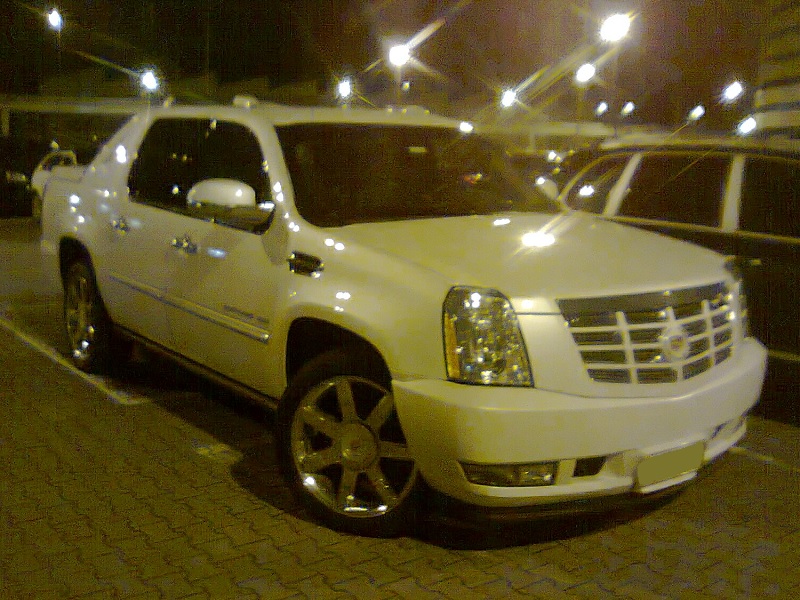
Another aspect to be considered is the availability of comfort features: nothing prevents a cab-forward to be fully-loaded, including options such as 4WD, automatic transmission and crew-cab, altough their main markets usually go for no-frills versions to be used essentially as a tool, while in America a whole cultural phenomenon developed around the usage of pickup-trucks as personal commuters, leading even to the introduction of luxury-oriented trucks such as the Cadillac Escalade EXT.

Usually, less attention is given to make the design of a cab-forward truck to look either "sporty" or macho rather than focusing only in the functional aspect, which seems to make this layout look less attractive for the average Joe who uses a truck just as an ego-extender, but nothing prevents either a redneck to haul all his guns, fishing rods and camping gear with one, or a ricer to turn it into a F-Truck racing replica.
After all, it seems that a cab-forward light-duty truck is a reasonable option even in the American market, it would only need a chance to find its chunk on the local market share.

Saturday, February 01, 2014

Brazilian Fiat Fiorino MK3

Finally the 2nd-generation Fiat Fiorino got a replacement in Brazil and other regional markets such as Uruguay in late 2013. Altough its platfrm is the same one used in the Euro-spec Fiorino, also shared with the current Fiat Panda (including a Brazilian version introduced in 2010 but rebadged as Uno), the design still gets the same basic tall-box layout of the previous generation. There are also some differences in the powertrain options: it comes only with the 1.4L Fire Evo 8-valve engine in a flexfuel (gasoline/ethanol) version, bolted to a 5-speed manual transmission. Since it's mostly targetted to be a no-frills workhorse, a Dualogic automated-manual transmission is not available due to its purchase cost, in spite of the longer lasting of the clutch pack being a good advantage for a commercial vehicle. Diesel engines are also not offered for this variant of the Fiorino because its biggest markets (and basically the only ones where it's available), Brazil and Uruguay, have bureaucratic restrictions preventing the registration of vehicles with Diesel engines and a payload under one metric ton, unless they feature either hi-lo 4WD or at least seating for 9 passengers plus driver.

Thursday, January 09, 2014

One of the most controversial among the entry-level motorcycles in Brazil, with a hate-it-or-love it design and the lack of many comfort and safety features such as electric start and front disc brakes not even as optional items, the Honda Pop 100 was introduced in late 2006, and is often pointed out as just a simplified version of the Super Cub series because of its backbone-tube frame layout and the engine slanted to the front.
Unlike the Super Cub, however, it doesn't have the underseat storage space, the scooter-like fairings and the automatic clutch, turning it into a less attractive option for unskilled riders who look at a low-displacement motorcycle just for occasional urban commutting. Its carburettor-fed 97,1cc single-cylinder air-cooled engine is not a speed-demon with its 6hp/7N.m, altough it still goes above the minimum 60 km/h minimum speed limit for motorcycles to be legally allowed for highway traffic in Brazil, and the average fuel consumption goes around 40 km/l (roughly 100 U.S. MPG).
Its dash has only the speedometer with an odometer and the check-lights for the turn signals, high-beam and neutral gear. There's not even a fuel level indicator, which became mainstream even among the Chinese entry-level motorcycles. Honda's strategy with the Pop 100 has been to offer a lower-cost option to counter-attack Chinese manufacturers who usually offer rip-offs of Honda designs such as the Super Cub and the CG 125, which in spite of offering many features not available in the original ones, including front-wheel disc brake with mechanical ABS in some models, still don't have as many dealers nationwide as Honda does.

Similar motorcycles from Chinese manufacturers cost no more than US$900 in Uruguay, while in Brazil due to higher taxes they would cost the equivalent to some US$1200, but Honda charges close to US$2000, which doesn't make it so popular, being quite overpriced due to its poor equipment level.

In spite of its unattractive features, there is still some market for the Pop 100, mostly due to the brand-loyalty developed around Honda in Brazil until mid '90s, when its local monopoly for 4-stroke motorcycles below 250cc began to decline.

Wednesday, January 01, 2014

FedEx minivan in Brazil

Fiat Doblò Cargo (1st generation, facelifted) from the Brazilian branch of FedEx, spotted in Porto Alegre a few days ago. This little beauty is fitted with a 1.4L SOHC 8-valve flexfuel engine (a 1.8L 16-valve is available as option) and a 5-speed manual transmission, rated to a 620kg (1367lbs) payload. This model is still made in Brazil, while the 2nd generation is made only in Turkey and more successful in export markets.

Wednesday, December 25, 2013

Volkswagen military truck in Brazil

Volkswagen Truck & Bus, currently a division of the MAN Group, had its roots in South America, mostly Brazil, when Volkswagenwerk AG acquired the local assets of Chrysler in late 70s, and altough the passenger cars were quickly phased out, the Dodge truck platform still served as a base for Volkswagen branded trucks, all fitted with a forward-control cabin co-developed with MAN for the usage in its G90 truck series, and were also used in some U.S.-spec Peterbilt and Kenworth Mid-Ranger trucks which had their production outsourced to VW Truck & Bus in its earliest production site. In the early 90s due to an agreement with Ford, the trucks started to share the platform with the Ford Cargo and to be built at a former Ford factory at the Ipiranga neighborhood in São Paulo, until 1997 when the partnership ended, and Volkswagen developed its first all-new truck platform, known as "modular" and still in use. The truck shown in these pictures is a Volkswagen 8-140 (about 8-ton GVWR and roundly 140hp) set to be used as a K-9 unit by Santa Catarina State Military Police, powered by an MWM 4.10TCA engine with a 4.3L displacement, developing a power of 138hp at 2600RPM and a 430Nm torque from 1600RPM thru 2000RPM, backed by a 5-speed manual transmission. It was also available in Europe thru '94 to 2000, with the same engine, but it had a lower differential ratio borrowed from the naturally-aspirated (8-100) version available in the Brazilian market. MWM is currently merged with International Engines, and also outsources the local assembly of the MAN engines used in the current lineup of Volkswagen and MAN trucks, and also the 2.8L Duramax engine used by Chevrolet for its midsize pickup and SUV range.

Thursday, December 19, 2013

More mini hearses in Brazil

The low availability of new station-wagons, which were the stereotypical hearse for decades, is one of the factors leading to an increasement on the presence of those mini hearses in Brazil, but the ease to upfit a compact coupé-utility for the job is also to be taken into account. The vehicle featured is an early Chevrolet Montana, based in the platform of the Opel Corsa C and the Opel Combo, and was also available in South Africa as Opel Corsa Utility but didn't reach the European market. The open deck was extended and enclosed with a single-piece fiberglass canopy, totally integrated with the vehicle's original design, altough the taillights were replaced for the ones used in the Fiat Siena Fire, which was available in limited European markets as the Fiat Albea. The front grille seems to have been taken from the 1st-gen Kia Sorento, and there is a hood ornament resembling Jaguar's "leaping cat".

Even the Fiat Strada, available in European markets, is also occasionally upfitted with fiberglass hearse conversion kits.

Monday, December 02, 2013

Old Brazilian half-tonners repowered with Diesel engines

This Brazilian '64 Ford F-100 had the Y-Block 292cu.in. V8 replaced by a Brazilian-made MWM D-229-4 naturally-aspirated Diesel engine, a 4-cylinder close in size to the Cummins B-series. The 3-speed collumn-shifted manual transmission was also replaced by a floor-shifted 4-speed.

Dodge D-100, which had been also made in Brazil from '69 to '76, available only with the 318cu.in. V8 and a 3 on-the-tree manual transmission. One of the most popular engine for repowerings for this model in the Brazilian market was the Perkins 4-236, and a few ones had been even factory-fitted with this engine and a floor-shifted 4-speed manual transmission.

Both trucks were spotted at Largo da Epatur, in Porto Alegre, Brazil.

Wednesday, November 13, 2013

Hyundai H100 with an evaporative cooler

I've spotted this Hyundai H100/Porter/Bakkie fitted with a roof-mounted evaporative cooler (or alternatively "swamp-cooler") a few months ago in my hometown, Porto Alegre, located in Brazil's most southern state, Rio Grande do Sul. Altough air-conditioner is an optional feature for the H100 in many markets, it was not available in Brazil, but the thermal comfort issue was addressed with the evaporative cooler, a very popular aftermarket item for commercial vehicles in Brazil. It works more effectively in dry climates, since its cooling principle is based on increasing the air relative humidity, but it also has a good effect decreasing static electricity loads and the amount of suspended dust aboard.

Saturday, October 19, 2013

Flexfuel motorcycles: a recent Brazilian trend

It's not fresh news that Brazil had one of the most sucessful experiences with ethanol as a substitutive for gasoline since the 70s when mandatory blends started to be enforced nationwide, and since '79 there were dedicated-ethanol cars, with flexfuel ones starting to come in 2003, but it only started to become more popular among motorcycle users in recent years, since they were already seen as an alternative to get lower fuel bills. Air-cooling, altough turning the thermal management quite harder while using alcohol-based fuels, is still prevalent in entry-level bikes such as the Honda CG 150, the local market leader.
Unlike regular flexfuel and the older ethanol-dedicated cars, which used to include an auxiliary tank for gasoline to ensure cold-start ability, a feature that is getting outdated due to pre-heated fuel injector units increasing popularity, it was never available in the flexfuel motorcycles because of the space availability which is more critical. However, since pre-heating of the injector tips increases significantly the electrical loads and the cost of a brand-new motorcycle, when Honda started to offer flexfuel versions of the Honda CG in 2009, world's first commercially-available flexfuel motorycles, they were initially labelled "Mix" instead of Flex, since some gasoline blend was recommended to ensure an easy start-up in colder days...
The introduction of electronic fuel injection was deemed extremely important to make it viable, due to the real-time adaptability to the fuel blends, and alongside the introduction of a catalytic converter it decreased significantly the emission levels, which had been a matter of arguments since its enforcement had been milder for motorcycles than for automobiles, despite the proportionally-greater increasement in motorcycle sales.

The same feature quickly became also available for the Honda NXR 150 Bros dual-purpose motorcycle, giving it another strong sales argument.

Flexfuel ability was also introduced to other models, such as the Honda CB 300R and the Honda XRE 300. Altough not being high-end motorcycles, they're actually a step closer to show the viability in other segments which could eventually justify the increasing cost of improvements in this feature, such as direct injection which would offer advantages regarding thermal management. Their all-around performance is also more suitable to eventual road traffic than the CG 150 and NXR 150.

There is still no water-cooled flexfuel motorcycle commercially available, altough that would improve the thermal management significantly. Another critical aspect with the current generation of flexfuel motorcycles is the usage of pressed-steel fuel tanks, more sensible to the ethanol corrosive effect than plastic-moulded tanks currently widespread in cars. But, as a trend which started just recently, it's already proven as an economically-viable alternative to decrease the usage of petroleum-based fuels...

Tuesday, September 17, 2013

A few objections to the current emission standards for Diesel engines

For a long time, Diesel engines have been considered a good option due to their enhanced efficiency over spark-ignition (or older hot-bulb ignition) engines. Initially not so suitable for vehicles due to a poor power-to-weight ratio, further developments reduced this disadvantage in heavy-duty trucks, marine and agricultural machinery.

Since the 70's Diesel engines have been playing an important role in the automotive market, even leading some markets, mostly due to a demand for fuel savings after the oil crisys, but lately its adaptability to alternative fuels without performance changes or compromises to the efficiency while using heavier fuels such as straight vegetable oil in the days when biodiesel was still not taken so seriously.
In the medium-duty truck segment, the availability of spark-ignited engines became hard to justify, altough it still had some supporters in the American market for cultural reasons and easier cold-starts, and in Brazil due to the successful ethanol program. However, in the heavy-duty segments, Diesel prevailed, and it will hardly lose its leadership in a medium to long term...

Some old irons from that era, such as the early Volkswagen Passat (known in the U.S.A. as Dasher) and the Peugeot 504, are often deemed among the best options for experiences with SVO. The higher operation temperatures in the old-school indirect injection layout and the lower combustion speeds lead to a more complete combustion, reducing issues related to glycerin glazing inside the engines...
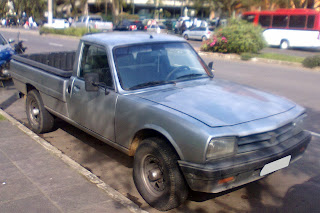
However, the same higher temperatures quoted as beneficial to an accurate combustion process are usually a reason to blame for the higher nitrogen oxides (NOx) emissions in Diesel engines, then it's quite predictable to see the direct injection as the predominant setup into newer vehicles such as the Peugeot 3008. There is also another opposition raising against the Diesel engines, with the increased popularity of gasoline-electric hybrids such as the Toyota Prius, raised on marketing to be perceived as a "cleaner" alternative in spite of the higher manufacturing footprint mostly due to the electric auxiliary driveline.

In spite of the combustion process in Diesels providing a higher thermal efficiency and adaptability to alternative fuels, including ethanol for direct injection engines, the current emission standards are often disconsidering these advantages, and actually decreasing it with the enforcement of some emission control devices such as the EGR (or the SCR as either an alternative or an add-on measure to reduce NOx emissions) and the DPF. Considering the increased fuel consumption from the usage of EGR and DPF, due to both the lowered combustion efficiency with the EGR recirculating exhaust gases inside the combustion chambers and the requirement of a small amount of Diesel fuel to the DPF "regeneration" (burning-off the trapped soot) process, the energy expense with more petroleum being refined and having its byproducts hauled to the refuelling stations, the tailpipe emisions reduction doesn't seem to match...

That tank between the fuel tank and the air filter is for the DEF
With the SCR/DEF/BlueTec system, which uses a solution composed of 67.5% distilled water with 32.5% industrial-grade urea, more prevalent in medium-duty and heavy-duty trucks and buses, another point to consider is related to the higher complexity to the logistic process due to another fluid required to the proper operation of the vehicle, which absence can lead to failure. No wonder military fleets have been granted an exemption from this kind of stuff.

Alternatives such as water injection at the intake, usually blended with some alcohol (either methanol or ethanol) up to 50% to avoid freezing, are easy to implement and effective in matter of NOx reduction due to the lower exhaust gas temperatures, and instead of just increasing the purchase cost of a new Diesel-powered vehicle or machinery it would be actually providing a pay-off due to the lower fuel consumption. Even pure ethanol can be sprayed at the intake for the same effect, reducing the volume required. Also, due to the enhancement of the combustion process, it decreases the amount of particulate matter and the fuel consumption, making more sense than wasting both the extra fuel required in an engine fitted with EGR or the urea used in the SCR, and keeping the intake manifold cleaner from oily residues brought from the crankcase by its closed vents. The energy input required for industrial processes to meet an increased demand for Diesel fuel and the urea fluid would become lower, and also due to the combustion enhancement some alternative fuels such as pure vegetable oil can be used in a safer way. The DPF is often also deemed to actually have a prejudicial effect regarding respiratory diseases, since the particulate matter oxidized into smaller particles can go deeper into the lungs. Ironically, water+methanol injection was already experienced by Rudolf Diesel himself, altough not being so widespread among OEMs.

Beyond its current relevance for the private vehicle market, Diesel engines also have been prevalent in emergency vehicles such as ambulances, and stationary appliances such as backup power gensets. While the efforts to reduce emissions can be considered relevant, the approaches for that matter have been quite unaccurate due to their side-effects, which not just decrease the efficiency but also raise the purchase cost due to the highly-sophisticated aftertreatment setups required for a compliant operation.