Wednesday, April 09, 2014
The folks at EcoModder.com gonna like this Brink's van...
This cash-transit van from the Brazilian branch of Brink's has some features that, in spite of being kinda mainstream in South America such as the swamp-coolers on the roof, the 4-cylinder turbodiesel and the 5-speed manual transmission, are not so usual in their North American equivalents which usually rely either on a straight-6 or a V8 turbodiesel backed by an automatic transmission. The swamp-coolers instead of an air-conditioneer decrease the load over both the engine and electrical system, while the manual transmission is not just lighter but also has less internal frictions, thus not overheating so easily and increasing the overall efficiency. The lesser amount of heat to be exhausted also allows it to have smaller openings in the engine bay, decreasing the aerodynamic drag. The front grille is as small as the license plate, and is fitted between the 2 bumper-mounted auxiliary headlamps.
Monday, February 03, 2014
Cab-forward light-duty trucks: why not to give them a chance in the American market?
Around the world, the cab-forward (a.k.a. cabover or forward-control) layout have been far more popular not just in the medium-duty trucks market, they also became prevalent in light-duty operations due to the optimization of the platform lenght compared to a bonnet-nose truck, thus improving maneuverability in urban areas. A good comparison basis can be the Kia K2500 cabover and the Chevy S10.
EPA is usually the one to blame for the absence of some options to increase the overal efficiency of the American fleet, but the cab-forward trucks suffer due to the perception of these vehicles as "unsafe". Sure, there is a lack of impact crumple zones compared to a bonnetted truck, but if they were really so unsafe the NHTSA wouldn't ever allow this layout in the big rigs...
Some customers may think a cab-forward looks weaker, but it's not accurate. The cabin layout by itself won't prejudice the capacities, no wonder the Hyundai HR (a.k.a. Hyundai H-100, Hyundai Porter, or Dodge H-100) became one of the most popular options for car towing/wrecking in Brazil, since it can safely haul a midsize car.
Often, access to the engine for PMS purposes is pointed unfavorably to cab-forwards since they would either require the cab to tilt forward or an internal hatch under the front seats to reach the engine. But nowadays it's not really so unfavorable, since due to the engine getting mounted a little backwards even in conventional-cab trucks, it often requires the cab to be entirely removed on them to acess the engine or some specific components...
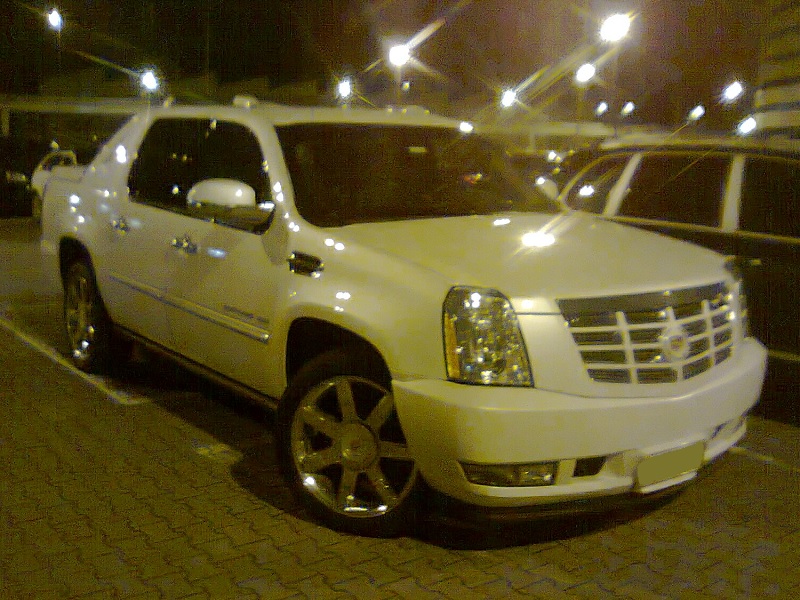
Another aspect to be considered is the availability of comfort features: nothing prevents a cab-forward to be fully-loaded, including options such as 4WD, automatic transmission and crew-cab, altough their main markets usually go for no-frills versions to be used essentially as a tool, while in America a whole cultural phenomenon developed around the usage of pickup-trucks as personal commuters, leading even to the introduction of luxury-oriented trucks such as the Cadillac Escalade EXT.
Usually, less attention is given to make the design of a cab-forward truck to look either "sporty" or macho rather than focusing only in the functional aspect, which seems to make this layout look less attractive for the average Joe who uses a truck just as an ego-extender, but nothing prevents either a redneck to haul all his guns, fishing rods and camping gear with one, or a ricer to turn it into a F-Truck racing replica.
After all, it seems that a cab-forward light-duty truck is a reasonable option even in the American market, it would only need a chance to find its chunk on the local market share.
![]() |
| International 9800i: currently more popular in overseas markets actually |
![]() |
| Hyundai HR: once it was available in Mexico rebadged as a Dodge |
Often, access to the engine for PMS purposes is pointed unfavorably to cab-forwards since they would either require the cab to tilt forward or an internal hatch under the front seats to reach the engine. But nowadays it's not really so unfavorable, since due to the engine getting mounted a little backwards even in conventional-cab trucks, it often requires the cab to be entirely removed on them to acess the engine or some specific components...
Another aspect to be considered is the availability of comfort features: nothing prevents a cab-forward to be fully-loaded, including options such as 4WD, automatic transmission and crew-cab, altough their main markets usually go for no-frills versions to be used essentially as a tool, while in America a whole cultural phenomenon developed around the usage of pickup-trucks as personal commuters, leading even to the introduction of luxury-oriented trucks such as the Cadillac Escalade EXT.
Usually, less attention is given to make the design of a cab-forward truck to look either "sporty" or macho rather than focusing only in the functional aspect, which seems to make this layout look less attractive for the average Joe who uses a truck just as an ego-extender, but nothing prevents either a redneck to haul all his guns, fishing rods and camping gear with one, or a ricer to turn it into a F-Truck racing replica.
After all, it seems that a cab-forward light-duty truck is a reasonable option even in the American market, it would only need a chance to find its chunk on the local market share.
Saturday, February 01, 2014
Brazilian Fiat Fiorino MK3
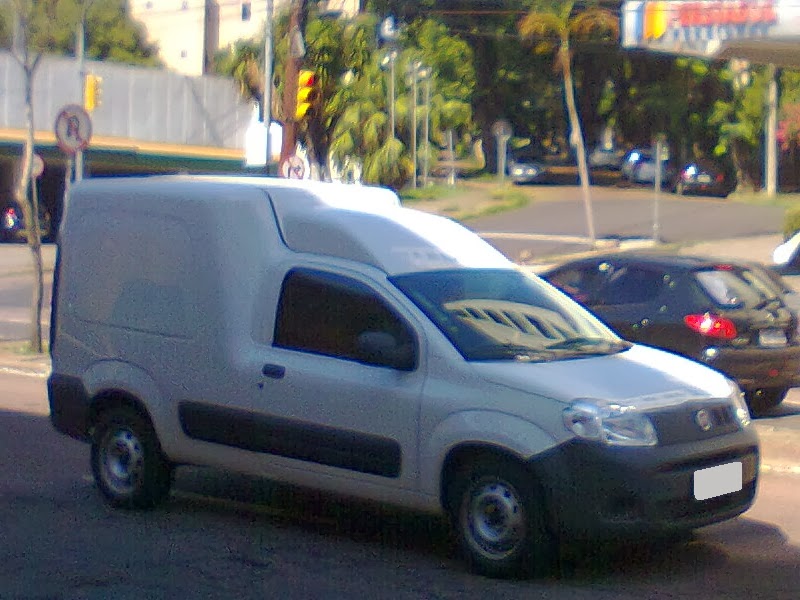
Finally the 2nd-generation Fiat Fiorino got a replacement in Brazil and other regional markets such as Uruguay in late 2013. Altough its platfrm is the same one used in the Euro-spec Fiorino, also shared with the current Fiat Panda (including a Brazilian version introduced in 2010 but rebadged as Uno), the design still gets the same basic tall-box layout of the previous generation. There are also some differences in the powertrain options: it comes only with the 1.4L Fire Evo 8-valve engine in a flexfuel (gasoline/ethanol) version, bolted to a 5-speed manual transmission. Since it's mostly targetted to be a no-frills workhorse, a Dualogic automated-manual transmission is not available due to its purchase cost, in spite of the longer lasting of the clutch pack being a good advantage for a commercial vehicle. Diesel engines are also not offered for this variant of the Fiorino because its biggest markets (and basically the only ones where it's available), Brazil and Uruguay, have bureaucratic restrictions preventing the registration of vehicles with Diesel engines and a payload under one metric ton, unless they feature either hi-lo 4WD or at least seating for 9 passengers plus driver.
Thursday, January 09, 2014
Unlike the Super Cub, however, it doesn't have the underseat storage space, the scooter-like fairings and the automatic clutch, turning it into a less attractive option for unskilled riders who look at a low-displacement motorcycle just for occasional urban commutting. Its carburettor-fed 97,1cc single-cylinder air-cooled engine is not a speed-demon with its 6hp/7N.m, altough it still goes above the minimum 60 km/h minimum speed limit for motorcycles to be legally allowed for highway traffic in Brazil, and the average fuel consumption goes around 40 km/l (roughly 100 U.S. MPG).
Its dash has only the speedometer with an odometer and the check-lights for the turn signals, high-beam and neutral gear. There's not even a fuel level indicator, which became mainstream even among the Chinese entry-level motorcycles. Honda's strategy with the Pop 100 has been to offer a lower-cost option to counter-attack Chinese manufacturers who usually offer rip-offs of Honda designs such as the Super Cub and the CG 125, which in spite of offering many features not available in the original ones, including front-wheel disc brake with mechanical ABS in some models, still don't have as many dealers nationwide as Honda does.
Similar motorcycles from Chinese manufacturers cost no more than US$900 in Uruguay, while in Brazil due to higher taxes they would cost the equivalent to some US$1200, but Honda charges close to US$2000, which doesn't make it so popular, being quite overpriced due to its poor equipment level.
In spite of its unattractive features, there is still some market for the Pop 100, mostly due to the brand-loyalty developed around Honda in Brazil until mid '90s, when its local monopoly for 4-stroke motorcycles below 250cc began to decline.
Wednesday, January 01, 2014
FedEx minivan in Brazil
Fiat Doblò Cargo (1st generation, facelifted) from the Brazilian branch of FedEx, spotted in Porto Alegre a few days ago. This little beauty is fitted with a 1.4L SOHC 8-valve flexfuel engine (a 1.8L 16-valve is available as option) and a 5-speed manual transmission, rated to a 620kg (1367lbs) payload. This model is still made in Brazil, while the 2nd generation is made only in Turkey and more successful in export markets.
Wednesday, December 25, 2013
Volkswagen military truck in Brazil
Volkswagen Truck & Bus, currently a division of the MAN Group, had its roots in South America, mostly Brazil, when Volkswagenwerk AG acquired the local assets of Chrysler in late 70s, and altough the passenger cars were quickly phased out, the Dodge truck platform still served as a base for Volkswagen branded trucks, all fitted with a forward-control cabin co-developed with MAN for the usage in its G90 truck series, and were also used in some U.S.-spec Peterbilt and Kenworth Mid-Ranger trucks which had their production outsourced to VW Truck & Bus in its earliest production site. In the early 90s due to an agreement with Ford, the trucks started to share the platform with the Ford Cargo and to be built at a former Ford factory at the Ipiranga neighborhood in São Paulo, until 1997 when the partnership ended, and Volkswagen developed its first all-new truck platform, known as "modular" and still in use. The truck shown in these pictures is a Volkswagen 8-140 (about 8-ton GVWR and roundly 140hp) set to be used as a K-9 unit by Santa Catarina State Military Police, powered by an MWM 4.10TCA engine with a 4.3L displacement, developing a power of 138hp at 2600RPM and a 430Nm torque from 1600RPM thru 2000RPM, backed by a 5-speed manual transmission. It was also available in Europe thru '94 to 2000, with the same engine, but it had a lower differential ratio borrowed from the naturally-aspirated (8-100) version available in the Brazilian market. MWM is currently merged with International Engines, and also outsources the local assembly of the MAN engines used in the current lineup of Volkswagen and MAN trucks, and also the 2.8L Duramax engine used by Chevrolet for its midsize pickup and SUV range.
Thursday, December 19, 2013
More mini hearses in Brazil
The low availability of new station-wagons, which were the stereotypical hearse for decades, is one of the factors leading to an increasement on the presence of those mini hearses in Brazil, but the ease to upfit a compact coupé-utility for the job is also to be taken into account. The vehicle featured is an early Chevrolet Montana, based in the platform of the Opel Corsa C and the Opel Combo, and was also available in South Africa as Opel Corsa Utility but didn't reach the European market. The open deck was extended and enclosed with a single-piece fiberglass canopy, totally integrated with the vehicle's original design, altough the taillights were replaced for the ones used in the Fiat Siena Fire, which was available in limited European markets as the Fiat Albea. The front grille seems to have been taken from the 1st-gen Kia Sorento, and there is a hood ornament resembling Jaguar's "leaping cat".
Even the Fiat Strada, available in European markets, is also occasionally upfitted with fiberglass hearse conversion kits.
Monday, December 02, 2013
Old Brazilian half-tonners repowered with Diesel engines
This Brazilian '64 Ford F-100 had the Y-Block 292cu.in. V8 replaced by a Brazilian-made MWM D-229-4 naturally-aspirated Diesel engine, a 4-cylinder close in size to the Cummins B-series. The 3-speed collumn-shifted manual transmission was also replaced by a floor-shifted 4-speed.
Dodge D-100, which had been also made in Brazil from '69 to '76, available only with the 318cu.in. V8 and a 3 on-the-tree manual transmission. One of the most popular engine for repowerings for this model in the Brazilian market was the Perkins 4-236, and a few ones had been even factory-fitted with this engine and a floor-shifted 4-speed manual transmission.
Both trucks were spotted at Largo da Epatur, in Porto Alegre, Brazil.
Wednesday, November 13, 2013
Hyundai H100 with an evaporative cooler
I've spotted this Hyundai H100/Porter/Bakkie fitted with a roof-mounted evaporative cooler (or alternatively "swamp-cooler") a few months ago in my hometown, Porto Alegre, located in Brazil's most southern state, Rio Grande do Sul. Altough air-conditioner is an optional feature for the H100 in many markets, it was not available in Brazil, but the thermal comfort issue was addressed with the evaporative cooler, a very popular aftermarket item for commercial vehicles in Brazil. It works more effectively in dry climates, since its cooling principle is based on increasing the air relative humidity, but it also has a good effect decreasing static electricity loads and the amount of suspended dust aboard.
Saturday, October 19, 2013
Flexfuel motorcycles: a recent Brazilian trend
It's not fresh news that Brazil had one of the most sucessful experiences with ethanol as a substitutive for gasoline since the 70s when mandatory blends started to be enforced nationwide, and since '79 there were dedicated-ethanol cars, with flexfuel ones starting to come in 2003, but it only started to become more popular among motorcycle users in recent years, since they were already seen as an alternative to get lower fuel bills. Air-cooling, altough turning the thermal management quite harder while using alcohol-based fuels, is still prevalent in entry-level bikes such as the Honda CG 150, the local market leader.
Unlike regular flexfuel and the older ethanol-dedicated cars, which used to include an auxiliary tank for gasoline to ensure cold-start ability, a feature that is getting outdated due to pre-heated fuel injector units increasing popularity, it was never available in the flexfuel motorcycles because of the space availability which is more critical. However, since pre-heating of the injector tips increases significantly the electrical loads and the cost of a brand-new motorcycle, when Honda started to offer flexfuel versions of the Honda CG in 2009, world's first commercially-available flexfuel motorycles, they were initially labelled "Mix" instead of Flex, since some gasoline blend was recommended to ensure an easy start-up in colder days...
The introduction of electronic fuel injection was deemed extremely important to make it viable, due to the real-time adaptability to the fuel blends, and alongside the introduction of a catalytic converter it decreased significantly the emission levels, which had been a matter of arguments since its enforcement had been milder for motorcycles than for automobiles, despite the proportionally-greater increasement in motorcycle sales.
The same feature quickly became also available for the Honda NXR 150 Bros dual-purpose motorcycle, giving it another strong sales argument.
Flexfuel ability was also introduced to other models, such as the Honda CB 300R and the Honda XRE 300. Altough not being high-end motorcycles, they're actually a step closer to show the viability in other segments which could eventually justify the increasing cost of improvements in this feature, such as direct injection which would offer advantages regarding thermal management. Their all-around performance is also more suitable to eventual road traffic than the CG 150 and NXR 150.
There is still no water-cooled flexfuel motorcycle commercially available, altough that would improve the thermal management significantly. Another critical aspect with the current generation of flexfuel motorcycles is the usage of pressed-steel fuel tanks, more sensible to the ethanol corrosive effect than plastic-moulded tanks currently widespread in cars. But, as a trend which started just recently, it's already proven as an economically-viable alternative to decrease the usage of petroleum-based fuels...
Subscribe to:
Posts (Atom)