Saturday, April 18, 2015

Sidevalve engine: is it really obsolete at all?

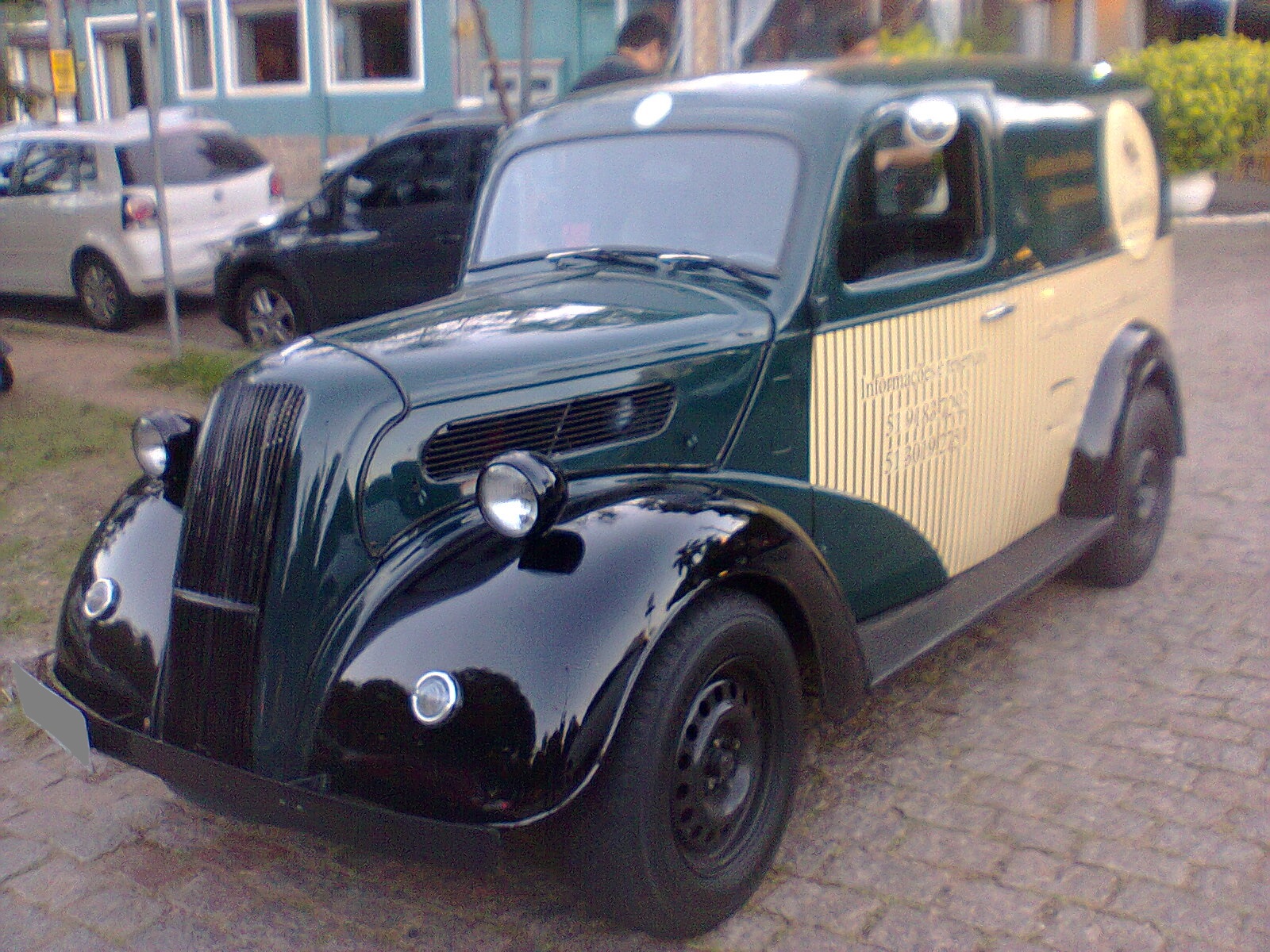
Sidevalve engines, also known affectionally as "flathead" engines due to their head formats, once had their days of glory, having in the earliest Ford small-block V8 one of their most iconic examples. Introduced in 1932 and available into Ford cars and trucks until 1954, it's still cult-followed at some extent.

In spite of having some limitations, mostly concerning the internal flow restrictions, lower engine speeds, lower compression ratio and eventually an insuficient cooling of the head, the sidevalve layout has noticeable advantages regarding its overall physical volume much reduced due to the lower head, even though the block has to be slightly wider to accommodate the valves, reduced weight and a lesser likelihood of failures resulting from oil starvation, since the moving parts are kept further low so there is a smaller path the oil has to flow into.
Another notable example is the Ford Model T, made from 1908 to 1927, always with a 4-cylinder sidevalve engine. This valvetrain layout does make sense for a no-frills vehicle such as the Model T, due to the lower manufacturing cost resulting from a simpler design, which also led to an easier maintenance. The inherently low compression ratio, often pointed as a disadvantage of sidevalve engines, actually worked out perfectly for the Model T, due to the lower grade of the regular gasoline available back then.

Sidevalve engines had also been highly popular in European compact cars, such as the British Ford E494A-series Anglia and the French Renault Juvaquatre, until late '50s. After that, the introduction of tetraethyl lead into the gasoline as an anti-knocking additive and valve seat hardening agent was kinda inviting for the extra expense on overhead-valve layouts which allowed a higher compression ratio, often pointed to increase the overall efficiency of the engine.

Another point favorable to the sidevalve engines is their suitability to special applications such as off-road vehicles and light piston-powered aircrafts. The low-end torque is actually favored by the inherently lower speed ratings, and the fact that engine moving parts are concentrated downwards also keep the lubrication more precise even under severe inclination variance. A good example is the early Jeep Willys, fitted with the Continental Go-Devil inline-4 engine. In spite of the absence of developments targetted to automotive applications, another promising market is light aircraft, plagued by the push for a ban of aviation gasoline (AvGas) due to environmental concerns about the tetraethyl lead content still present on it. Besides the suitability to lower-grade fuels, the lower speed in a sidevalve eliminates the need for a reduction gearing between the engine and the propeller.

Despite all the incredulity towards sidevalve engines, they still have some advantages which are worth considering...

Thursday, March 19, 2015

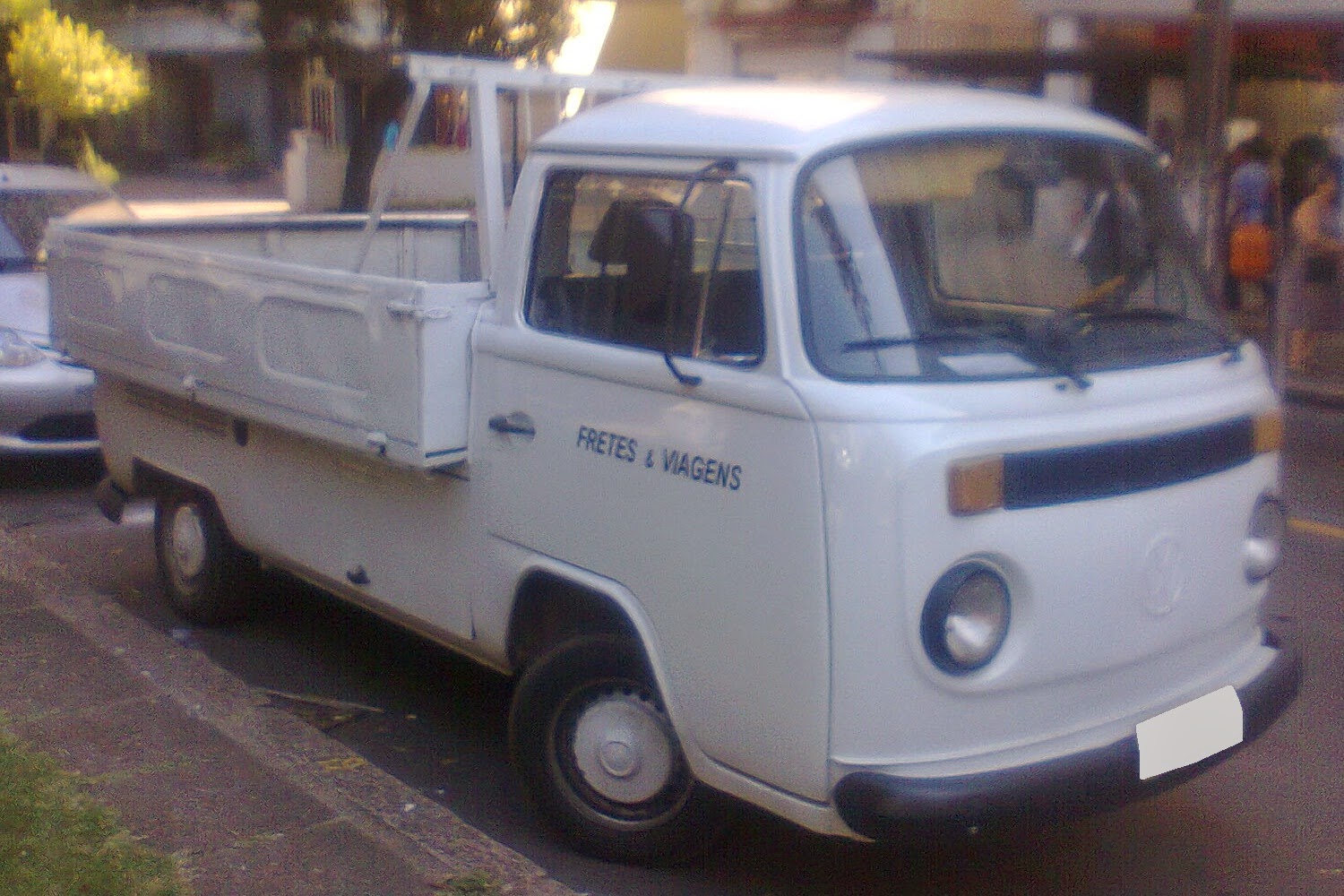
Brazilian Volkswagen Kombi pick-up with oversized bed

In spite of the popularity of the vans, pick-up versions of the Kombi are getting somehow rare in Brazil nowadays. Actually, it's easier to find them with aftermarket wooden beds instead of this pressed-sheetmetal one which is a little oversized but had been a factory fit for the Kombi at least in Brazil. Spotted this one yesterday morning while I was taking my dog for a walk.

Saturday, March 14, 2015

Are restraint systems becoming over-complicated?

Restraint systems are often pointed among the most important safety features in a motor vehicle since the first lap-belts were introduced by Volvo in the 50's, and their complexity increased considerably after the introduction of 3-point seatbelts and airbags. A simple lap-belt is still enough for the driver and passengers to avoid having their necks broken in case of rollover, while a 3-point seatbelt is only useful either if it's the only way to prevent the driver and front passenger(s) from hitting the windshield in case of collision or to enhance the support for disabled drivers. Airbags, in spite of all the hype around them, don't really seem to make so much sense.

Restraint systems would be less likely to save anyone's life in a structurally weak vehicle, such as some third-world econoboxes which bodies are made out of lower-grade steel alloys and often thinner metal sheets, while their counterparts targetted to developed markets might easily fare better in case of accident when a defective airbag wouldn't deploy. Actually, even a side-by-side ATV such as the Polaris Ranger is safer than many third-world subcompact cars. It's also worth to look at American school-buses, which are fitted with lap-belts in a few states but usually don't have seatbelts everywhere else while still deemed the safest road-legal vehicles on earth. The concepts of "compartmentalization" applied to their interior layout sure has an important role on that matter, while the side panel trims and seats cushioning provide different grades of impact absorption in order to prevent major injuries while the seat backs height prevents whiplash without resorting to airbags, and not even the simplest lap-belts are needed if we consider that a school-bus is not so prone to rollovers.

Having such examples in mind, what can still justify the cost and complexity associated to airbags? Basically, sophisticated restraint systems also work out as an easier excuse for the marketing departments of the manufacturers to push more expensive options for customers who don't really need, neither want them. That way, the extra cost coming from a pair of airbags may seem more diluted at the price tag of a car with a fancier interior trim, infotainment, alloy wheels with fat low-profile tyres and the hell out than it would do in a no-frills version with manual windows and mirrors, plain-black mirrors and door handles, a cheaper trim, skinny high-profile tyres in smaller pressed-sheetmetal wheels (with or without hubcaps) and a simple AM/FM radio with USB connection (or eventually no radio at all). Even if the profit margin at the airbags and the amenities gets a slight reduction in order to be pointed out for the final customer as a "value package", they're still highly profitable for the manufacturer due to an increase in their production volume.

Another matter of concern, regarding most specifically to airbags, is the clearance issue while fitting the vehicle with adaptive controls for disabled drivers. Some interfaces, such as ring-shaped accelerators mounted over the steering wheel which are still widely popular among paraplegic drivers in Europe, were already challenging when driver airbags started to appear, and revisions on their designs were required to overcome this difficulty. Nowadays, knee airbags pose a major issue regarding lever interfacess, either just for the brake or combined accelerator/brake units. Some popular devices in this category still use pushrods to transfer the movement from the lever to the pedals instead of cables due to reliability concern, but it ends up on the way of knee airbags when they're fitted. Altough it might seem easier to just resort to a floor-mounted unit such as a Carospeed/Menox, any one-size-fits-all approach to this market segment won't work out so effectively.

We can't deny the importance of safety features such as ABS brakes and stability control, since they effectively decrease the likelihood of a crash, and collapsible steering columns for avoiding many deaths, but at a certain point airbags get excessively praised, and it's not so inaccurate to claim that seatbelts are also over-estimated at a minor extent. Apart from the noticeable increase in the purchasing cost of a vehicle fitted with airbags, the cost to get them replaced, either due to deployment or expiration, is rather unjustifiable considering the residual retail value either in an older car or in a salvaged one, leading otherwise roadworthy vehicles prematurely to the junkyard.

Wednesday, February 11, 2015

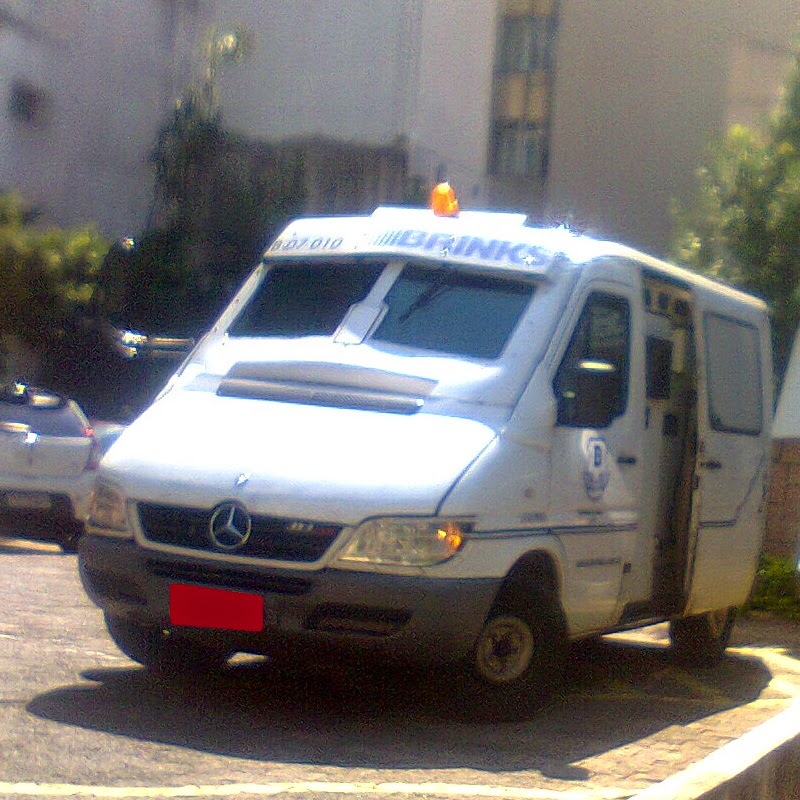
Brink's armored van

Still think a 4-cylinder turbodiesel under 3-litre is not enought to get the job done? It's time to review some concepts...
Alongside its regular cash-transit vans built around medium-duty truck frames, Brazilian branch of the Brink's company also operates with some Argentinian-made Mercedes-Benz Sprinter vans, mostly due to their enhanced maneuverability in tight spaces, fuel savings, and to circumvent restrictions on the circulation of trucks in some areas. The only engines officially available for the Sprinter in Brazil since its introduction in '97 have been 4-cylinder turbodiesels, and this one specifically is fitted with a 2.1L OM611 rated at 127hp (129cv for those more used to the French unit, or 95kW) at 3800RPM and 300Nm. (220lb.ft.) at 1600-2400RPM backed by a 5-speed manual transmission. Apart from a handful "executive" passenger vans which featured a 5-speed automated-manual transmission, the Sprinter is only available in Brazil with manual transmissions.

Sure the weight added by the up-armoring decreases its payload in a significant matter, but it still does what it's expected to do.

Monday, January 12, 2015

Fiat Siena Tetrafuel

Yesterday morning while I was walking my dog in another neighborhood nearby, I saw this Fiat Siena Tetrafuel, the first vehicle factory-fitted to run on gasoline, ethanol and compressed natural gas (CNG). What surprised me the most, actually, is the fact that this one didn't had a taxi livery, which is pretty much unusual since its main market had always been the taxi segment in Brazil. Actually, the Tetrafuel nameplate is not so accurated, since it runs on gasoline, ethanol and CNG, not considering Brazilian-standard E20/E25 gasohol as a distinct fuel at all. It has a pair of 6.5m³ trunk-mounted CNG tanks, and only one single tank for the liquid fuels at its regular underbody location. The engine is a 1.4L Fire with the 8-valve head and natural aspiration, and power figures were 67hp while running only on CNG, 80hp on gasoline, and 81hp on ethanol. Introduced in 2006 alongside the already-available gasoline/ethanol flexfuel variants, the Tetrafuel was phased out in Brazil in 2011 and replaced in 2012 by a Tetrafuel variant of the Grand Siena which was introduced in that year. The old model had its production transfered to Venezuela, where it had been a captive import, and the Venezuelan-made version was rebadged Dodge Forza.

Monday, January 05, 2015

A few CNG-powered trucks in my hometown

Compressed Natural Gas, or CNG, was initially deployed as an automotive fuel in Italy during the inter-wars period, and is currently pointed as one of the easiest-to-implement measures to reduce the dependence on Middle-East oil, alongside ethanol. It's usually extracted from fossil reserves, either in oil wells or isolated, but since its basic component is Methane gas it can also be sourced from any organic matter residue in landfills and wastewater treatment plants. It's often also pointed as more sustainable than ethanol and biodiesel, because its impact on food prices and availability is lower. The main markets for CNG-powered vehicles nowadays are India, Pakistan, Argentina and Brazil. Their presence in Europe and the USA is increasing in commercial vehicles, but is still not so popular among private car owners due to the lack of refuelling stations in spite of the availability of Natural Gas as for stationary applications such as power generation, home heating and cooking fuel. Anyway, the folks at Ecomodder and CNGChat might like these ones...

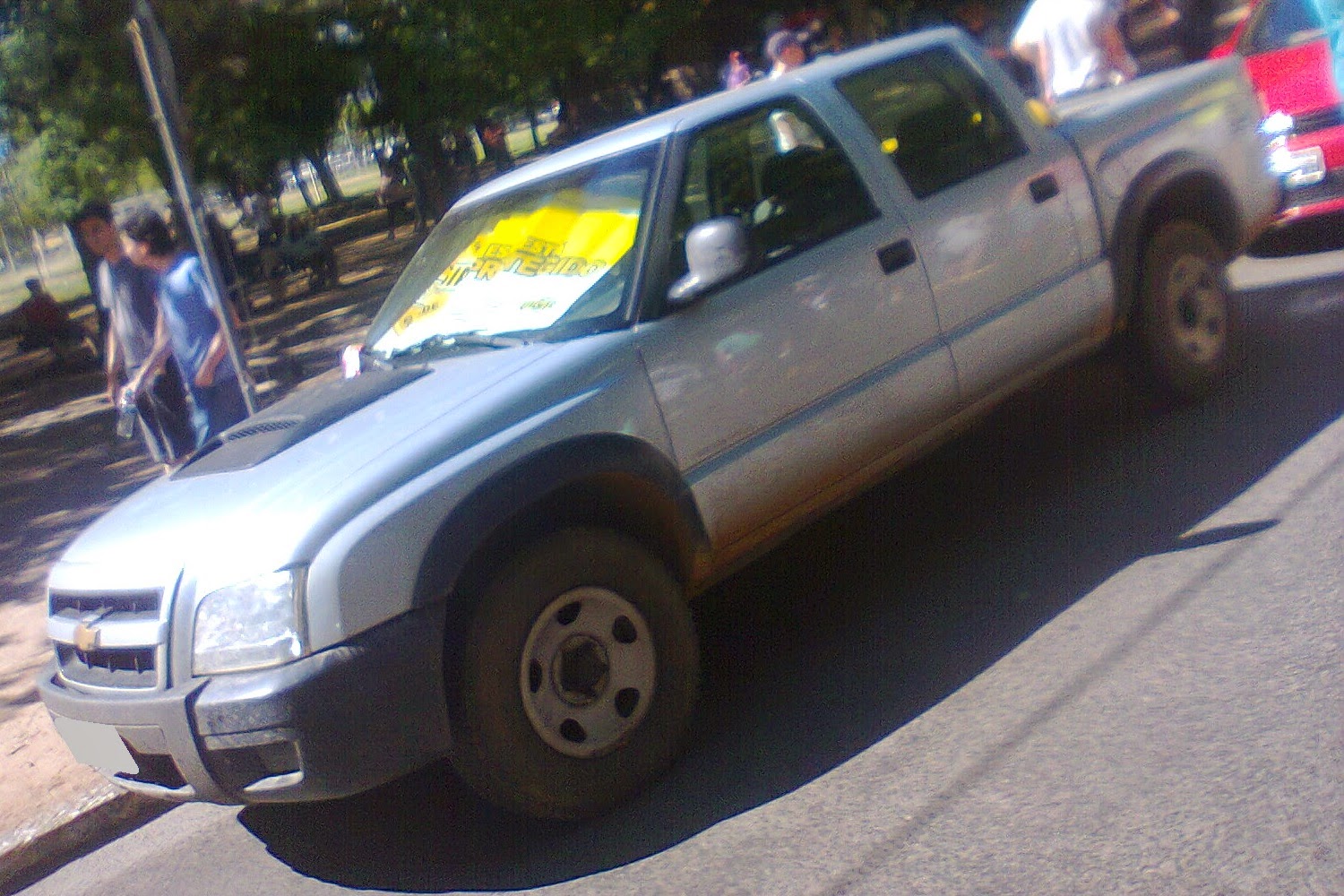
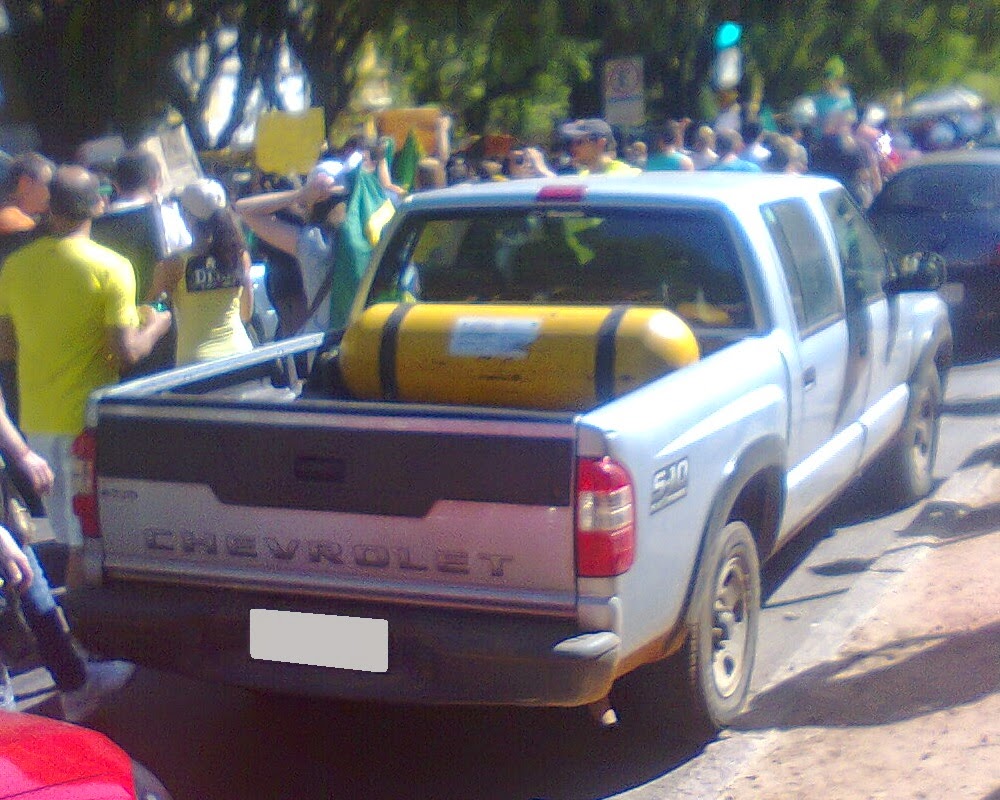
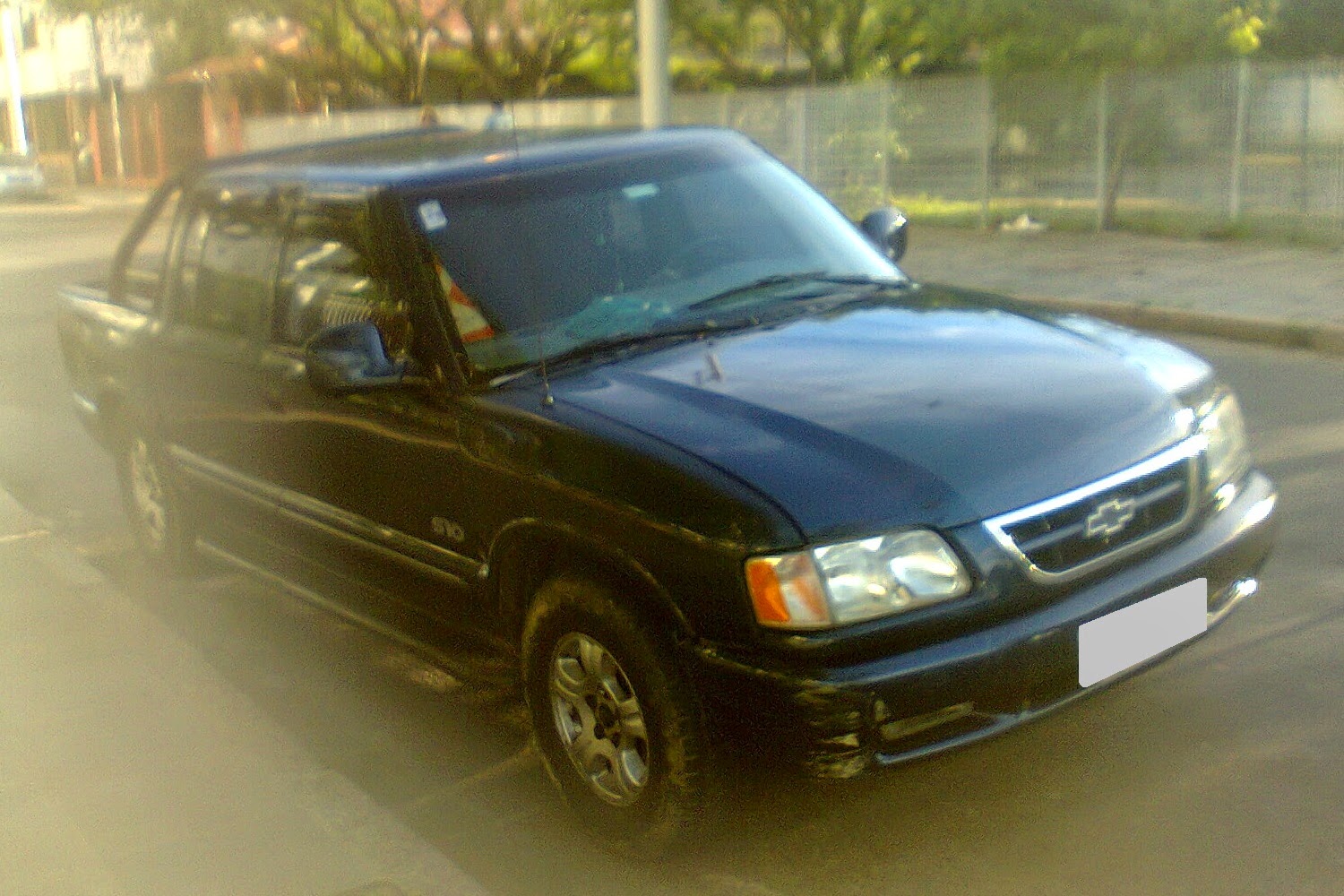
Brazilian versions of the Chevy S10 have an Opel-designed 4-cyl engine available, initially as gasoline-powered but gasoline/ethanol flexfuel since '05, instead of the Vortec 2200 from their American equivalent. This on was originally a flexfuel, so now with the CNG setup it became tri-fuel capable...

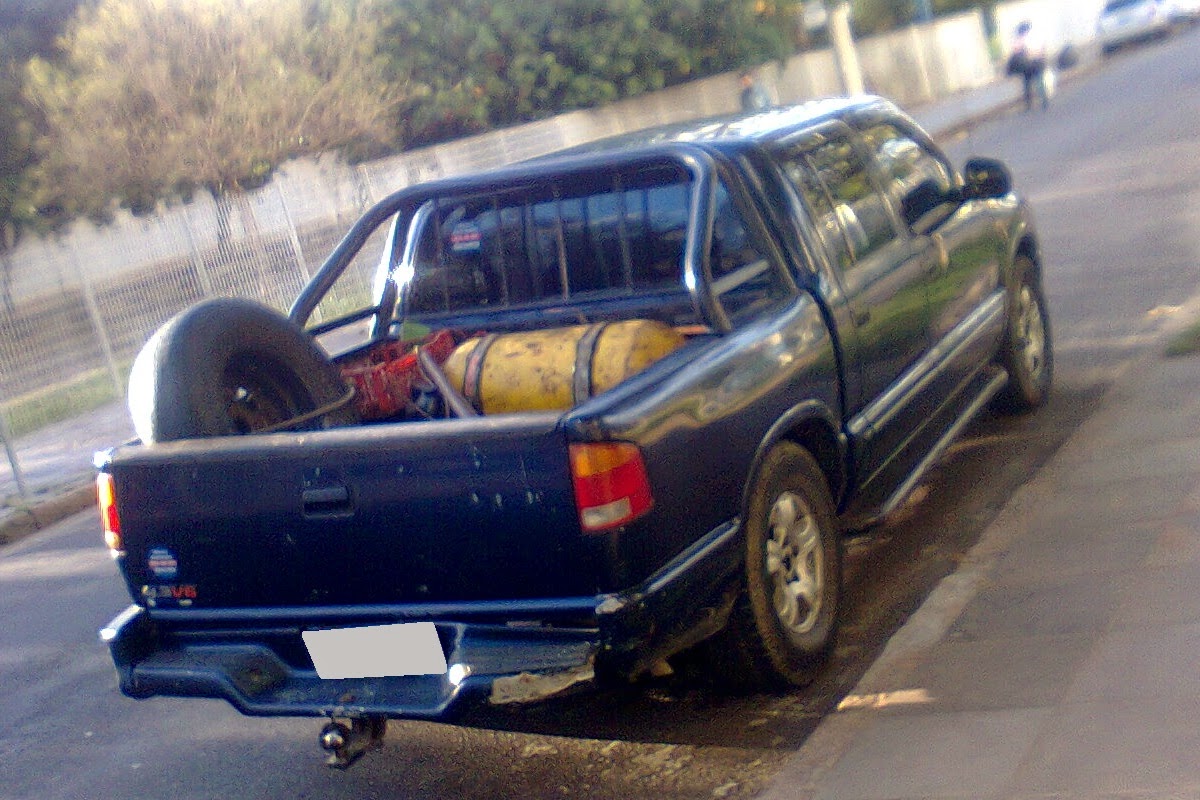
This other S10 has the 4.3L V6 engine, and the CNG tank is visible at the pick-up box. Couldn't see any underbody tank, but since the spare tyre had been relocated to the box it may have released some space to fit other tanks, which would be kinda useful considering the thirst of the V6...

Another V6, this time a single-cab. Also fitted with a single box-mounted tank, but since it didn't have clearance issues with the wheel wells a bigger tank could be fitted...

The Dodge Dakota is considered a lemon in Brazil, because its local production run had been too short ('99-'01) and, in spite of running on the American 4WD chassis and suspension setup due to the harsher pavement conditions, it was only available in 2WD. It was also kinda expensive when new, and all of its gasoline-powered engines were imported. The 4-cyl 2.5L and the 3.9L V6 were made in the USA while the 5.2L V8 came from Venezuela. The only Brazilian-made engine was the Diesel-powered one, a VM Motori R425 OHV license-made by Detoilet Detroit Diesel which had some overheating issues and was more expensive to overhaul than the Diesel engines used in its opponents, leading a handful of owners to repower them with engines from other similarly-sized trucks such as the MWM Sprint 4.07 TCA used in the S10 from '99 to '05 and the Toyota 3L and 5L-E from the Hilux. Many of the surviving gasoline-powered ones had been converted to CNG, such as this one with extended cab and the V6 engine.

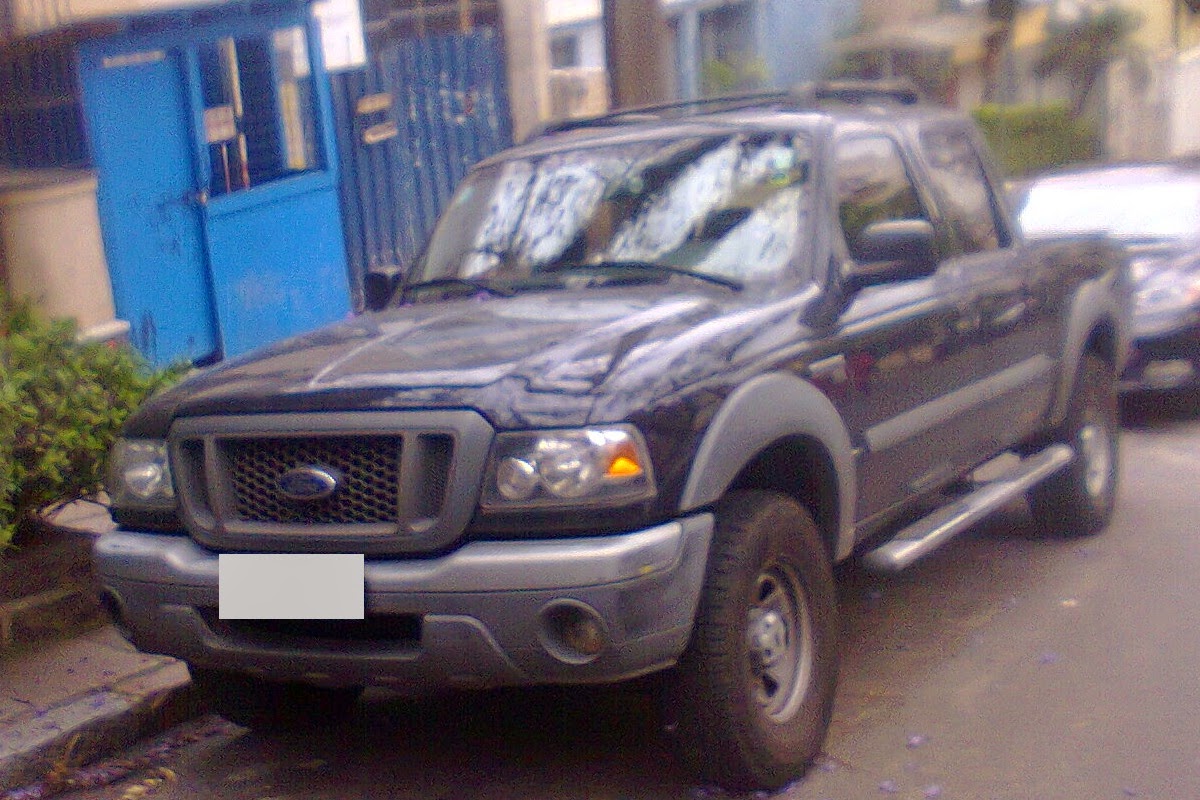
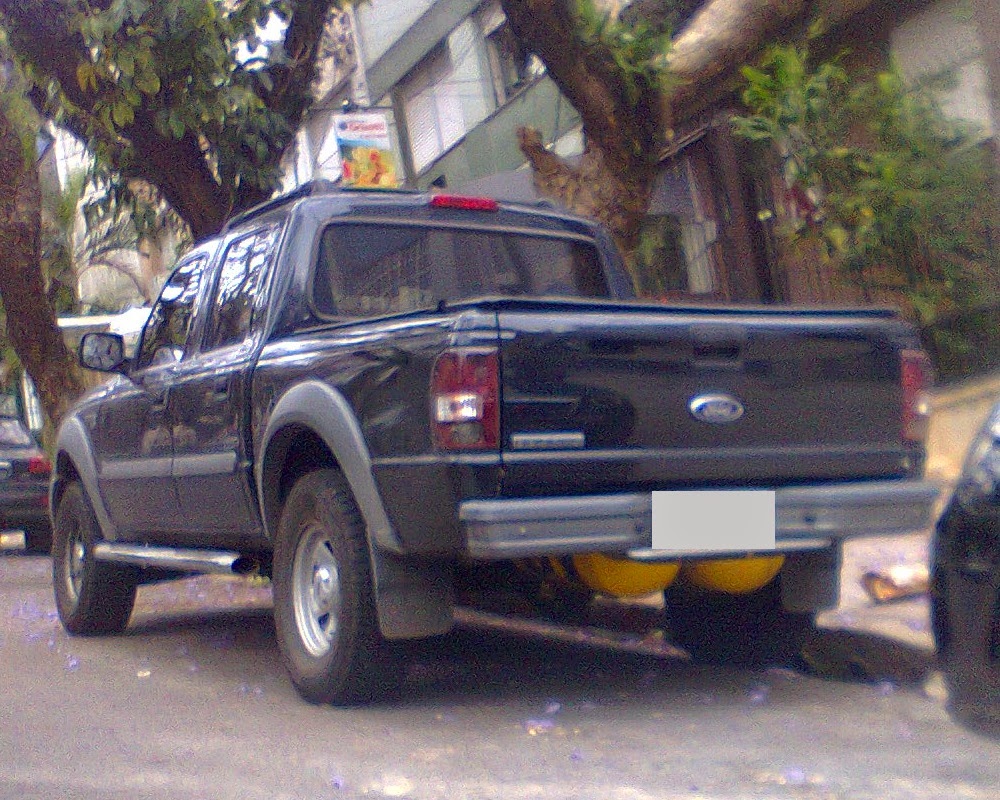
This double-cab Ranger was available only in South American RHD markets (except French Guyana where a rebadged Euro-spec Mazda B-Series was sold as the Ranger) and Mexico, because the Ranger made in Argentina is available there since late '97. Ford even offered a CNG-prep package for the 2.3L 4-cyl engine in Brazil from '06 to '12, and a bi-fuel CNG installation was a factory option for the ones fitted with the 4.0L V6 engine in Venezuela from June '09 to early '12. There is a conversion shop certified by Ford to perform the service in Brazil, but the certified conversions had the CNG tank mounted in the pick-up box, while this one had a non-certified conversion with underbody tanks in the stock spare tyre location. At least the spare tyre takes less useful space in the box than a CNG tank would...

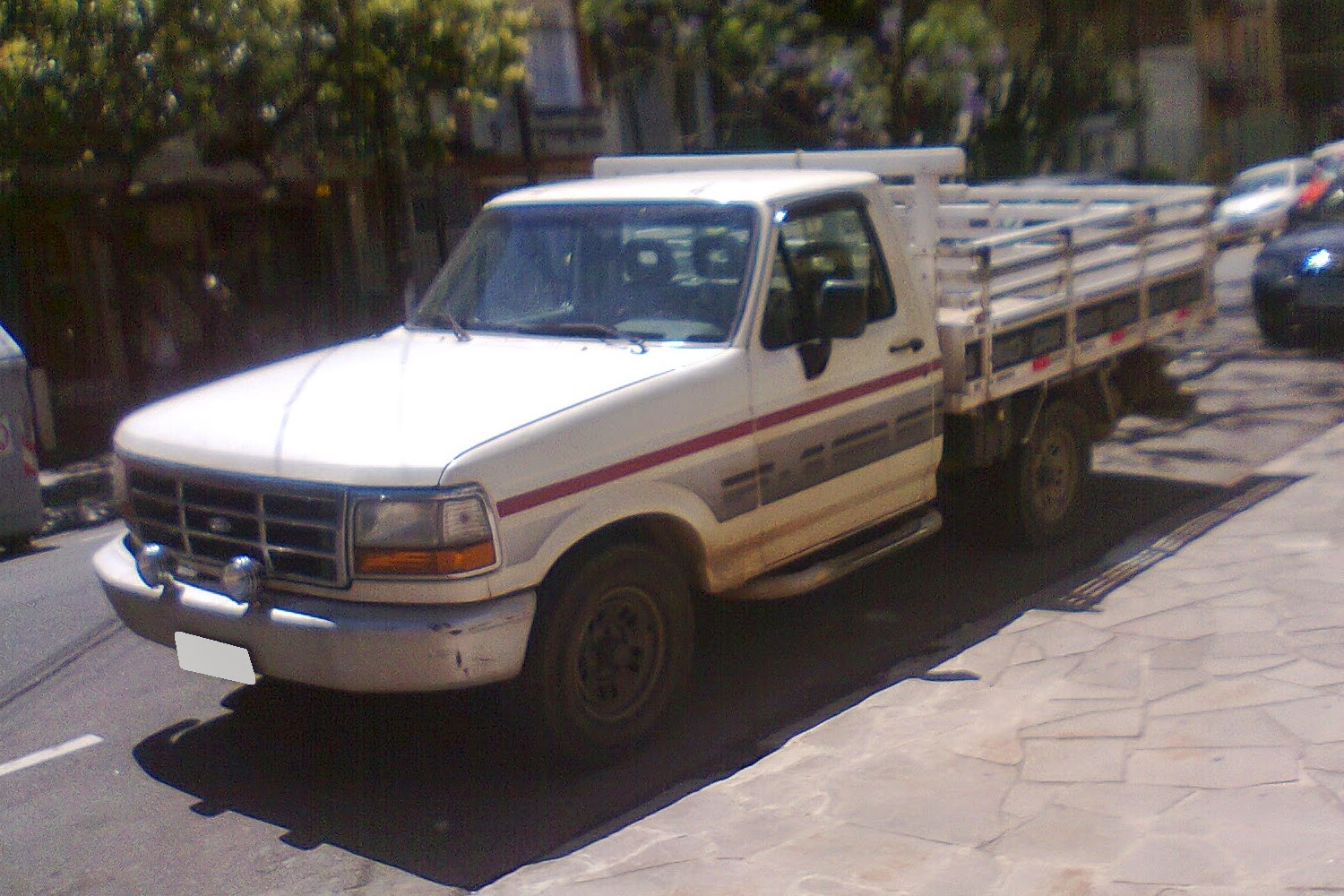
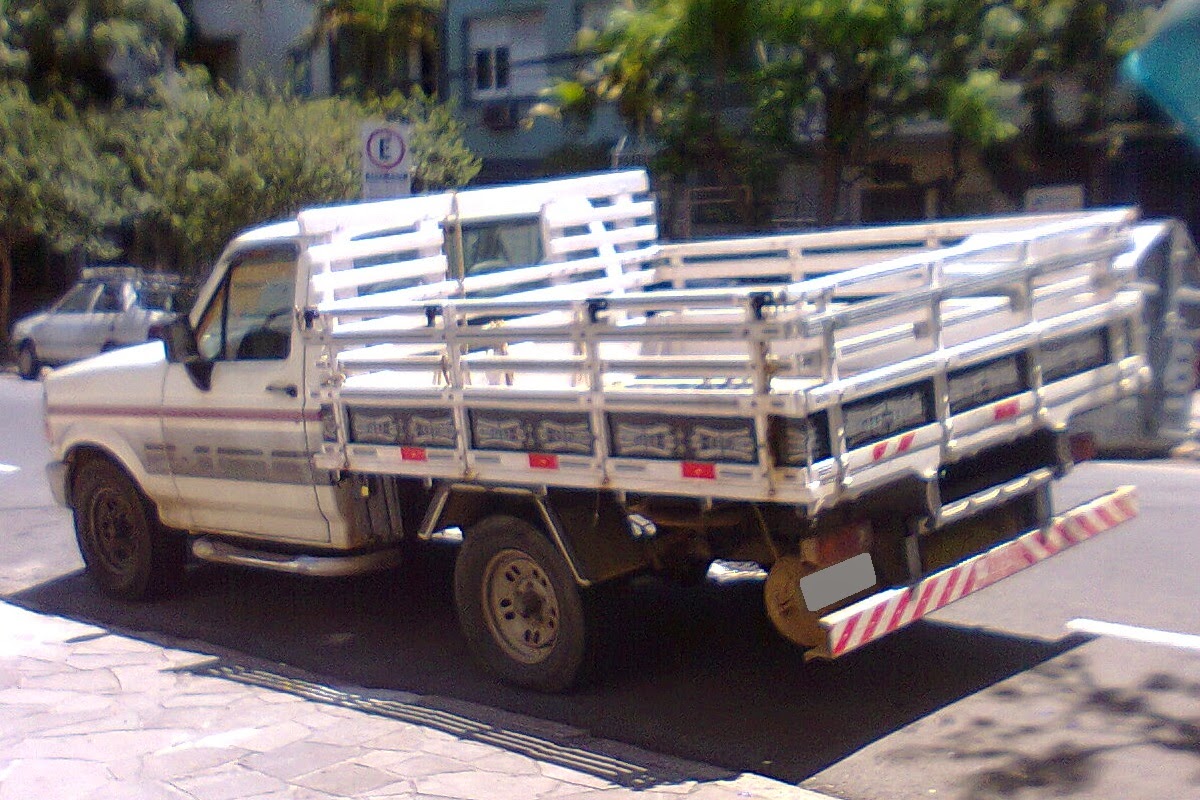
In spite of the side graphics suggesting that it could be an F-100, it's a Brazilian equivalent to the American F-250 and was known locally as F-1000. The last zero on the graphics would appear in the stock sheetmetal pick-up box if it wasn't converted to a wooden one. Engine is the gasoline-powered 300cu.in. inline-6, backed by a 5-speed manual transmission. This one was fitted with a single CNG tank mounted under the box, still visible from the sides or from the rear bumper gaps.

Monday, December 22, 2014

Tricycle for a disabled rider

This tricycle was assembled in Brazil, and is based in a random Chinese imitation of the Honda CG 125. Spotted in Itapema city, Santa Catarina state.

The front suspension is reinforced, like it's done in some motorcycle-based cargo tricycles, and a rear extension was added without any cut in the original chassis, making this conversion somehow easily reversible.

Saturday, December 06, 2014

4-cylinder turbodiesel engines into trucks: suitable to America?

4-cylinder Diesel enginess became a prevalent choice for commercial operators in light-duty trucks all around the world since a relatively long while ago, and the recent advances in turbocharging technologies brought benefits regarding performance and fuel-efficiency.
Nowadays, even a full-size such as a Ford F-450 fitted with a Cummins B3.9 (the good old 4BT) can be as throttle-responsive as one fitted with a gasser V8, no wonder this was the only engine available for a South American equivalent of the F-450 from late '98 to 2011. The cost of a V8 Diesel engine, such as the ones used in North America, would be too high for Brazilian buyers, who couldn't afford the Diesel option as a premium feature.

Historic competition between Mercedes-Benz LN trucks and the F-Series in the Brazilian market is often pointed as the main reason leading Ford to move towards 4-cylinder Diesels in the 70's. Mercedes-Benz not just got a clear advantage due to the parts commonality of its OM-314 engine with the OM-352 used in medium-duty trucks and bus frames but also because these engines were also supplied to other OEMs which fitted it into stationary/industrial appliances and special machinery, making the availability of spare parts easy, and Ford couldn't get a constant supply of any Diesel V8 similar to the International 6.9L IDI used in the United States, so the quickest solution was to fit the agricultural 4.4L engine into the trucks, with a locally-sourced MWM D-226-4 (lately a D-229-4) also available.
MWM would eventually become a Navistar company, and make the V8 engines in Brazil to fit them into International medium-duty trucks and RHD versions of the F-250 and F-350 exported to Australia, but for the versions aimed for sale in Brazil and other regional export markets Ford would keep the 4-cylinder engines, which became supplied exclusively from Cummins in late '98.

What could be pointed as a downgrade exclusive for the Third World, however, is getting attention from Americans who are becoming kinda tired of wasting their money for that one-size-fits-all deal. The increasing complexity of the V8 turbodiesels, which became more targetted to private users, and the sky-high premium cost they're charged for, is leading to some changes in the perception of 4-cylinder engines among the customers, and taken more seriously as a viable option by people who just seek for a no-frills workhorse instead of a fancy "redneck limo" to show off.
Anyway, a 4-cylinder turbodiesel can be a good choice even for a leisure-oriented truck. The one shown in these pictures is an F-250 (not an Excursion) made in Brazil, factory-fitted with a 203hp common-rail Cummins ISB3.9 and an Eaton 5-speed manual transmission, with the 6-door SUV bodywork by Tropical Cabines, a company specialized in crew-cab conversions. Actually, very few people who buy a Diesel truck for non-commercial purposes would really care if there's a small 4-banger or a fancy V8 under the hood as long as it can roll coal.

An increasing interest in 4-cylinder Diesels has led to a rush for old walk-thru vans and Japanese cab-forward trucks such as the Isuzu NPR, aiming at the adaptation of their engines into trucks originally fitted with a gasser V8. An engine swap is very labor-intensive, but this phenomenon shows that many Americans are thinking outside the box and not willing to be pushed towards a bigger engine when they just need (or want) a Diesel.
Most of these conversions are, actually, deemed illegal because of differences in the emission certifications of the engines and the vehicles, even if a Diesel engine originally fitted to a Class 5 truck has lower emissions than a gasser V8 that could be legally fitted into a Class 2 rig such as a Hummer H2...

Anyway, the so-called "working class heroes" are still more receptive to 4-cylinder turbodiesels, usually taking their current availability in the Japanese cab-forward trucks such as the Mitsubishi Fuso Canter as a reference of their suitability to the needs of an American operator. So, since U.S.-spec versions of the Canter are fitted with a high-speed 3.0L 4-cylinder turbodiesel outsourced from FPT (Fiat Powertrain), why can't a similar engine become available for a conventional bonnetted-cab truck with a lower GVWR?

Tuesday, December 02, 2014

Has Ford gone too far with the engine downsizing in the Brazilian versions of the SuperDuty?

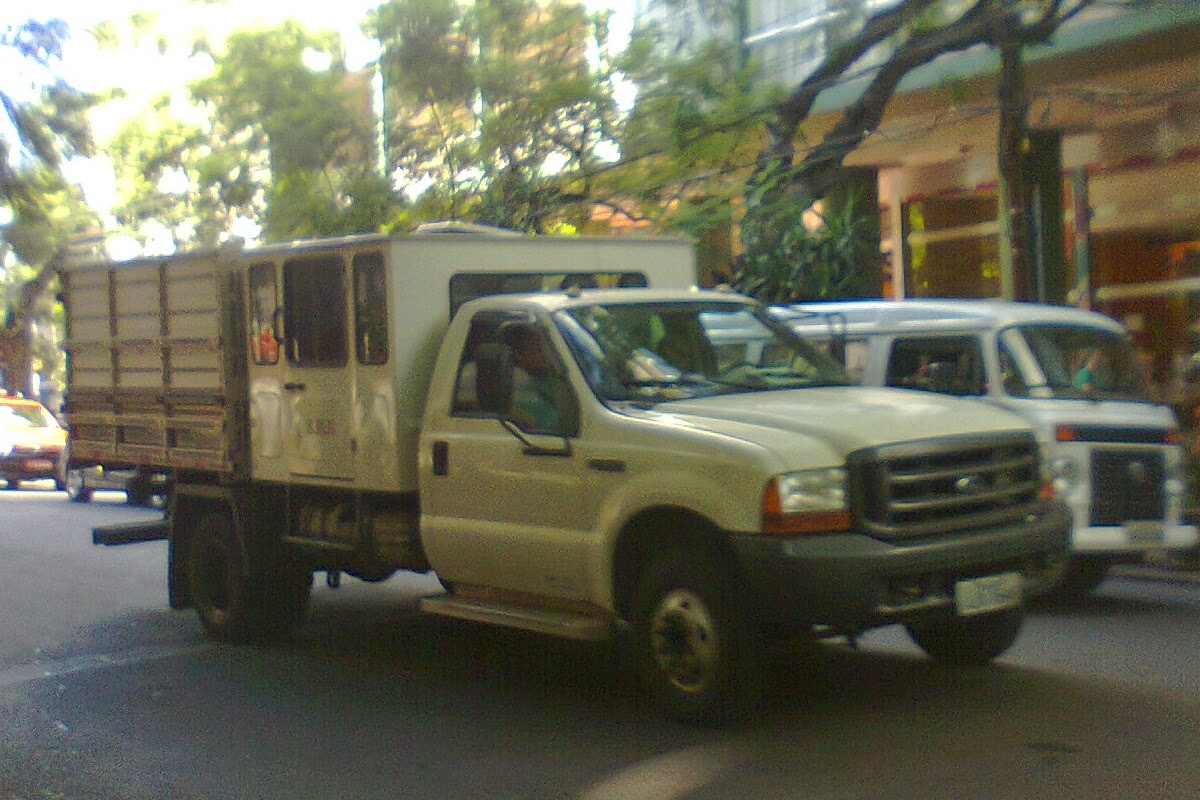
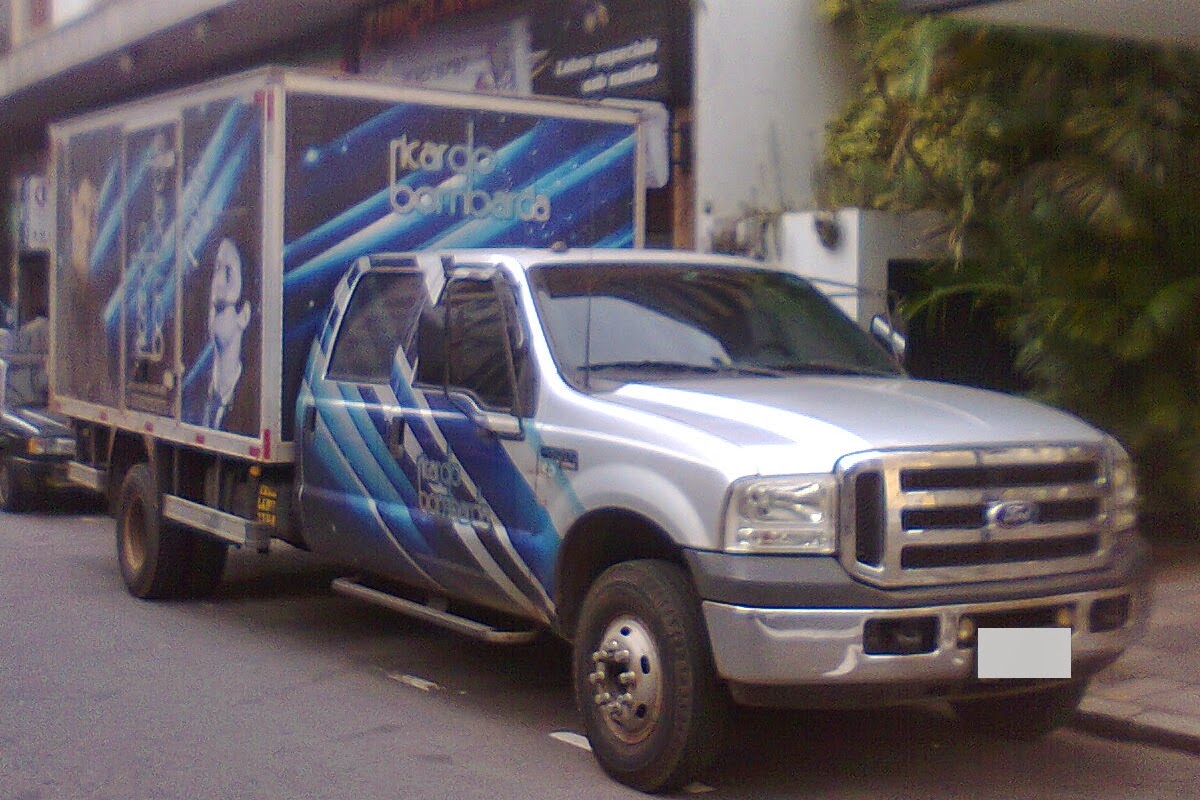
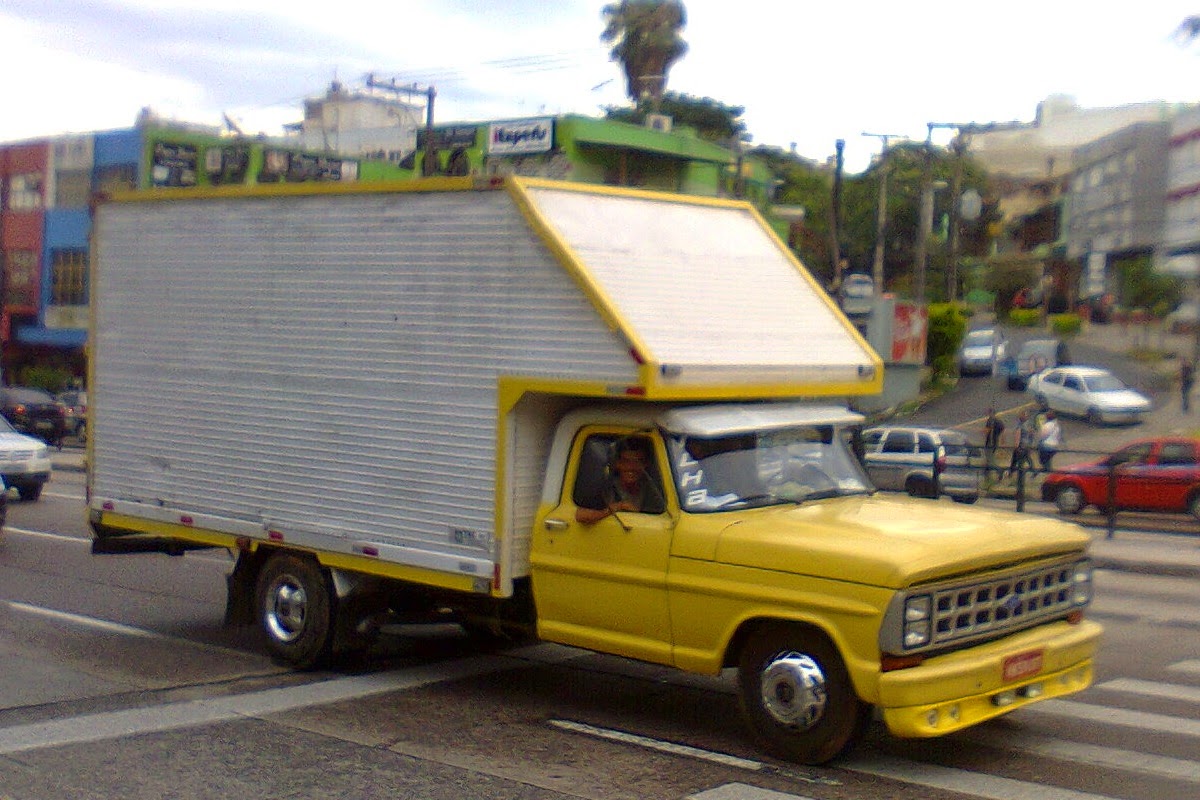
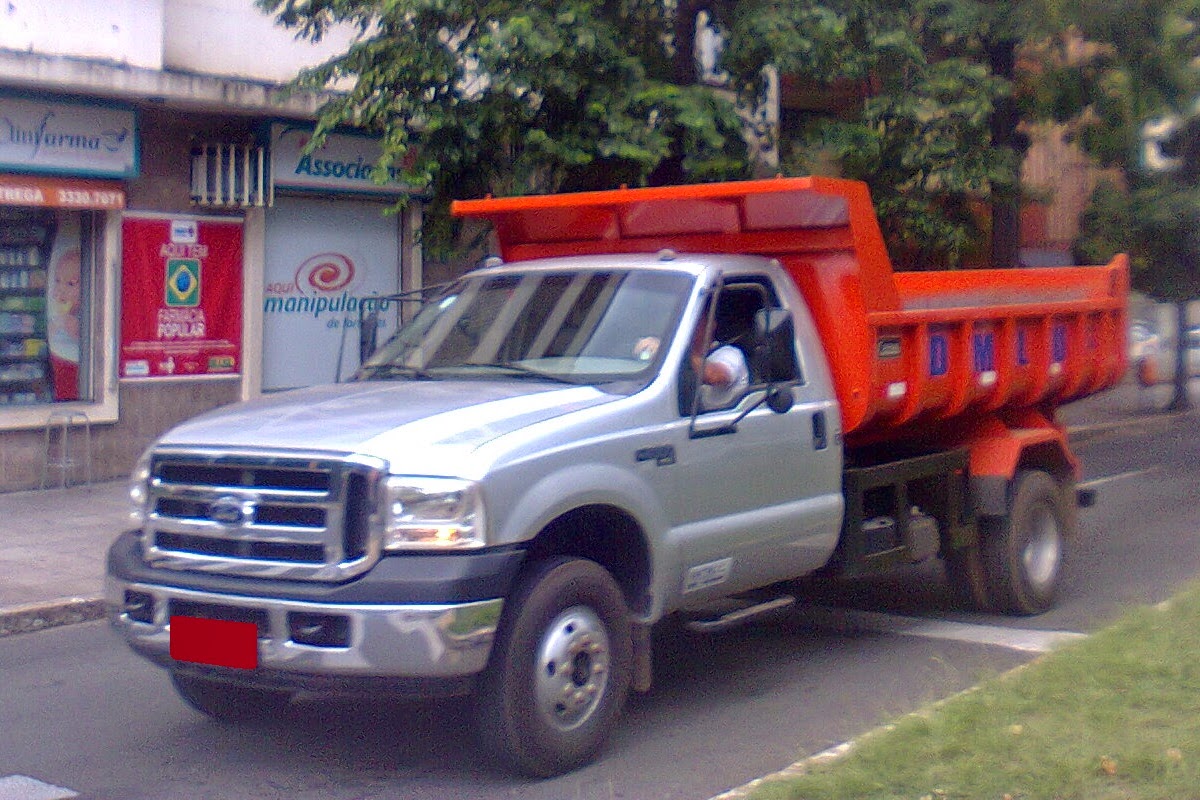
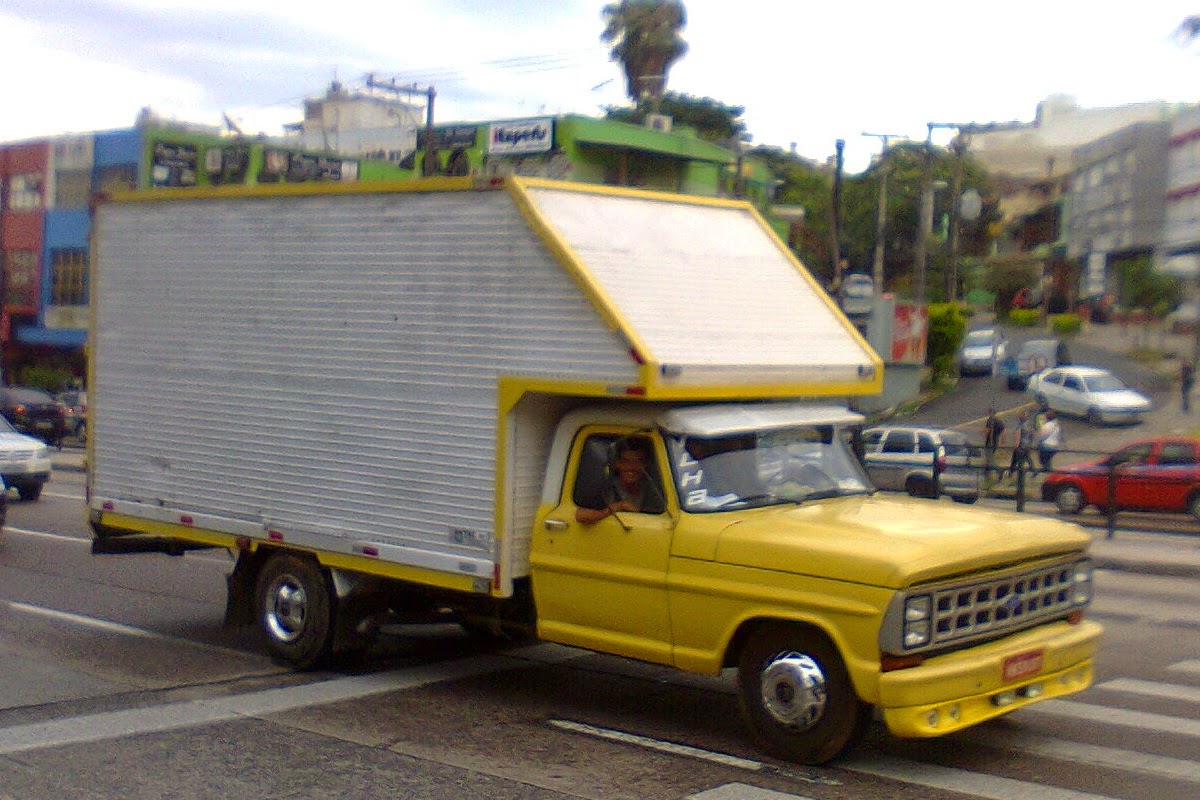
It ain't breaking news that Ford always used Diesel engines smaller than its American counterparts in the Brazilian F-Series, and lately in the SuperDuty, but it was a shock for many people when it was announced that starting in 2014 the F-350 (picture above, notice the saddle-mounted DEF tank with its blue filling cap) and the F-4000 (a local derivative of the F-450, shown in the picture below with crew-cab and a box-van body) would feature a Cummins ISF2.8 at their engine bay. The current Brazilian version of the F-350, available only in 2WD, is exclusive for the local market, while the F-4000 can be had in either 2WD or 4WD and is also exported to Argentina.

Actually, the F-4000 (the yellow one above might be from the 70's due to the white cabin roof, but got updated with a front clip from the 80's) has been fitted exclusively with a 4-cylinder Diesel since the 70's, and the F-1000 (a derivative of the OBS F-250 with the short bed of the F-150) had a high-speed turbodiesel with a displacement below 3-litre available between '97 and '98 for its 2WD variant, but the F-350 and F-4000 were never factory-fitted with any engine under 3.9-litre such as the Cummins B3.9 (also often referred to as "4BT") which became the sole powerplant for both the F-350 and F-4000 from late '98 to late 2011 when they were phased out because somebody at Ford South American Operations (FSAO) deemed it wouldn't be cost-effective to upgrade them with an electronically-governed engine compliant to Euro-5 emission standards, and trying to push the traditional buyers of the Brazilian F-Series/SuperDuty to the Ford Transit semi-bonnetted vans and the Ford Cargo forward-control truck sounded more profitable. But it was proved wrong and, after losing some market share for Volkswagen, Iveco and even to Hyundai and a few Chinese manufacturers, Ford had to reintroduce the F-350 and F-4000 (pictured below is a '05-'11 F-4000, with a mechanically-governed B3.9 detuned to 120hp in order to get compliant to the Euro-3 emission standards).
In spite of the controversies regarding the new engine, the SuperDuty already recovered its sales performance right after its reintroduction. In a contrast to the American market, where conventional bonnetted trucks remain the most popular configuration, nowadays forward-control trucks are prevalent in Brazil, so the cabin is the strongest sales argument for the F-350 and the F-4000 against its closest competition in the public utility and rural segments. The basic concept of the SuperDuty, less specialized than the current generation of Class 3 and Class 4 cab-forward trucks which are more focused on urban delivery, makes it more favorable for a wide range of operations not just in city and highway but also in rougher terrain.
While it could be deemed kinda obvious to just fit the same engine and transmission from the smaller versions of the Ford Cargo into the F-350 and F-4000 (pictured above is a '98-'05 Euro-2 F-4000 with a Cummins B3.9 rated at 141hp and an aftermarket supplementary cabin), a different engine was chosen, still supplied from Cummins, but for everyone's surprise it was the ISF2.8 instead of the ISBe4.5 currently used in some versions of the Ford Cargo ranging from Class 5 to 7, with its lower cost pointed by a former FSAO engineer as the main factor leading to this choice. It may seem shocking at first, but high-speed turbodiesels in the 2.8L displacement range are actually not so unusual in Asian trucks with a gross vehicle weight rating comparable to the F-4000, such as many Chinese imitations of the Isuzu NPR powered by some copy of the Isuzu 4JB1-TC engine.
OK, with an engine that would predictably develop a lower torque, altough it would do so at a higher RPM, the right gearing selection becomes a major concern in order to retain a reasonable performance. Gears with a numerically higher rating are, actually, lower, because they mean how many input rotations would be turned into output rotations, such as from the engine to the transmission and from the transmission to the rear-end. A higher engine speed compensates for a lower final gear ratio, which is applied to multiply the torque, so it's viable to keep the performance in pair with a lower-speed engine at a higher displacement range coupled to a transmission setup with a higher final gear.

At a first look, it might seem that Ford went too far in the downsizing with the SuperDuty for the Brazilian and Argentinian markets, but actually it does seem to match the specific requirements of the regional market, where the purchase cost is a kinda critical issue, and a Diesel engine must be the standard instead of a premium feature. On a sidenote, unlike its American equivalents which are nowadays available only with an automatic transmission, the Brazilian SuperDuty is factory-fitted exclusively with a manual, not just because of its lower cost but also due to its perceived lower impact on fuel-efficiency and easier repairability.