Wednesday, February 03, 2016

Hand control for the clutch in a split-window Kombi

As if an immaculate split-window Kombi wouldn't caught enought attention, this one specifically had a special feature in order to accomodate a physical disability of its owner. Since he had lost his left leg, using a standard clutch pedal would be impossible. A dashboard-mounted lever to the left of the steering wheel was the obvious choice in Brazil during the 70's when, unlike Europe, a Saxomat automatic clutch or some clutch automation device catering specifically to disabled drivers was either unavailable or overly expensive.
Even though this bodystyle was phased out in most markets in '67, it soldiered on in Brazil until '75, and this one specifically is a '72. Back there in 2009 the owner was not any likely to retire it, and still daily-drove the Kombi which was his pride and joy. He was very excited while telling me about how this vehicle was essential to provide him a job and raise his kids.

Tuesday, February 02, 2016

Jeep M-170 ambulance

There were times, conditions and operational requirements that allowed a canvas-top ambulance, such as this Jeep M-170 from the Korean War era.

Small tricycle with a narrowed Chevette rear axle

Some years ago, in the middle of a trip from Porto Alegre to Florianópolis, I saw this small tricycle converted from a Chinese imitation of the Honda C100 Biz "underbone" motorcycle. Considering the improvised nature of such vehicles, which in Brazil are more popular among disabled riders, it really surprised me that it had a differential instead of relying on a simpler rear-end setup. The rear axle came out of a Chevrolet Chevette/Opel Kadett C/Isuzu Gemini, but had to be narrowed in order to fit this tricycle, and was modified to become chain-driven instead of shaft-driven. On a sidenote, the responsible for this adaptation is a cousin of mine who lives in a small town located in Santa Catarina state.

Tuesday, January 26, 2016

Are biofuels suitable to save Venezuela?

Any talk about fuels in Venezuela moves into controversial matters, such as the heavy subsidies to keep the gasoline and Diesel fuel prices below their real cost, and the state monopoly over the energy resources such as petroleum and natural gas. Even though the crippled Venezuelan economy relies basically on the profits of its petroleum products export, it's plagued by poorly-mantained refineries and other infrastructural problems, and the endemic corruption of South American populist dictatorships. It's also worth noting that about 70% of all the food consumed in Venezuela is imported, not due to any lack of arable land or pastures.

Back in 2009, the then-dictator Hugo Chávez set a CNG mandate, enforcing that at least half of all the new vehicles sold in Venezuela should be able to run on gasoline and compressed natural gas, with a conversion program subsiding the retrofit of an alternative fuel system at the expenses of state-owned oil company PDVSA enabling older vehicles to also run on CNG. As this fuel doesn't require the expensive and energy-consuming process of refining, being also considerably cheaper to transport to the refueling stations through pipelines instead of tanker trucks, it would predictably decrease the expense on gasoline and Diesel subsidies, leaving more of those to be exported for their international market prices or just to be given away as a payment for loans contracted by the Venezuelan dictatorship with China. Devaluation of the local currency and low oil prices in the international market hit the economy in Venezuela pretty hard, and became a threat to food safety, so why not to take a look at a possible integration between the production of food items and renewable fuels in order to diminish the economic disaster and prevent starvation? Maybe because it's easier for the dictator Nicolás Maduro to blame the yankees, Israel, and everybody else instead of moving his cimarrón arse and doing something really useful. Why not to support cattle farmers from Táchira state, homeland of the great Marcos Pérez Jiménez, instead of forcing the people to slaughter donkeys in order to get some meat or so many Venezuelan mothers who are having to rely on smuggling to get milk for their children, for example?

Distillation-dried grains (DDG) and other leftovers from ethanol fuel brewing are suitable to feed livestock, much like the "cake" released from the pressing of seeds for edible oil (which could later be repurposed either directly as fuel or turned into biodiesel) extraction, while a wide variety of residues from agropastoral activities also constitute an economically viable source of raw materials to be turned into biofuels. From fruit and vegetable peels to beef tallow, it's perfectly viable to integrate food and fuel production instead of relying solely on fossil fuels with highly unstable prices to support the expense on food imports which is a suicidal move. Maduro and its predecessor Hugo Chávez actually could blame previous "puntofijist" governments from AD and COPEI for deteriorating the living standards of Venezuelan people, but they had resources to solve the crisis and instead decided to take it one step further with their "Bolivarian" agenda. Instead of subsiding so heavily the petroleum-based fuels, turning the support to agriculture, livestock raising (not just cattle but also poultry and eventually fish-farming) and the industrial processing of the produce to enhance its shelf stability (cutting refrigeration costs significantly) would seem more prudent, and then brewing biofuels from the leftovers deemed unsuitable for human consumption. Or does anybody drink gasoline instead of eating?

It may sound kinda weird, but Venezuela actually imports light oils to blend with its heavy and tar-like extra-heavy crudes in order to refine them adequately. This is certainly another favorable argumentation supporting biofuels. Sure they won't immediately displace traditional petroleum-based fuels from the market, but the first step must be taken before it's too late. Otherwise, Venezuelans are going to either starve to death or keep humiliating themselves at border crossings exchanging a full gasoline tank for a roasted chicken and a bottle of Coca-Cola on a daily basis for a long time.

Sunday, January 03, 2016

Honda Civic Stream

With a very limited worldwide availability, mostly to Europe and the Asia-Pacific region, it was kinda surprising for me to see a Honda Stream of the first generation from 2000 to 2006, still derived from the Honda Civic, with Argentinian registration plates. With its sporty appearance, it's actually far from the boring looks of a stereotypical soccer-mom van. Also, being more aerodynamic than a closely-sized Honda CR-V, it was a good alternative for those who either disliked the pretentious off-road look or didn't need the slightly higher ground clearance of the C-RV.

Thursday, November 26, 2015

Yamaha XT250Z Ténéré, one of the best 250cc motorcycles

With the Brazilian market as its main target, the Yamaha XT250Z Ténéré is one of those motorcycles that would also be a good choice in developed markets. Even though it's not so much of a hardcore off-roader, it's suitable to some cross-country, and the relatively large fuel tank gives more peace of mind for longer errands.
The long suspension travel makes it more comfortable and safe when dealing with unimproved or poorly-mantained pathways, and the single-cylinder 250cc engine is enought to provide agility in city traffic and road performance with a moderate fuel consumption. Current model is now flexfuel, able to operate not just with gasoline but also ethanol. Air-cooled engines have their limitations regarding cold starts with ethanol, but the electronic fuel injection makes it smoothier than in an older carburettor-fed one.
It's been successful not just among private customers but also for commercial operations. One of the biggest insurance companies of Brazil uses a fleet of Ténéré 250, as the model is also known, for its home repairs service.

Tuesday, November 17, 2015

3rd-generation Ford F-Series truck with Opel Corsa B headlights

I must confess, when I saw this Brazilian Ford F-600 with Opel Corsa B headlights it was kinda shocking. It wouldn't be so hard to find rounded headlights that could fit into the original front clip without adaptations, but this one sure become eye-catching.

Tuesday, November 03, 2015

Would tricycles still make sense in a developed country?

Utility tricycles got widespread in the 3rd-world kinda recently, even though more focused in the light commercial vehicles market, surpassing the social stigma regarding them as somewhat "inferior" to a conventional 4-wheel automobile. The space they take on the streets, compared to a small car of comparable role, makes them an attractive option for door-to-door parcel delivery and other tasks requiring an enhanced maneuverability in tight corners and ease of parking. But would these vehicles still be viable in developed countries?

There are some challenges that can make a tricycle less attractive in developed markets. From a 3rd-world perspective, the lack of a good all-weather protection is often excused due to the cost it would add, while a lower running cost is the main priority over the comfort. However, it's not impossible to find some models equipped with a fully-enclosed cabin, also featuring car-like controls instead of a motorcycle-type handlebar, and seating capacity for at least one passenger. Switching the engine from a rather outdated air-cooling layout to liquid-cooling also makes it easier to provide heating. With all the improvements that can be applied to a tricycle, it turns them into an attractive option over a regular coupé-utility such as the Fiat Strada, which had been available in selected European markets in spite of catering to the 3rd-world.

Utility tricycles such as the Innocenti Lambro and the Piaggio Ape (ah-pay, "bee" in Italian) actually had their days of glory in Western Europe and, due to their suitability to many purposes from light cargo hauling to passenger transportation, their key role in the rebuilding of Italy and other countries devastated by the horrors of World War II is not to be forgotten. Agile, cheap to operate, and more affordable than a comparable 4-wheeled vehicle of the austerity days in the immediate post-war period, they were a perfect option to roam around the narrow streets and alleys of the European cities. The lower fuel consumption and fewer tyres were also very desirable due to the scarcity of resources at that time.
An Indian derivative of the Piaggio Ape, the Bajaj RE, available with 2-stroke (RE2S) and 4-stroke (RE4S) gasoline-powered engines also available in gaseous-fuel versions using either CNG or LPG, and Diesel options, became very popular for passenger transportation as an alternative to conventional taxis that are more expensive. Their enhanced maneuvering in tight spaces also helps to deal with the overcrowded urban traffic, while the low top speed is not so much of a problem in precarious Indian roads and the 3-wheel layout actually reduces the frame stress dealing with irregular pavements. Even though the aptitude to go through unimproved terrain is virtually negligible by modern European standards, and the modest performance would be deemed undesirable by potential customers looking for an all-around vehicle, the basic concept of a tricycle still provides some room for improvements.

But would a tricycle be still competitive in a market where cars as small as the Smart ForTwo and fuel-sippers like the Toyota Prius are available? Probably. The lesser amount of raw materials required in the manufacturing of a tricycle and the replacement parts needed throughout its useful life is favorable to them from a "sustainability" standpoint so much as the low fuel consumption is. And even though it's not technically impossible to apply a hybrid drivetrain into a tricycle, it's not really essential in order to achieve outstanding fuel-efficiency values and cut tailpipe emissions.
No matter if they're based around a 125cc motorcycle or specifically-developed as a tricycle like the Can-Am Spyder, these vehicles usually still hold the legal status of a motorcycle, thus retaining a more compact size and lower weight as they don't have to comply to modern crash-worthiness standards that are often blamed for the size, weight and complexity increase in newer cars. Some customers may still prefer the allegged safety advantage of a car but, as I never saw anybody buying one willing to hit it into a concrete wall, a tricycle still sounds reasonable.

Monday, October 26, 2015

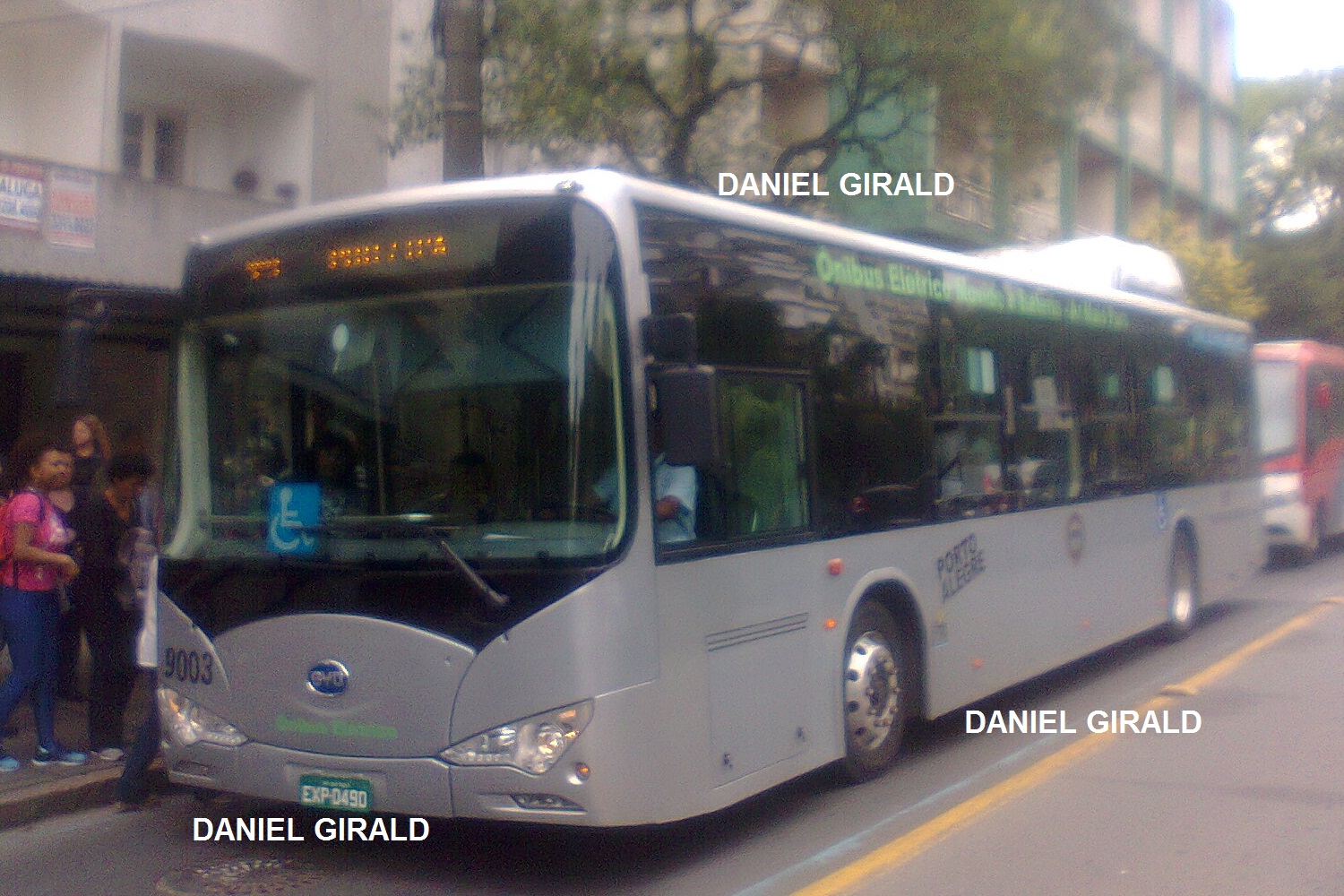
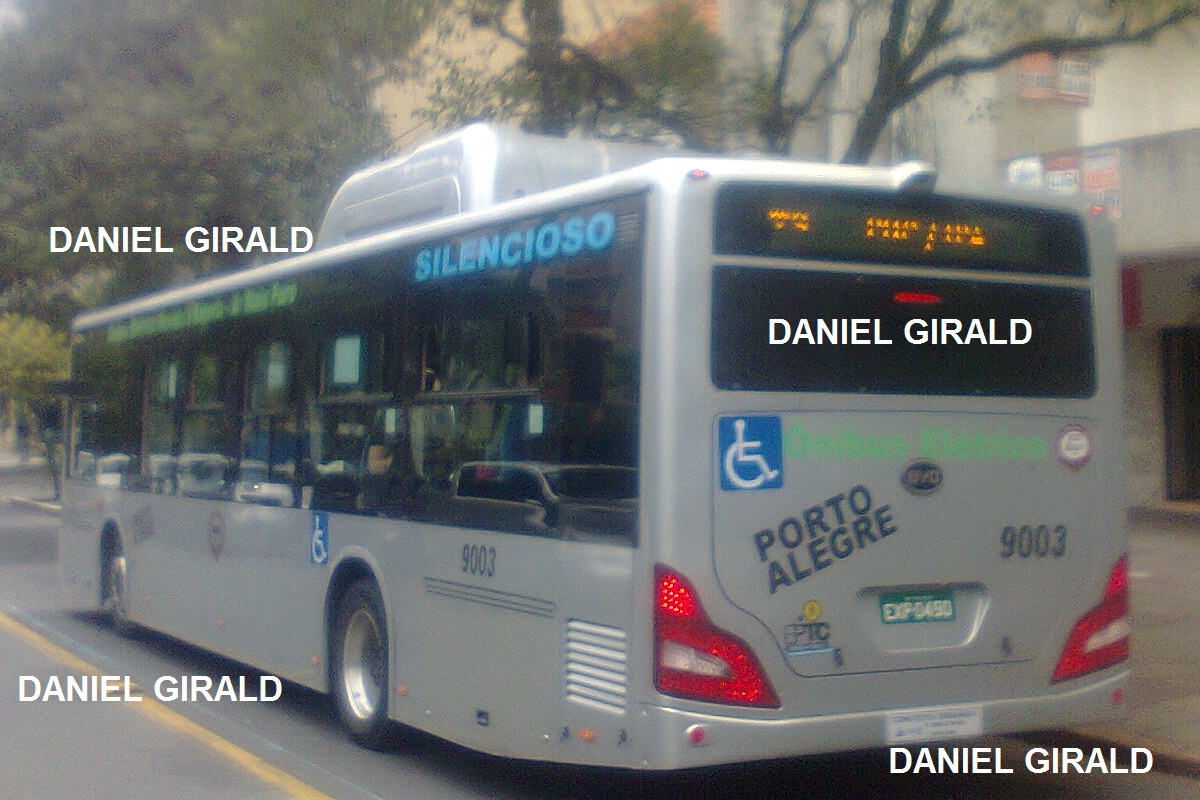
Chinese-made electric bus in my hometown

Early this afternoon I saw this Chinese-made electric bus undergoing tests in Porto Alegre, Rio Grande do Sul, Brazil. It's made by the BYD company and, unlike most Brazilian buses that are built by specialized bodywork companies over frames supplied by truck manufacturers, this one is an unibody.

Thursday, October 22, 2015

Brink's armored big-rig

Due to the high crime rates in Brazil, and cargo robbery growing at frightening rates, some measures are earning popularity in order to prevent it. Armored trucks, for example, are getting more popular. From the beginning with cash-in-transit vans, that could also haul some smaller items in a relatively safe way, bulkier items required other approach. The Brink's company, for example, already operates some Mercedes-Benz trucks with an armored cabin designed in resemblance to the bodywork of its cash-in-transit vans. The one in the picture above is fitted with a Mercedes-Benz OM447LA engine rated at 350hp.