Monday, April 25, 2016
Mercedes-Benz LA-1313 airport firefighting truck
This old bubble-nose Mercedes had been used for a long time at the Hercílio Luz International Airport, which runway is shared with the Florianópolis Air Base of the Brazilian Air Force. In this picture that I took in 2009 it was already retired and on its way to be auctioned, but it was still ready to operate again. Could've easily had a new stretch of life as a forest fire-fighting rig...
Saturday, April 02, 2016
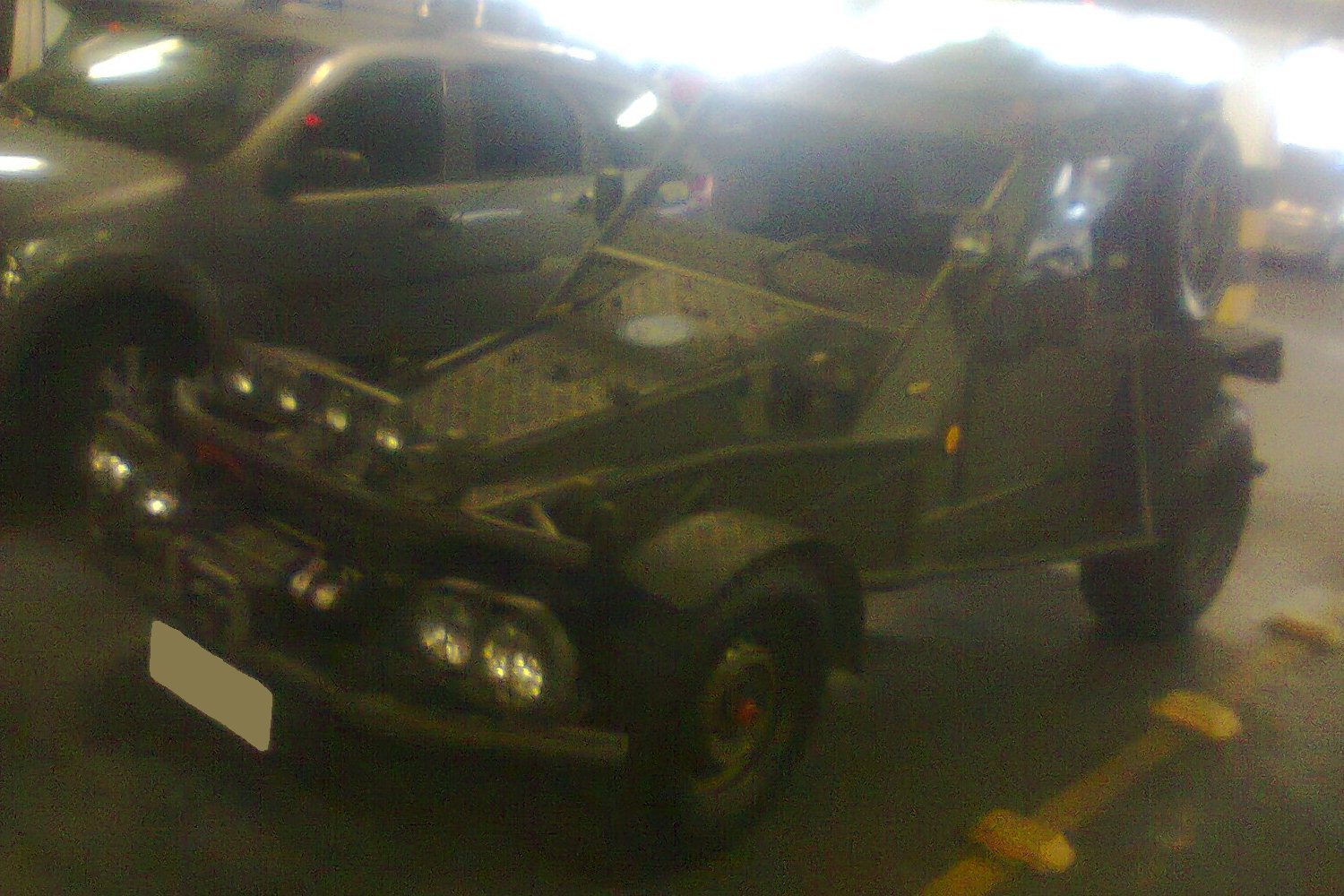
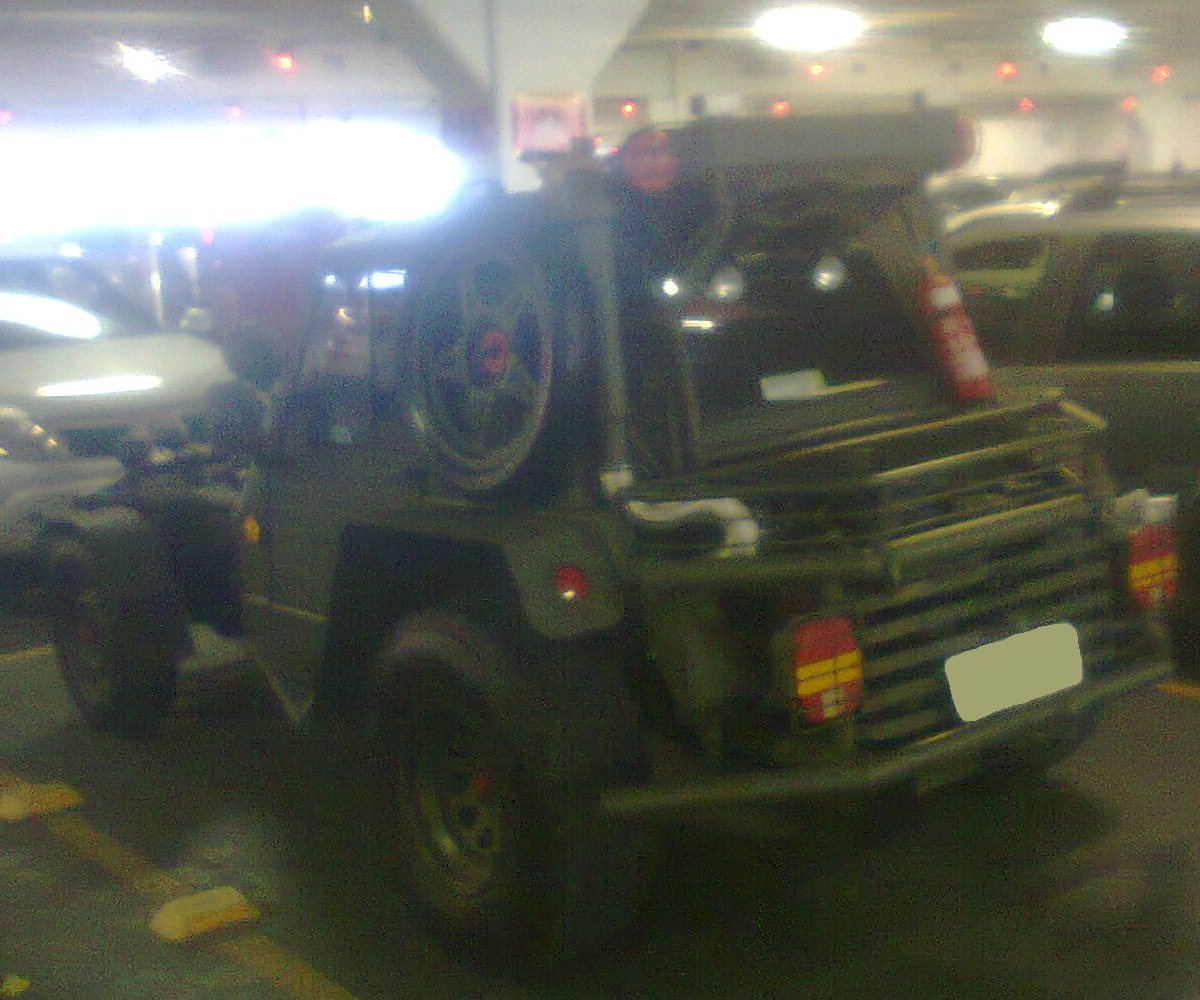
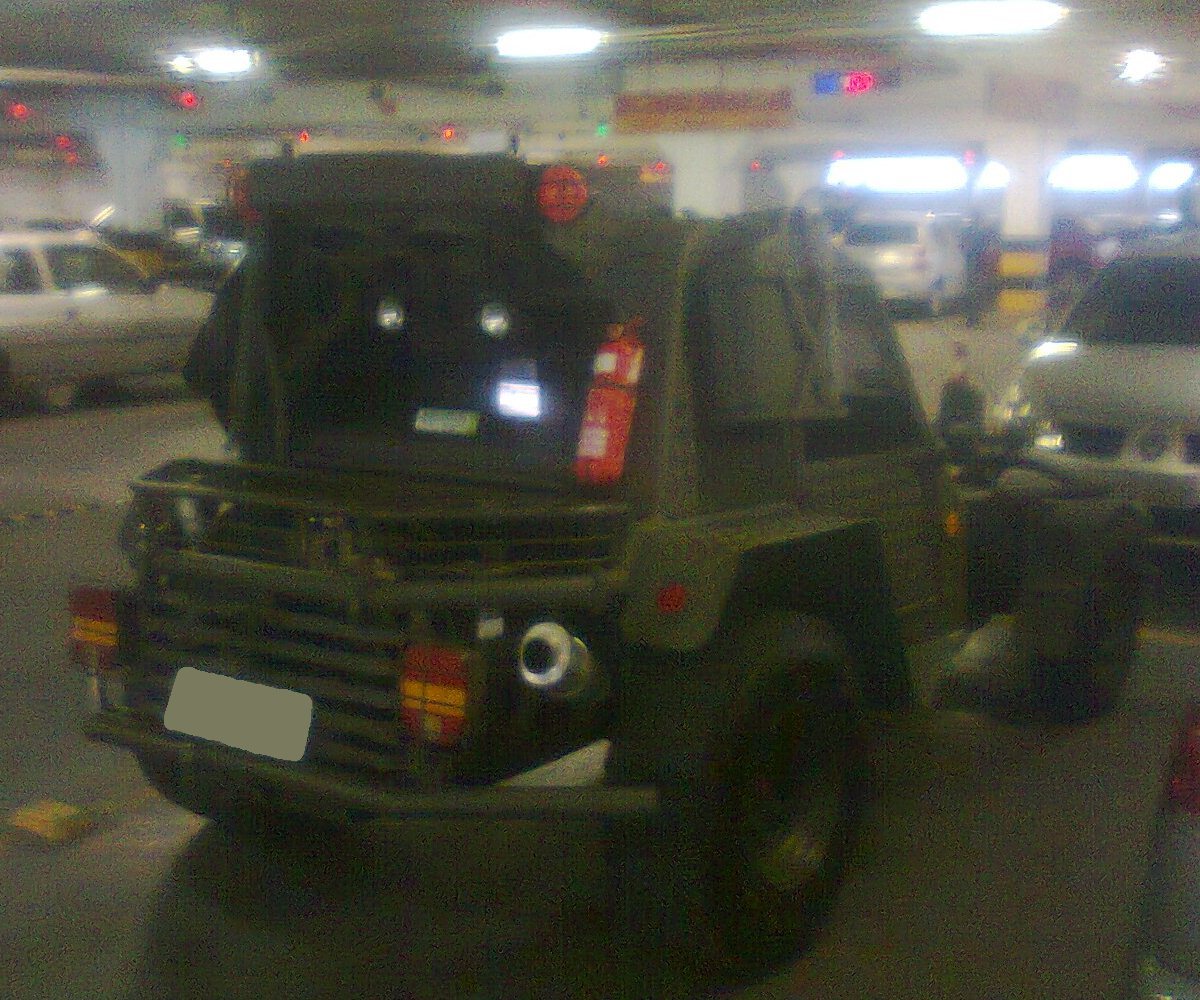
Street-legal sandrail buggy in Brazil
Sandrail buggies are not so uncommon in Brazil, but it's not so usual to see a street-legal one. Relying mostly on ancient Volkswagen powertrains such as the traditional air-cooled flat-4 and the water-cooled EA827 inline-4 engines, usually mated to Volkswagen's old longitudinal transaxle, they're still perceived among recreational off-roaders as an affordable option to 4-wheel drive vehicles.
This one, specificlaly, relies on a water-cooled EA827 engine, with the radiator mounted in a high position that leaves it more protected from mud and debris that could eventually get stuck on its core and decrease the cooling efficiency. The rear-mounted powertrain keeps most of the vehicle weight around the drive wheels all the time, thus improving traction in a variety of rough terrain. Though it's still 2-wheel drive, off-road performance is not to disdain.
This sandrail buggy appeared in the parking lot of a supermarket in Florianópolis, one of the most popular touristic destinations in Brazil.
Friday, March 25, 2016
What would be a nice engine swap option for a Renault 21/Medallion?
The good old Renault 21 is one of those cars from the 80's thru 90's that is nowadays mostly neglected, but has some potential for cool projects such as engine swaps. While the versions fitted with smaller engines (up to 1.7L, except a 1.6L available only in Colombia and Argentina) had it mounted in transverse position, the bigger engines (1.9L and 2.1L Diesel, 2.0L and 2.2L gasoline) were fitted longitudinally, so there's enough space to mount even a small-block V8 inside. Its original transmission can easily handle the output of engines such as the Ford 302W, being used in South African replicas of the classic Ford GT40, for example.
Personally, if I were looking for a V8 to put into a Renault 21 I'd rather get a small-block Chevy, either the classic one or the LS-series, or maybe consider a V6 in order to avoid turning it too nose-heavy. Other possibilities could be some Subaru Boxer engine, either a flat-4 or a flat-6 out of a Legacy, favored due to their lower center of gravity and the shorter overall lenght that sets the weight a little back. Even though some folks are still skeptical about the suitability of front-wheel drive with a relatively high-performance engine, the longitudinal layout allow the half-shafts to be fully symmetrical, avoiding issues such as the torque-steer.
Saturday, March 05, 2016
Volkswagen Constellation truck with aerodynamic fairing
Aerodynamic fairings are not so usual in Brazilian trucks. In spite of their benefits to the mileage, it's hard to ensure they're going to last long in the harsh conditions of local roads. This one, specifically, only had them in order to be used as a mobile billboard promoting the Brazilian Formula Truck racing series, even though it doesn't match so closely the racer looks because of the cabin position and the presence of a sleeper, while the racing rigs use a day-cab modified to sit lower and a little backwards, with a shorter front overhang.
Sunday, February 21, 2016
Chopper motorcycle based in a Czechoslovakian Jawa
When we think about choppers, the first thing that comes across anyone's mind is usually a Harley-Davidson though it's not the only option. This old Czechoslovakian Jawa fitted with a 2-stroke 250cc engine, for example, was turned into a chopper in Brazil. I spotted it in some coastal city of Rio Grande do Sul state and, must confess, was kinda impressed to see a Soviet-engined chopper...
Thursday, February 11, 2016
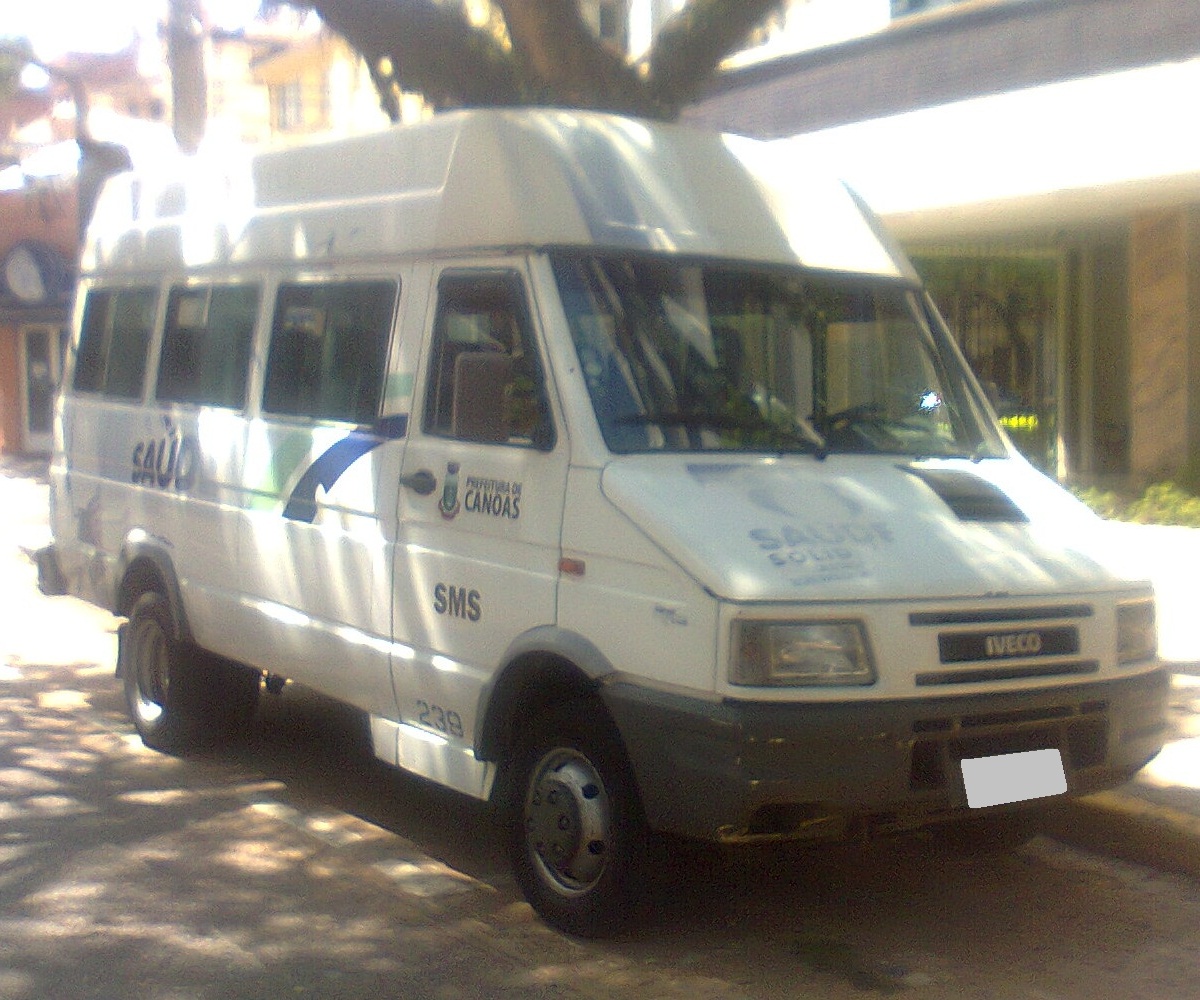
Are front-wheel drive vans any worse than a rear-wheel drive one?
Buying a van for the business always involves some compromises between its features and what suits better to the job it becomes designated. Front-wheel drive setups are often pointed out to be "weak" under heavier loads, while rear-wheel drive is still usually perceived by commercial operators as having superior traction when loaded. However, other factors such as stability, comfort and boarding height also play their role. No matter if it's a puller like the Fiat Ducato or a pusher like the Mercedes-Benz Sprinter, both configurations give reasons to either support or dismiss them.
Due to their overall height, big vans tend to have the center of gravity set higher than a typical automobile. In this scenario, there is a clear advantage to front-wheel drive as its tends to understeer while cornering at higher speeds in opposition to going tail-happy like a rear-wheel drive would. These handling characteristics being closer to those of an average minivan are highly desirable for unexperienced drivers, and are also safer under low grip conditions such as heavy rain or when there is snow or ice in the pathway. The space constraint requires the transaxles used in front-wheel drive vans to have a compact and lightweight packaging, which opens the possibility to share driveline components with minivans and can decrease development costs due to the economics of scale.
Front-wheel drive advantages are noticeable not just in leisure applications such as motorhomes and campervans but also in highly-demanding professional uses such as ambulances. The compact, lightweight and set-forward driveline decreases the amounts of inertia and friction, being more favorable to the fuel-efficiency and overall performance. There are fewer clearance issues too, so the floor can be set lower in order to enhance the interior height without any effect to the overall exterior dimensions. All the special equipment added can also be set at a lower position, and eventually closer to the center of the vehicle, and then the center of gravity also goes down which is the best to improve stability. On a sidenote, since transverse engine is prevalent in front-wheel drive vans, there is fewer intrusion of the powertrain to the cabin compared to rear-wheel drive vans with longitudinal engine, thus decreasing the noise and heat irradiation.
The weight bias between the axles under load is often pointed to turn in
favor of rear-wheel drive vans, such as the Iveco Daily in opposition
to the already-mentioned Fiat Ducato, but it's not exactly an absolute
truth. A shorter rear overhang, as well as proper restraining of either
the cargo or passengers aboard, are effective measures to keep the
weight closer to the centerline of the vehicle, so there is fewer weight
transfer to the rear axle while driving uphill, for example. There are
other resources such as traction control and differential lock that
could also decrease the allegged disadvantage of front-wheel drive vans,
but that's a whole different matter.
Another controversial aspect is the ruggedness. While independent front suspension and solid-axle rear suspension are an usual setup for both front and rear-wheel drive vans, the usage of CV joints still faces some fierce opposition from conservative customers who regard a solid drive axle as more reliable under severe operating conditions. There were times when axle-wrap was a valid excuse but it's not the case anymore, and front-wheel drive finds its way even for military and law enforcement applications, favored by the improved handling too. No surprise the Fiat Ducato is taking the place of the old Iveco Daily as the standard van for the Rio Grande do Sul State Military Police, for example.
Though it's impossible to reach perfection, front-wheel drive is far from being just a makeshift for OEMs to go cheap, and may in fact become an advantageous option to many operators. From freight companies like UPS to secretaries of health in small towns, the comfort and safety enhancements are good enough to justify the switch to front-wheel drive vans, while the fuel savings are too hard to beat. That being said, they're not any worse than a rear-wheel drive van.
Due to their overall height, big vans tend to have the center of gravity set higher than a typical automobile. In this scenario, there is a clear advantage to front-wheel drive as its tends to understeer while cornering at higher speeds in opposition to going tail-happy like a rear-wheel drive would. These handling characteristics being closer to those of an average minivan are highly desirable for unexperienced drivers, and are also safer under low grip conditions such as heavy rain or when there is snow or ice in the pathway. The space constraint requires the transaxles used in front-wheel drive vans to have a compact and lightweight packaging, which opens the possibility to share driveline components with minivans and can decrease development costs due to the economics of scale.
Another controversial aspect is the ruggedness. While independent front suspension and solid-axle rear suspension are an usual setup for both front and rear-wheel drive vans, the usage of CV joints still faces some fierce opposition from conservative customers who regard a solid drive axle as more reliable under severe operating conditions. There were times when axle-wrap was a valid excuse but it's not the case anymore, and front-wheel drive finds its way even for military and law enforcement applications, favored by the improved handling too. No surprise the Fiat Ducato is taking the place of the old Iveco Daily as the standard van for the Rio Grande do Sul State Military Police, for example.
Though it's impossible to reach perfection, front-wheel drive is far from being just a makeshift for OEMs to go cheap, and may in fact become an advantageous option to many operators. From freight companies like UPS to secretaries of health in small towns, the comfort and safety enhancements are good enough to justify the switch to front-wheel drive vans, while the fuel savings are too hard to beat. That being said, they're not any worse than a rear-wheel drive van.
Tuesday, February 09, 2016
Riced black Opel Corsa B
I'm not so sure about the exact reason for the appearing preference of Brazilian ricers for the Opel Corsa B, but its relatively affordable price and the availability of spare parts might be considered. Despite the looks, many are fitted with a 1.0L engine. Ambitious, but rubbish...
Monday, February 08, 2016
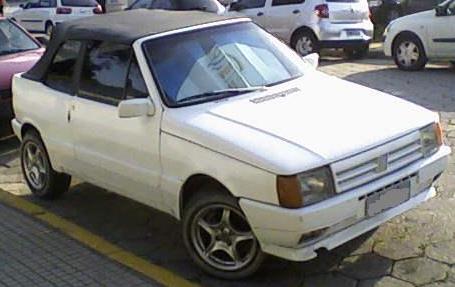
Brazilian Fiat Uno Cabriolet
Due to import restrictions and the lack of options from the main players in the local automotive market in the 80's, aftermarket modifications held a high degree of popularity in Brazil. One of those was the cabriolet conversion offered by the Sulam company, and one of the models which it was available for was the Fiat Uno. I spotted this one in Florianópolis 8 years ago. Not sure about its engine, but most likely to be the "Fiasa" 1.3L.
Wednesday, February 03, 2016
Hand control for the clutch in a split-window Kombi
As if an immaculate split-window Kombi wouldn't caught enought attention, this one specifically had a special feature in order to accomodate a physical disability of its owner. Since he had lost his left leg, using a standard clutch pedal would be impossible. A dashboard-mounted lever to the left of the steering wheel was the obvious choice in Brazil during the 70's when, unlike Europe, a Saxomat automatic clutch or some clutch automation device catering specifically to disabled drivers was either unavailable or overly expensive.
Even though this bodystyle was phased out in most markets in '67, it soldiered on in Brazil until '75, and this one specifically is a '72. Back there in 2009 the owner was not any likely to retire it, and still daily-drove the Kombi which was his pride and joy. He was very excited while telling me about how this vehicle was essential to provide him a job and raise his kids.
Tuesday, February 02, 2016
Jeep M-170 ambulance
There were times, conditions and operational requirements that allowed a canvas-top ambulance, such as this Jeep M-170 from the Korean War era.
Subscribe to:
Posts (Atom)